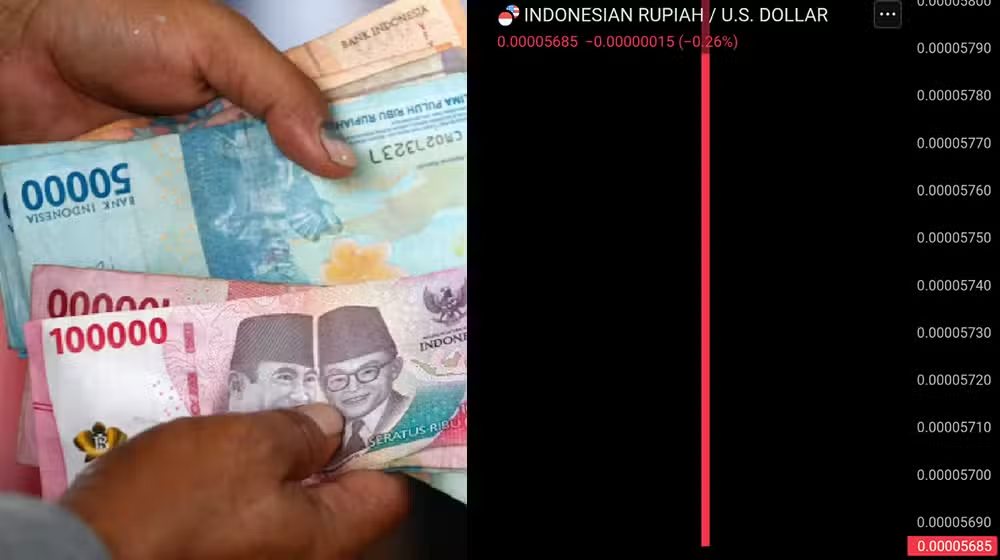
At current exchange rates, one US dollar is trading between 17,000 and 17,300 rupiah, depending on market movements. At that level, converting roughly 57 dollars gives around one million rupiah, a figure that sounds impressive but carries very limited purchasing power in practice.
The depreciation has put renewed focus on the fragile position of the Indonesian currency. The rupiah has been under sustained pressure in recent months due to a combination of global and domestic factors. A strong US dollar, high global interest rates, and continued capital outflows from emerging markets have all weighed heavily on the currency.
Ongoing geopolitical tensions in the Middle East have added to market uncertainty, increasing demand for safe-haven assets and further strengthening the dollar.
The currency recently touched record-low levels above 17,000 rupiah per dollar before stabilising. That pause came after intervention by Bank Indonesia, which stepped in through high-priority open market operations to inject liquidity and manage volatility. The move helped slow the slide, but it did not reverse the broader trend.
Also read: Indonesia sends warship to monitor Chinese coast guard vessel
Currency analysts say the situation highlights the difference between nominal figures and real economic value. While reaching one million rupiah with a relatively small amount of dollars may sound dramatic, it does not translate into higher living standards or stronger buying power for ordinary Indonesians.
In fact, a weaker rupiah creates mixed effects for the economy. On the positive side, Indonesian exports become cheaper and more competitive in international markets, which can benefit exporters in sectors such as manufacturing and commodities. But the downsides are significant. Imports become more expensive, pushing up costs for fuel, food, machinery, and consumer goods. That, in turn, adds to inflationary pressure and erodes household purchasing power.
For everyday consumers, one million rupiah remains a modest amount. In major cities like Jakarta, it may cover only basic groceries or a few utility bills, and it falls far short of supporting any meaningful increase in savings or investment. Economists stress that currency depreciation should not be confused with rising wealth, even if the numbers look larger on paper.
Market observers also point out that exchange rate movements are cyclical. Periods of stress for emerging market currencies often coincide with aggressive monetary tightening in the United States and global risk aversion.
When conditions ease, currencies like the rupiah can stabilise or recover, especially if supported by credible monetary policy and improving capital flows.
For now, the “millionaire” label remains a symbolic reflection of how far the rupiah has weakened, not a sign of prosperity. As analysts note, one million rupiah may sound like a fortune, but in real economic terms, it still represents only about 57 dollars and very limited purchasing power.
About Tamoor Ahmed

Tamoor Ahmad has been covering politics since 2022.
