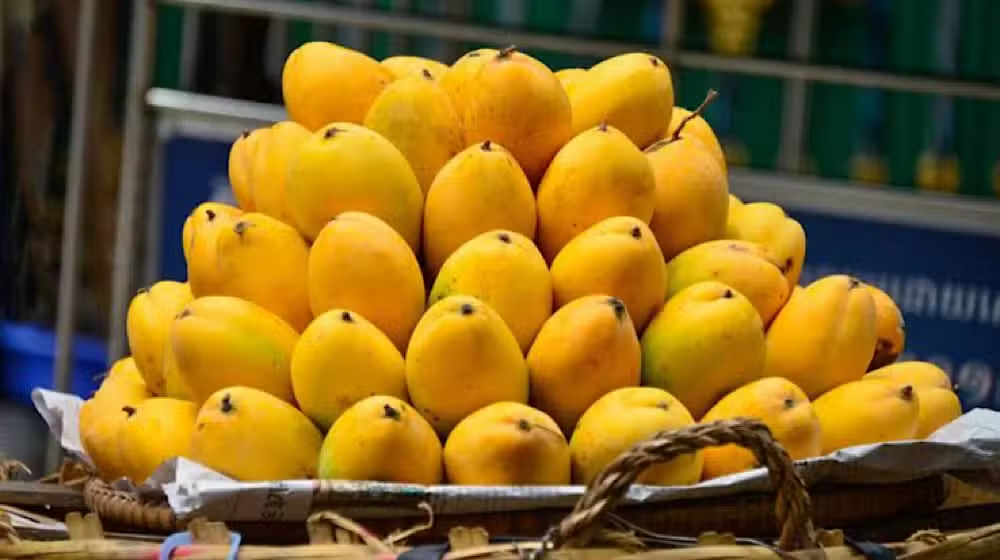
Pakistan’s mango season has arrived later than usual this year, with industry estimates indicating a production decline of nearly 20 percent due to adverse weather conditions and growing export challenges.
Market stakeholders say the overall output has been hit by unusual climate patterns during the critical flowering stage. This has reduced national production to around 1.5 million tonnes compared with nearly 1.8 million tonnes last year, even though the total cultivation area remains unchanged at about 160,000 hectares.
The delay is also affecting market supply timelines. Mango harvesting for local markets, which typically begins in late April, only started in the first week of May this year. Export shipments are now expected to begin from June 1 instead of the usual mid May schedule.
Weather disruption hits key growing regions
Industry experts say cooler and wetter weather in March and April played a major role in lowering expected yields. These conditions disrupted flowering and fruit formation, especially in early-season varieties that are highly sensitive to temperature changes.
Early-producing districts in Sindh, such as Mirpurkhas, Tando Allahyar, and Hyderabad, have reported average yields so far. However, the situation in Punjab appears more concerning.
Major mango producing areas including Rahim Yar Khan, Multan, Muzaffargarh, and Shujaabad are reporting noticeably reduced output. Farmers in these regions say fruit size and overall yield are below normal levels, raising concerns about total seasonal recovery.
Exporters face logistics and freight pressure
Exporters are now dealing with multiple operational challenges beyond reduced supply. Regional tensions and trade disruptions have added pressure on already tight export schedules.
Trade routes to Afghanistan remain affected due to extended border closures, limiting one of Pakistan’s traditional fruit export corridors. At the same time, instability concerns around the Strait of Hormuz have increased shipping costs and reduced vessel availability, impacting sea freight planning.
According to industry estimates, freight charges for refrigerated shipments have increased significantly compared to last season, adding to exporter costs and reducing profit margins.
Air cargo constraints add uncertainty
Exporters also rely heavily on air freight for premium mango shipments to Europe and the United Kingdom. Speaking on the situation, Shoaib Ahmad Basra, Managing Director of National Fruit Pakistan, said limited cargo capacity is becoming a serious concern for the industry.
He explained that Pakistan depends largely on Middle Eastern airlines for international mango exports, and reduced flight frequency is creating bottlenecks in shipment planning. This is making it difficult for exporters to secure consistent space during peak export weeks.
Basra noted that despite lower production, international mango prices may not rise significantly. Demand in some traditional regional markets has weakened, which is balancing global supply expectations.
Market outlook remains mixed despite lower supply
The overall outlook for the season remains uncertain. Lower production would normally push prices higher, but weaker demand conditions in regional markets are expected to limit sharp price increases.
In domestic markets across Karachi, Lahore, and Islamabad, traders expect moderate price fluctuations depending on variety and early supply arrivals. Exporters, however, are more cautious, focusing on logistics stability rather than price gains.
Industry stakeholders say the coming weeks will be critical in determining how the season unfolds. Weather recovery, freight stability, and export logistics will collectively decide whether Pakistan can maintain its position in the global mango market despite reduced production this year.
