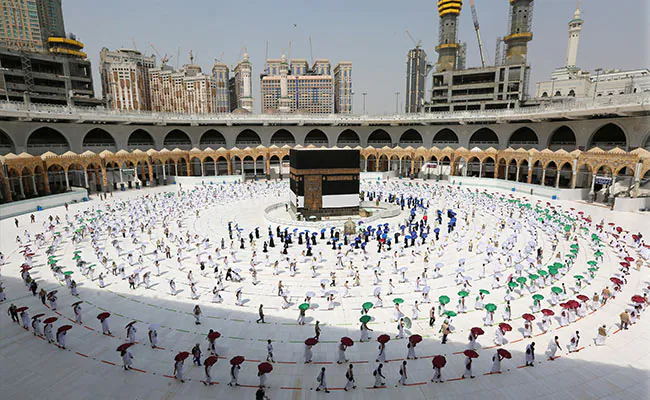
Women can perform Hajj without mehram. The Council of Islamic Ideology has granted conditional approval for women to embark on the Hajj pilgrimage without the traditional requirement of a mehram, a male companion.
This decision, rooted in the jurisprudence of Jaafriya, Maliki, and Shafi’i, acknowledges the possibility for women to engage in the sacred pilgrimage under specific conditions.
According to a detailed correspondence from the council to the Ministry of Religious Affairs, women undertaking Hajj without a mehram must fulfill several conditions. Foremost among these is the necessity for trustworthy female companions to accompany the pilgrim.
Furthermore, obtaining explicit permission from both parents and, if married, the husband is deemed a prerequisite for this unique pilgrimage arrangement.
The stipulation that the woman must be free from any perceived threats or risks during the pilgrimage underscores the emphasis on ensuring the safety and security of female pilgrims.
The council’s directive also places a significant responsibility on the Ministry of Religious Affairs, stressing the need for a thorough investigation and scrutiny of the group members before granting permission for a woman to undertake Hajj without a mehram. This measure is designed to provide an additional layer of assurance regarding the well-being of the pilgrims throughout the sacred journey.
In alignment with Hanafi and Hanbali jurisprudence, the council’s letter elucidates that, according to these schools of thought, if a woman lacks a mehram, Hajj is not considered obligatory upon her. This nuanced approach seeks to harmonize religious obligations with the paramount importance of ensuring the safety and security of female pilgrims.
The conditional approval reflects a careful balance between religious requirements and safety concerns, acknowledging the right of women to partake in the Hajj pilgrimage without a mehram while implementing measures to mitigate potential risks.
As Women can perform Hajj without mehram, this decision is poised to have a far-reaching impact, facilitating increased inclusivity and accessibility for female pilgrims in their spiritual journey to Mecca.
