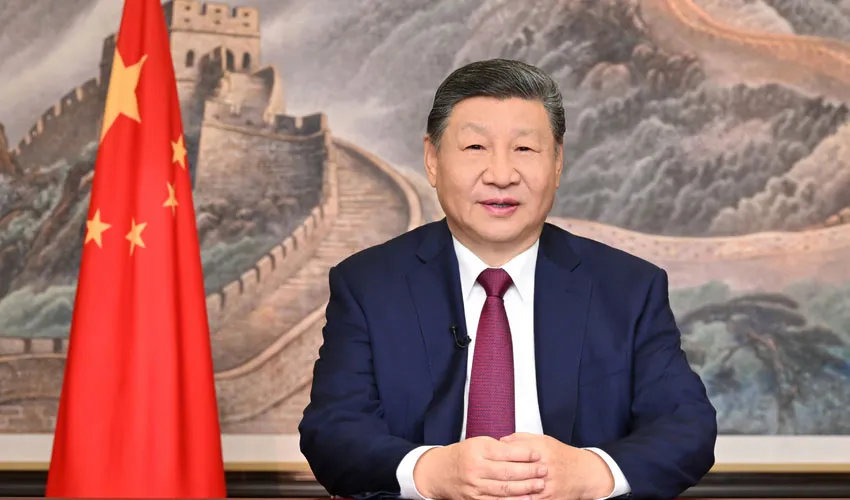
Chinese President Xi Jinping has called for a stronger and more dynamic partnership between China and the Arab world, warning that the international system is entering a period of unprecedented change marked by geopolitical uncertainty and shifting alliances.
Speaking during talks in Beijing, Xi stressed the need for deeper coordination between China and Arab nations, saying global stability now depends on greater unity, dialogue, and strategic cooperation.
He said humanity is facing critical choices between peace and conflict, as well as cooperation and confrontation, adding that stronger China-Arab relations are essential to navigating global instability and advancing shared development goals.
China-Arab ties amid changing global dynamics
Xi’s remarks came during a meeting with Sheikh Khaled bin Mohamed bin Zayed Al Nahyan, the crown prince of Abu Dhabi, highlighting the growing importance of the United Arab Emirates in China’s broader Middle East diplomacy.
The visit reflects sustained diplomatic engagement between Beijing and Gulf states at a time when major powers are reassessing foreign policy priorities and regional partnerships.
China has steadily expanded its political, economic, and diplomatic footprint across the Middle East, positioning itself as a partner focused on dialogue, infrastructure development, and non-interference.
Gulf tensions add urgency to diplomatic outreach
The talks took place against the backdrop of rising tensions in the Gulf region following the collapse of recent negotiations between Washington and Tehran, which reportedly ended without agreement.
The stalled talks have renewed concerns over regional instability linked to Iran, adding urgency to diplomatic efforts by external powers seeking to prevent further escalation.
Analysts say China’s call for closer Arab ties reflects a broader strategy to expand its role in Middle East politics as an alternative diplomatic actor, particularly as traditional alliances face strain.
China positions itself as a key Middle East player
In recent years, Beijing has intensified engagement with Arab states through energy cooperation, trade, infrastructure projects, and mediation initiatives, reinforcing its image as a stabilizing force in a fragmented global order.
Xi’s emphasis on China-Arab cooperation underscores Beijing’s ambition to play a larger role in shaping regional diplomacy while promoting a multipolar international system based on strategic balance rather than confrontation.
