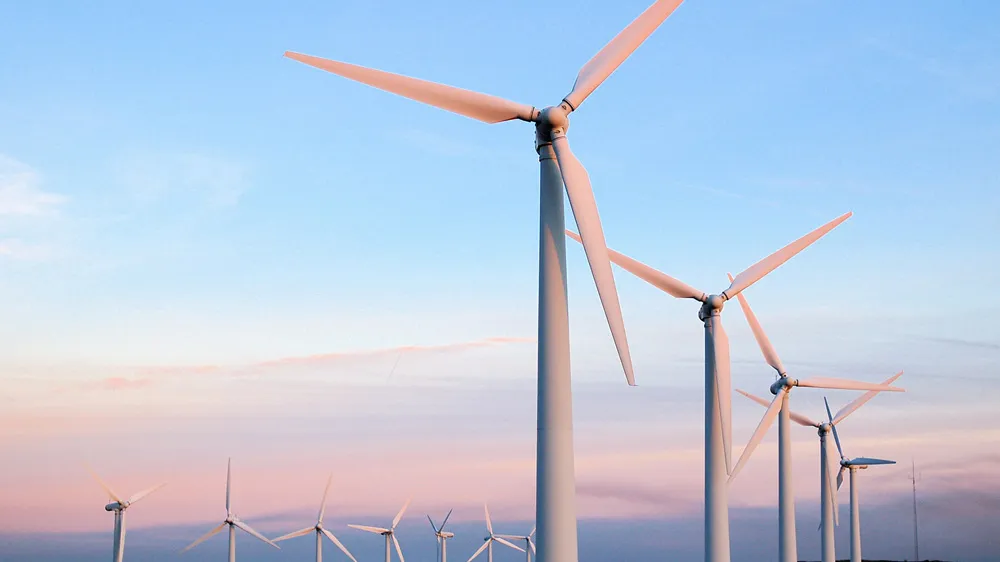
UEP Wind Power (Private) Limited has sought Rs5.824 billion from Pakistan’s central power purchaser to meet its financial obligations by the end of 2026, warning that a cash shortfall could expose the 99-megawatt wind power project to default.
In a letter dated October 19 to the Central Power Purchasing Agency-Guarantee (CPPA-G), the company said its projected cash flow was insufficient to cover loan repayments, debt servicing, operations and maintenance costs, taxes, insurance and other expenses through December 31.
The request highlights the financial pressure facing some power producers operating under the China-Pakistan Economic Corridor (CPEC), where delayed payments and rising outstanding invoices can constrain companies’ ability to meet their contractual obligations.
According to the company’s proposed payment schedule, it needs Rs628.14 million in October, Rs179.61 million in November and Rs5.016 billion in December. The letter requests the release of funds in instalments to ensure payments are made before their respective deadlines.
Loan Repayments Account for Most of the Funding Requirement
Repayment of a working-capital loan represents the largest component of UEP Wind Power’s funding request at Rs2.651 billion. The company has also projected Rs1.834 billion in debt-servicing payments to China Development Bank (CDB).
Other expenses include Rs841.38 million for the operations and maintenance operator, Rs323.59 million in sales tax, Rs125.94 million in operating and administrative costs, and Rs48.47 million for project insurance.
The company said timely payments were necessary to maintain uninterrupted operations and settle its outstanding liabilities. It urged CPPA-G to continue providing financial support to prevent a potential default.
Also read: Energy Crisis Claim: Wind, Thar Coal Underused as Pakistan Industry Shifts to Solar
The bulk of the requested amount falls due in December, when the company must meet major debt-servicing and working-capital loan repayment obligations.
However, the funding request does not establish that CPPA-G has approved or released the money.
Unpaid Invoices Projected to Reach Rs9.32 Billion
UEP Wind Power has also reported a growing backlog of unpaid invoices, adding to its liquidity concerns.
According to the letter, total unpaid invoices are projected to increase from Rs8.117 billion in October to Rs9.317 billion by December 2026. Overdue invoices are expected to rise from Rs6.532 billion to Rs8.147 billion over the same period.
The company said continued support from CPPA-G had helped it clear long-overdue payments to its operations and maintenance operator. It has now requested priority for repayment of a long-standing shareholder loan, which its shareholder has advised should be settled in full by December 31.
The company also identified Rs323.592 million in sales tax liabilities, describing the amount as payable to the national exchequer by December 22.
UEP Wind Power said it had entered its tenth year of operations without distributing dividends to shareholders. The statement adds context to its financial position, although the absence of dividends alone does not establish the project’s overall profitability or solvency.
CPEC Power Sector Faces Wider Payment Challenges
The company’s request comes amid broader concerns about outstanding payments to Chinese power producers in Pakistan.
According to sources cited in reports on the matter, CPPA-G owes approximately Rs500 billion to Chinese power plants established under CPEC. The reported arrears have been linked partly to inadequate recoveries by electricity distribution companies, commonly known as DISCOs.
When distribution companies collect less than the amounts billed to consumers, cash-flow pressures can spread through the electricity supply chain. Delayed payments to the central power purchaser can, in turn, affect generation companies that must continue servicing loans and paying operational expenses.
The National Electric Power Regulatory Authority (NEPRA) oversees Pakistan’s electricity sector and publishes regulatory decisions, tariff proceedings and power-sector information. Its official website provides a primary reference for readers seeking to examine the regulatory framework surrounding electricity purchases and payments.
The Private Power and Infrastructure Board, operating under the Ministry of Energy’s Power Division, identifies UEP Wind Power as a commissioned project in Jhimpir, Thatta, Sindh. Its published project information lists a gross capacity of 99 megawatts, a net capacity of 96.68 megawatts and China Development Bank among its foreign lenders.
These details establish the project’s capacity and financing background, while the latest funding requirement and projected arrears are based on the company’s reported letter.
Copies of the October 19 letter were also sent to the Embassy of China in Islamabad, the secretary of the Power Division, the managing director of the Private Power and Infrastructure Board, CPPA-G’s chief financial officer and the CPEC Authority.
Whether CPPA-G meets the requested payment schedule will be significant for UEP Wind Power’s ability to settle its year-end liabilities.
The company’s warning underscores the financial risks that mounting receivables can create for power producers when payments fall short of their immediate obligations.
