
Punjab Local Government Minister Zeeshan Rafiq has directed officials to intensify anti-littering inspections and strengthen anti-smog measures across the province, with a focus on waste disposal, monitoring of sanitation operations and reporting crop-burning incidents.
The directives were issued during a meeting at the Suthra Punjab Authority office, where the minister instructed Field Monitoring Officers to remain present in Union Councils and ensure compliance with anti-smog directions issued by the Environment Department.
Secretary of Local Government Zaid bin Maqsood and Suthra Punjab Authority Director General Umar Javed attended the meeting. Commissioners and managing directors from Multan, Gujranwala, Dera Ghazi Khan and Faisalabad participated through video link.
Punjab to Strengthen Waste Collection Monitoring

Officials briefed the meeting on waste collection points, waste enclosures and the ongoing geospatial mapping of Union Councils.
Rafiq directed officials to ensure that waste collected at temporary points was transferred to designated dumping sites without delay. The instructions aim to improve the handling of municipal waste and prevent rubbish from accumulating in public areas.
The minister also said the movement of loader rickshaws would be digitally monitored in each designated beat. The monitoring system is intended to help officials track sanitation operations and oversee the movement of vehicles involved in waste collection.
Effective implementation will depend on regular field inspections, accurate monitoring records and timely action when waste collection or disposal requirements are not met.
Mechanical Sweepers to Be Used During Smog Season

The minister directed local government officials to use mechanical sweepers instead of manual road cleaning during the smog season.
The measure forms part of the province’s wider effort to manage dust and improve roadside cleanliness as air quality deteriorates during periods of smog.
Mechanical sweeping can help remove accumulated dust and debris, although its effectiveness depends on suitable equipment, regular operation and proper waste disposal.
Rafiq also instructed officials to report crop-burning incidents to the relevant assistant commissioner for further action.
Crop-residue burning is one of several sources that can contribute to air pollution. Monitoring and reporting such incidents can help authorities identify violations and respond under applicable environmental rules.
Field Officers Told to Ensure Compliance
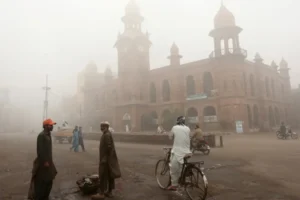
Field Monitoring Officers have been directed to remain active in their assigned Union Councils and ensure that anti-smog instructions are followed.
The meeting brought together provincial and local government officials responsible for sanitation and municipal operations in several major districts.
Their coordination will be important in carrying out inspections, tracking waste collection and responding to reported violations.
The directions place emphasis on implementation at the local level, where the timely removal of waste, monitoring of sanitation vehicles and reporting of crop burning can be checked directly.
The impact of the measures will depend on enforcement and follow-up. Public reporting on inspection results, crop-burning cases and sanitation performance would help residents assess progress in tackling littering and reducing pollution during Punjab’s smog season.
