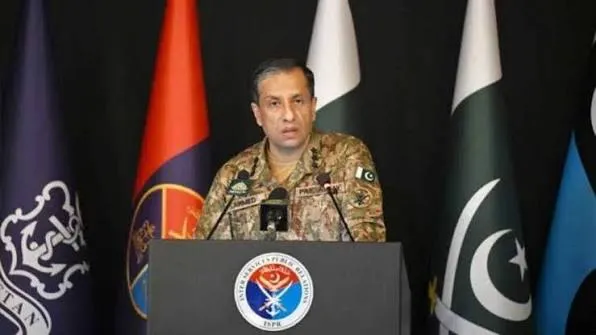
Pakistan is seeking a negotiated settlement to the conflict involving the United States and Iran while maintaining its defence commitments to Saudi Arabia, Inter-Services Public Relations (ISPR) Director General Lieutenant General Ahmed Sharif Chaudhry has said.
In an interview with CNN correspondent Ivan Watson, the military spokesperson defended Islamabad’s role as a mediator, saying Pakistan had been open about its position on the conflict and was working to prevent further regional escalation.
His remarks come amid continuing hostilities in the region and renewed questions about how Pakistan can facilitate negotiations while maintaining close security ties with Saudi Arabia.
Pakistan Defends Its Role as a Mediator
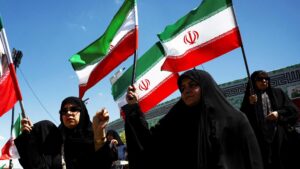
Asked whether Pakistan could remain a neutral broker given Iran’s past actions against Saudi Arabia and attacks attributed to the Houthis, Lt Gen Chaudhry described Pakistan as an “honest broker”.
He said Islamabad had publicly condemned Israeli attacks on Iran as well as Iran’s retaliatory campaign in the Gulf when the conflict began.
“We don’t mince our words; we have a stake in regional peace and stability,” he said, arguing that an expansion of the conflict would benefit no country.
The spokesperson said Pakistan remained committed to a “negotiated and peaceful” outcome and was making efforts to narrow differences between the parties.
He also stressed that Islamabad wanted to prevent the conflict from spreading to additional countries or escalating further.
The comments outline Pakistan’s stated approach to mediation. Whether the parties involved consider Islamabad an acceptable intermediary will depend on their respective positions and willingness to continue negotiations.
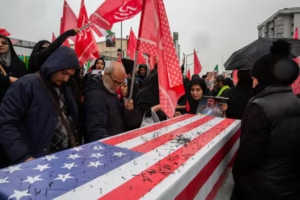
What Pakistan Said About Its Troops in Saudi Arabia
The interview also addressed Pakistan’s military presence in Saudi Arabia under the defence arrangement involving Pakistan, Saudi Arabia and Turkiye.
Lt Gen Chaudhry said Pakistani troops had been stationed in the kingdom for decades and had served in multiple operational domains.
In a longer version of the interview released by state-run Pakistan Television, he said the implementation of the Makkah defence accord would be “purely defensive”.
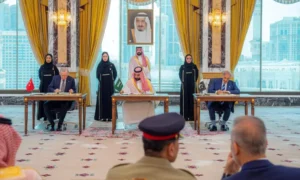
He added that decisions about how forces would be deployed and used would rest with the relevant operational commanders.
The spokesperson did not disclose specific operational details, including the timing, size or composition of any potential deployment under the agreement.
His comments therefore reaffirmed the stated defensive character of the arrangement without establishing precisely how it would operate in a particular emergency.
Defence Pact Emphasises Collective Deterrence
Lt Gen Chaudhry said the agreement was intended to strengthen collective deterrence among its signatories. He also referred to the right of states to self-defence under the United Nations Charter.
He argued that credible military cooperation could discourage potential aggression before it developed into an actual confrontation.
According to the spokesperson, Pakistan, Saudi Arabia and Turkiye possess military and diplomatic capabilities that could contribute to this objective.
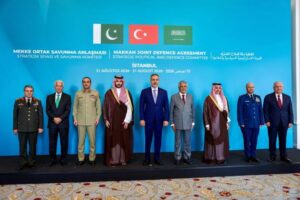
The pact was signed on August 7, according to the supplied report. Its practical implementation, including the deployment of forces and capabilities during an emergency, depends on the arrangements agreed by the participating countries.
The distinction between collective deterrence and operational deployment is important. A defence agreement does not, by itself, establish the precise circumstances, scale or timing of military action.
Regional Tensions Test Pakistan’s Diplomatic Approach
Pakistan’s mediation efforts are taking place amid a wider regional crisis involving the United States, Israel and Iran, as well as security concerns affecting Saudi Arabia and neighbouring countries.
Islamabad must pursue diplomatic engagement while managing its longstanding relationships with regional partners, including its defence ties with Riyadh.
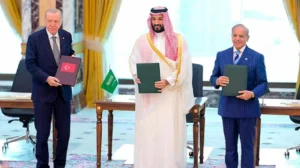
Lt Gen Chaudhry’s remarks suggest that Pakistan intends to continue advocating negotiations while describing its defence commitments as defensive and focused on deterrence.
The effectiveness of that approach will depend on developments on the ground, the positions of the countries involved and whether diplomatic efforts can produce an agreed path towards de-escalation.
For now, Pakistan’s stated objective is to keep communication open, narrow differences between the parties and prevent the conflict from spreading further.
