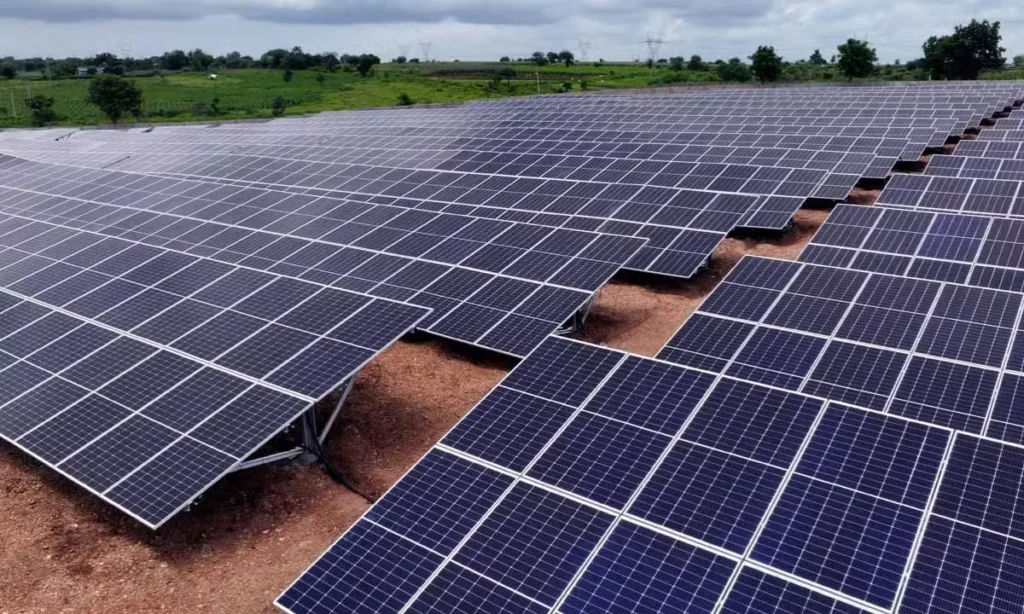
Islamabad — Experts at the Solar, Storage and Flexibility Conference say Pakistan must now shift focus from installing rooftop solar to building the factories, skills, and financing needed to capture the economic value of its clean energy transition.
Pakistan has built one of the world’s fastest-growing rooftop solar markets, but the country still imports nearly all of its solar panels, batteries, inverters, and electric vehicles — meaning most of the financial benefit of the boom is flowing overseas rather than staying in the local economy.
That was the central message from energy specialists who gathered in Islamabad this week for the closing session of the Solar, Storage, and Flexibility Conference.
Speakers argued that Pakistan’s renewable energy strategy now needs to move beyond consumer adoption and toward domestic manufacturing, technology transfer, workforce development, and long-term policy stability that can attract serious investment.
Building an Industrial Ecosystem, Not Just Factories
Andrew Chang, CEO of New Energy Nexus, told the conference that a genuine solar manufacturing industry needs more than production lines.
He said building trust, reducing technology risk, and investing in people are essential first steps, and that products must prove competitive in the market before manufacturing can realistically take root.
He added that developing local talent and supporting entrepreneurs matters because they are ultimately the ones delivering value to everyday consumers.
Pakistan Held Up as a Global Solar Model
The conference also spotlighted Pakistan’s expanding role in the worldwide push toward renewable energy. The Global Solar Council’s “300 Million Solar Homes” initiative — run jointly with the Global Covenant of Mayors for Climate and Energy — is targeting rooftop solar and battery storage installations across 300 million homes and small businesses globally by 2030.
Pakistan’s rapid rooftop solar growth was cited as one of the campaign’s strongest success stories.
Over the past two years, the country imported more solar panels than many nations have installed in an entire decade, while residential electricity demand climbed 32 percent over the same period — a rise attributed largely to distributed solar generation.
Global Solar Council CEO Sonia Dunlop said Pakistan’s consumer-driven solar surge is now being used internationally as proof of concept for other nations weighing similar transitions.
She noted that the model is politically popular because it directly eases the cost-of-living pressure from high energy bills, since household energy bills go down from the very next month after installing solar and storage.
The Financing Gap Holding Back the Next Stage
Panelists also tackled how Pakistan can fund the next phase of its energy transition. Pakistan’s distributed solar market is valued at roughly $14 billion, yet less than four percent of that has gone through formal financial institutions such as banks.
According to participants, the real bottleneck isn’t a lack of available capital — it’s that financing models haven’t evolved fast enough to match the speed of consumer-led solar adoption.
Speakers called on banks to design lending products specifically for distributed energy technologies and to rethink how they assess risk in this sector.
Tools such as blended finance, credit guarantees, vendor financing, securitization, and green bonds were named as promising ways to unlock investment in battery storage and broader distributed energy projects, especially for households and small businesses.
Several speakers emphasized that financing needs to extend beyond consumer-facing technology to cover the supporting infrastructure the transition will require.
What Comes Next
The conference closed on the note that Pakistan’s consumer-driven solar expansion has already proven that affordable clean energy can scale quickly.
The open question now, participants said, is whether industry, banks, and policymakers can move fast enough to keep pace with millions of Pakistani households already embracing solar power.
