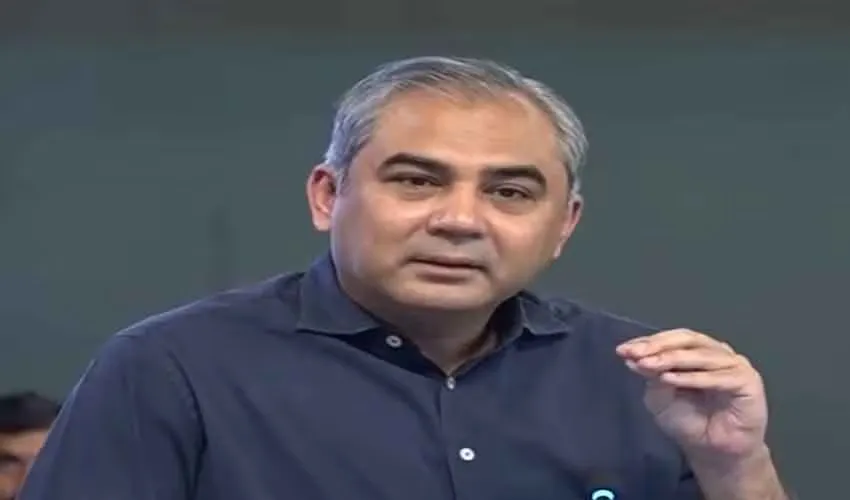
Federal Interior Minister Mohsin Naqvi called for sweeping structural reforms, administrative restructuring and greater political participation by the business community while addressing Pakistan’s first Economic Summit Conference 2026, where policymakers, economists and industry leaders gathered to discuss the country’s long-term economic future.
Speaking candidly at the summit, Naqvi said Pakistan’s existing governance model had reached a point where fundamental reforms could no longer be delayed if the country wanted sustainable economic growth.
‘The System Needs a Reset’
Naqvi told participants that he generally avoids political speeches but felt compelled to speak openly because of Pakistan’s current challenges.
He said everyone present at the conference—including political leaders, policymakers, and members of the business community—shared responsibility for the country’s present condition.
According to the interior minister, Pakistan would continue facing the same governance and economic problems even a decade from now unless comprehensive institutional reforms were introduced.
While reaffirming his support for democracy, Naqvi argued that governance reforms should be pursued within the democratic framework, noting that democratic countries around the world operate under different administrative models.
Calls for New Administrative Units
Highlighting governance challenges, Naqvi proposed creating new administrative units and potentially new provinces to improve public service delivery and bring government institutions closer to citizens.
He urged policymakers to initiate a national debate on administrative restructuring, saying smaller political units could create opportunities for new leadership and improve governance.
Referring to access to justice, he noted that residents in some parts of Pakistan still travel eight to ten hours to reach courts, arguing that judicial services should be available much closer to local communities.
Drawing a comparison with India, Naqvi observed that the neighbouring country had expanded from 14 states at independence to 29 today, suggesting Pakistan should also consider reforms to its administrative structure.
Business Leaders Urged to Join Politics
Naqvi encouraged industrialists and entrepreneurs to actively participate in politics rather than limiting their role to financing election campaigns.
He said many business leaders contribute substantial amounts during elections—sometimes ranging from Rs100 million to Rs500 million—yet choose not to contest elections or become directly involved in policymaking.
According to him, Pakistan’s political system could undergo meaningful change if the business community assumed a more active leadership role.
He also warned that if dissatisfaction continued to grow unchecked, even seemingly insignificant forces could disrupt the existing system, underscoring the urgency of reform.
Economy, Debt and Governance
Addressing Pakistan’s economic outlook, the interior minister said the federal government continues to present deficit budgets while national debt keeps increasing.
He praised Prime Minister Shehbaz Sharif for his commitment and work ethic but argued that even sustained efforts by the government would have limited impact unless institutional weaknesses were addressed.
Naqvi described the government’s current approach as focused largely on managing immediate crises rather than implementing long-term reforms.
He cautioned that relying on additional borrowing without addressing structural issues was not a sustainable strategy for economic development.
Political Consensus Needed
Calling for national unity, Naqvi urged both government and opposition parties to work together on a comprehensive reform agenda.
He said political differences should be set aside in favour of strengthening Pakistan’s governance system and improving the country’s economic prospects.
According to the minister, durable progress will only be possible through broad political consensus and institutional reform.
Focus on Youth Employment and Merit
Naqvi also highlighted the importance of creating employment opportunities for Pakistan’s growing youth population.
He said young people were looking for jobs, merit-based opportunities, and economic inclusion rather than symbolic initiatives alone.
The minister argued that sustainable employment, skills development, and economic opportunities should take priority in national policymaking.
He also described rapid population growth as a major long-term challenge, warning that increasing population without effective planning could place additional pressure on national resources.
Naqvi called for greater decentralisation of administrative powers to improve governance and public service delivery.
Economic Summit Highlights Reform Priorities
Participants at Pakistan’s first Economic Summit Conference echoed the need for comprehensive economic reforms aimed at achieving sustainable growth.
Speakers identified exports as the foundation of long-term economic development and highlighted industry, agriculture and information technology as key sectors capable of driving future growth.
The conference also focused on:
- Expanding the tax base
- Documenting the economy
- Strengthening institutional reforms
- Promoting the digital economy
- Ensuring policy continuity
- Developing youth skills
- Creating employment opportunities
- Increasing women’s participation in the workforce
- Encouraging private-sector investment
Participants agreed that while Pakistan has made progress towards macroeconomic stability, lasting economic growth will depend on structural reforms, stronger institutions, and consistent policymaking.
