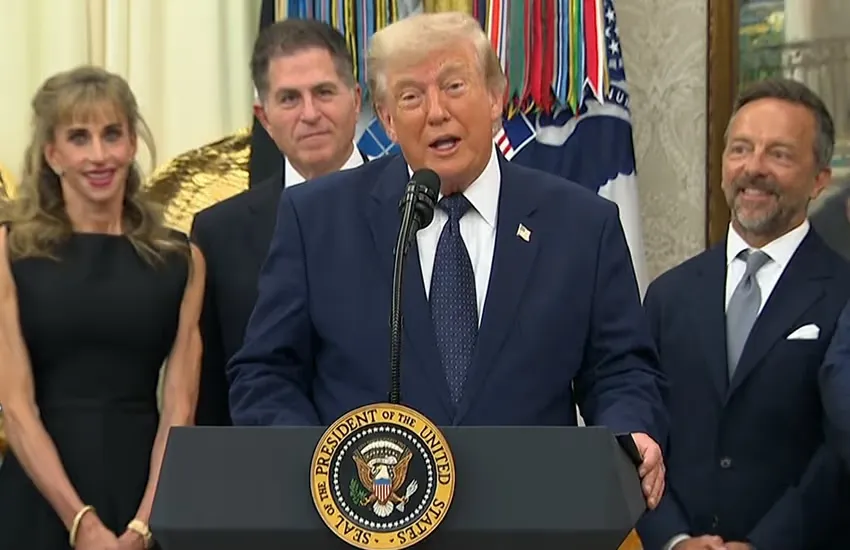
The United States has announced a 10 percent tariff on imports from Pakistan as part of a broader package of trade measures targeting 60 trading partners over concerns related to forced labour practices.
The new tariffs will take effect on Friday, replacing the temporary global tariff introduced earlier this year by US President Donald Trump. The move is part of Washington’s latest effort to tighten trade enforcement while encouraging trading partners to strengthen measures against forced labour.
Pakistan Among Countries Facing New US Tariffs
Under the new policy, Pakistan joins several countries that will face a 10 percent import tariff, including:
- India
- Canada
- Bangladesh
- Malaysia
- Mexico
- Indonesia
- Jordan
- Sri Lanka
- United Kingdom
Meanwhile, China and 37 other economies will be subject to a 12.5 percent tariff, reflecting a tougher US stance toward countries facing additional trade concerns.
The latest measures replace the temporary global tariff that expires on Friday.
US Cites Forced Labour Concerns
US Trade Representative Jamieson Greer said the tariffs are intended to encourage trading partners to strengthen efforts to eliminate forced labour from global supply chains.
According to Greer, the United States has consistently enforced restrictions on imports linked to forced labour and expects its trading partners to adopt similar standards.
The new tariff package follows a months-long investigation conducted by the Office of the United States Trade Representative (USTR) into labour practices and trade compliance.
Pakistan Responded During USTR Investigation
During the investigation, Pakistan submitted detailed responses to the USTR, addressing concerns raised by US authorities regarding forced labour.
Officials also provided an additional submission ahead of bilateral trade discussions held earlier this month in an effort to resolve outstanding issues and strengthen Pakistan-US trade relations.
Despite those efforts, Pakistan remains among the countries subject to the new tariff regime.
New Tariffs Designed to Withstand Legal Challenges
The latest trade measures are expected to be more legally durable than President Donald Trump’s earlier tariffs, many of which were struck down by the US Supreme Court in February.
The previous temporary 10 percent global tariff introduced after that ruling will expire on Friday, with the new country-specific measures taking its place.
Trade experts say the revised framework has been designed to better withstand future legal scrutiny while giving the US administration greater flexibility in trade negotiations.
Several Trading Partners Criticize US Move
The new tariffs have drawn criticism from several US trading partners.
Japan expressed regret over the decision, while Australia’s trade minister described the duties as unjustified and inconsistent with the countries’ free trade agreement.
Analysts say the latest tariffs reflect Washington’s increasingly protectionist trade policy and could lead to further disputes with key trading partners.
Some Products Exempt From New Duties
The new tariff measures will not apply to products already covered under existing sector-specific duties.
Exemptions include:
- Steel
- Aluminum
- Certain energy products
- Fertilizers
- Goods covered under the US-Mexico-Canada Agreement (USMCA)
These products will continue to be governed by their existing trade arrangements.
More Trade Measures Could Follow
The Trump administration is also investigating 16 economies over concerns related to excess industrial capacity.
Trade analysts believe those investigations could result in additional tariffs in the coming months, further reshaping global trade flows and increasing pressure on exporting countries.
The latest measures underscore Washington’s continued use of tariffs as both a trade enforcement tool and a negotiating strategy in international commerce.
What It Means for Pakistan
The new US tariff on Pakistani imports may increase costs for exporters shipping goods to the American market and could affect the competitiveness of some Pakistani products.
However, the long-term impact will depend on the composition of Pakistan’s exports, future bilateral trade negotiations, and whether Islamabad addresses the labour-related concerns highlighted by US authorities.
As one of Pakistan’s largest export destinations, the United States remains a critical market, making continued diplomatic and trade engagement important for maintaining export growth.
