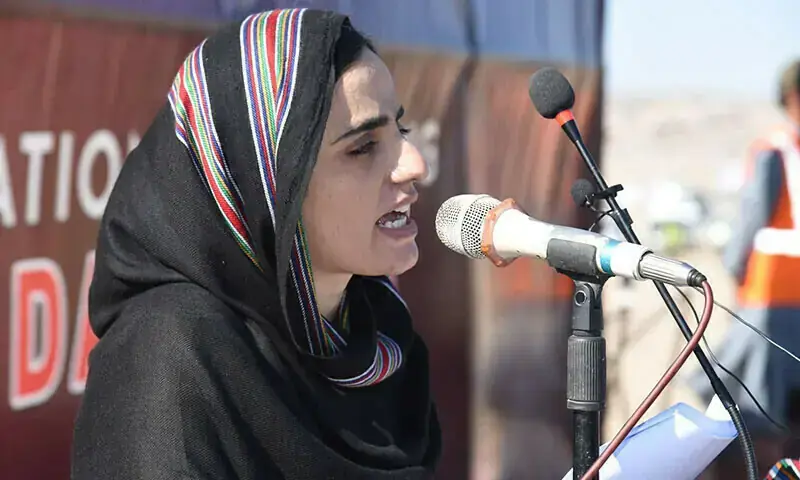
An anti-terrorism court in Quetta has convicted Mahrang Baloch, chief organiser of the Baloch Yakjehti Committee, in a high-profile case linked to the death of security personnel during violent protests in Gwadar in 2024.
The verdict was announced by the Anti-Terrorism Court, Quetta, after the completion of trial proceedings related to the killing of a Frontier Corps member who sustained fatal injuries during stone pelting by a mob.
Life sentences awarded after trial
ATC Quetta judge Muhammad Ali Mobeen handed down life imprisonment sentences to Mahrang Baloch and fellow accused Sibghatullah Shahji, according to defence counsel Israr Jattak. A detailed written judgement has not yet been released.
The prosecution argued that the accused were responsible for inciting and leading a violent protest that resulted in the death of the FC personnel. The defence has maintained that the charges were politically motivated and based on disputed facts.
Background of the Gwadar protests
The case stems from clashes that erupted on July 29, 2024, in Gwadar, where BYC supporters had gathered for the Baloch Rajee Muchi, or Baloch National Gathering. Confrontations between protesters and security forces occurred at multiple locations, including the Talar check post and Marine Drive.
Also read: The story of human rights activist Dr Mahrang Baloch
According to official accounts, three people were killed and at least ten others injured during the unrest. Authorities said violence escalated when protesters engaged in stone pelting and attacks on security checkpoints.
A day earlier, local administration in Mastung reported that participants of the march had attacked a Levies checkpoint and opened fire on Frontier Corps personnel following a breakdown in negotiations. Several security personnel and civilians were injured in those incidents.
Detention history and legal framework
Mahrang Baloch and Sibghatullah Shahji have remained in custody for nearly two years in connection with multiple cases. Mahrang was initially arrested in March 2024 and detained under the Balochistan Maintenance of Public Order ordinance. Her detention was extended multiple times before she was formally charged in other cases.
Subsequently, authorities registered cases against BYC leaders under the Anti-Terrorism Act and the Pakistan Penal Code, citing allegations of violence and public disorder.
While the Baloch Yakjehti Committee itself is not listed as a banned organisation by the National Counter Terrorism Authority, Mahrang Baloch’s name appears on the authority’s list of proscribed individuals.
Judicial review and constitutional challenges
Petitions seeking the release of Mahrang and two other activists were rejected by the Balochistan High Court in May 2025. Those rulings were later challenged before the Supreme Court of Pakistan, where proceedings remain pending.
Broader implications
The verdict highlights Pakistan’s strict application of anti-terrorism laws in cases involving protest-related violence and fatalities. It also highlights ongoing tensions in Balochistan, where political activism, public demonstrations and security operations frequently intersect.
Legal experts say the outcome will likely influence future protest management policies and the accountability framework applied to leaders of mass movements, particularly in conflict-sensitive regions.
