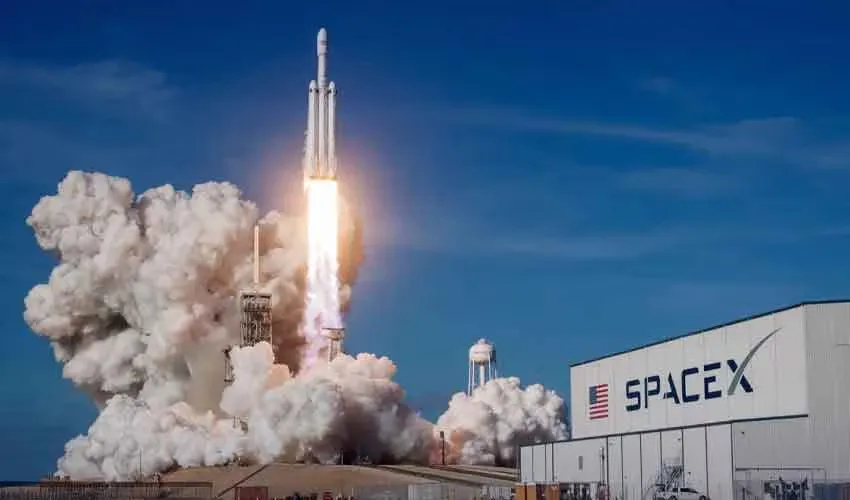
Shares of SpaceX, led by Elon Musk, surged sharply on Tuesday, briefly propelling the company’s market capitalization above that of Amazon in a dramatic post-IPO rally that captured global investor attention.
At its intraday peak, SpaceX’s valuation climbed to an estimated $2.9 trillion before easing back to close near $2.6 trillion. The move marked a fleeting but symbolic moment as the newly listed company momentarily ranked among the world’s most valuable corporations.
The rally followed a 20% gain during the stock’s first full trading session on Monday, fueled by strong retail and institutional demand and amplified by the launch of options trading in SpaceX shares.
Investor optimism drives momentum despite losses
Investor enthusiasm has remained strong despite SpaceX reporting a net loss of $4.9 billion on revenue of $18.7 billion last year. By contrast, Amazon posted a profit of $78 billion on $717 billion in revenue in 2025, underscoring the stark difference in current financial performance.
Market participants, however, appear to be prioritizing SpaceX’s long-term growth narrative over near-term profitability, particularly its expanding ambitions in artificial intelligence and high-margin digital infrastructure.
AI strategy takes center stage
A key catalyst for the rally was renewed focus on SpaceX’s artificial intelligence roadmap. The company has secured compute-leasing agreements with AI firms including Anthropic and Google, positioning itself as a major infrastructure provider for next-generation AI development.
Adding to the momentum, SpaceX confirmed plans to acquire AI coding startup Cursor in a share-based deal valued at roughly $60 billion, expected to close later this year. The acquisition is anticipated to open new enterprise and developer-focused revenue streams.
$1 trillion valuation jump in days
Since going public last week, SpaceX has added approximately $1 trillion to its market capitalization. The company’s initial public offering valued it at around $1.7 trillion and raised nearly $86 billion in fresh capital.
Only about 4% of total shares were made available for public trading, a limited float that analysts warned could result in extreme price swings. Those concerns appeared well-founded on Tuesday, as more than 300 million shares changed hands—over half of the publicly traded stock.
Volatility underscores high-stakes bet
The stock’s sharp movements continued in after-hours trading, with SpaceX once again briefly edging past Amazon’s market capitalization before retreating.
Earlier this year, Musk announced plans to restructure SpaceX’s AI operations and deepen integration with his artificial intelligence venture xAI, reinforcing investor expectations that SpaceX could eventually build a multitrillion-dollar AI-driven business.
Despite ongoing volatility and mounting scrutiny over its financial losses, SpaceX has quickly become one of Wall Street’s most closely watched stocks, as markets weigh its ambitious AI strategy against the realities of execution and profitability.
