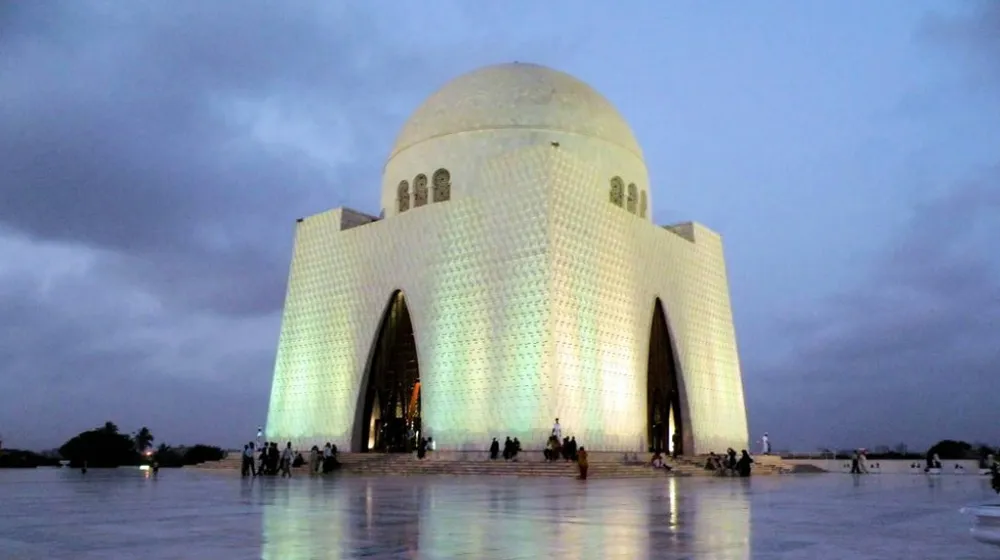
The Senate Standing Committee on National Heritage and Culture has raised serious concerns over deteriorating conditions at the mausoleum of Muhammad Ali Jinnah in Karachi, citing weak security, poor maintenance, and persistent cleanliness issues at one of Pakistan’s most important national monuments.
The concerns were discussed during a committee meeting held at Parliament House, chaired by Hidayatullah Khan. Members noted that the overall condition of the mausoleum premises does not reflect its national significance and warned that neglect could further damage its public image and security environment.
Lawmakers highlighted alarming issues, including the presence of drug sellers within the surrounding areas, theft of boundary fencing, and illegal encroachments in the form of unauthorized shops. These developments, members said, pose risks not only to visitors but also to the dignity of the mausoleum.
Senator Syed Waqar Mehdi drew attention to visible garbage inside the mausoleum complex and stressed the need for immediate coordination with Karachi’s waste management authorities to restore cleanliness. He said inadequate sanitation undermines visitor experience and reflects poorly on heritage management.
The committee also directed concerned departments to involve the inspector general of police and provincial law enforcement officials to strengthen security and improve law and order at the site. Members agreed that the mausoleum requires a more coordinated security framework given its symbolic and historical importance.
In a move aimed at improving governance, lawmakers recommended including Karachi-based representatives on the board overseeing the mausoleum’s affairs. The committee also decided to form a dedicated subcommittee to monitor maintenance, security, and development work at the site on a regular basis.
Officials briefed the committee that the Quaid-i-Azam Mazar Management Board currently comprises five officers in BS-17 and above, supported by 107 staff members from BS-01 to BS-16. The estimated budget for the financial year 2025–26 has been set at Rs. 353.921 million.
To ensure sustainable upkeep, the committee proposed that all four provinces contribute Rs50 million each for the mausoleum’s maintenance and visitor facilities, while Azad Jammu and Kashmir and Gilgit-Baltistan should provide financial support according to their capacity.
The meeting was also informed that renovation work at Awan-i-Nawadarat, the museum located within the mausoleum complex, is in progress. Additional funding for the project is expected under the Public Sector Development Programme for 2026–27, as authorities aim to preserve the site’s historical value and improve visitor engagement.
About Tamoor Ahmed

Tamoor Ahmad has been covering politics since 2022.
