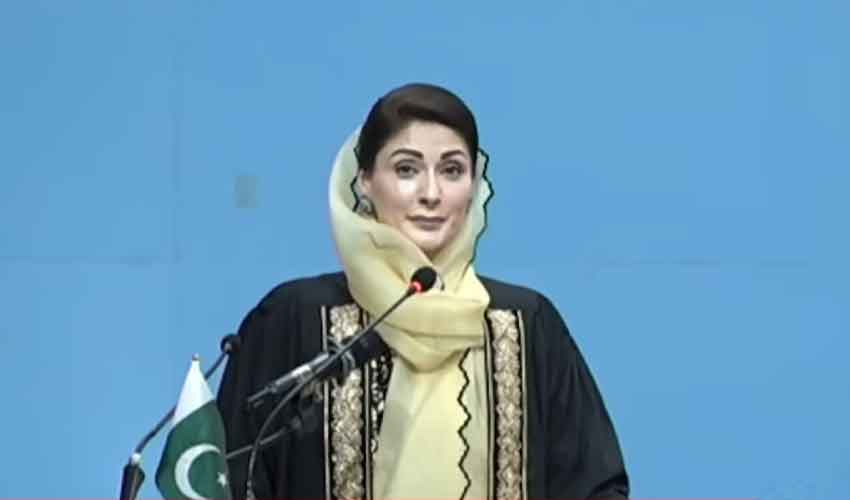
Punjab Chief Minister Maryam Nawaz Sharif has announced the introduction of a new system to combat online harassment and digital bullying, declaring zero tolerance for any form of harassment against women in the province.
Speaking at a ceremony and convocation at Lahore College for Women University, the chief minister said Punjab was committed to becoming a safe and dignified place for women. She said she would not rest until those involved in harassing women were arrested and brought to justice.
“I want no one to look at women with a dirty eye in Punjab,” she said, adding that harassment of women could not be tolerated under any circumstances.
New system to tackle online harassment
Maryam Nawaz announced that a dedicated system was being developed to address online harassment and digital bullying. She said the identities and personal information of complainants would be kept fully confidential to encourage women to report abuse without fear.
She also called for the installation of panic buttons for women in public spaces and the establishment of virtual protection centres to provide immediate support and assistance.
The chief minister urged parents to listen carefully when girls speak about harassment and to support them instead of ignoring or dismissing their concerns.
Women’s leadership in Punjab
Highlighting the growing role of women in governance, Maryam Nawaz said that women were now serving in key administrative positions across Punjab. She noted that, for the first time, women had been appointed as divisional commissioners, deputy commissioners, and district police officers.
She added that hardworking women were also part of the provincial cabinet and said the country could not be stopped from progressing if women played their full role in society.
Reflecting on her personal connection with Lahore College for Women University, she said her mother wanted her to become a doctor, but she never wished to pursue medicine. Addressing students, she said earning a degree was only the beginning of their journey.
Governance and development priorities
Maryam Nawaz said she was focused on improving infrastructure, law and order, and the economy in Punjab. While describing the current law and order situation as better, she said meaningful reforms required time.
She said 100,000 houses had been completed under the Apni Chhat Apna Ghar programme, while another 100,000 students had received merit-based scholarships.
The chief minister said she did not want weapons or petrol bombs in the hands of children. She announced that 100,000 more electric bikes would be distributed to students next year. She also unveiled plans for a new sports gymnasium, an artificial intelligence centre, and additional computer labs.
She added that a school meal programme had helped increase enrolment, ensuring children from poor families could study alongside those from privileged backgrounds.
National unity and foreign policy remarks
Maryam Nawaz said Pakistan belonged to all citizens and not to any single political party. She urged people to reject voices that incited hatred against the country.
“When the nation was united, we won the war against India,” she said.
She claimed Pakistan was now playing a diplomatic role between the United States and Iran, saying dialogue between the two countries had taken place through Pakistan. She added that efforts by Shehbaz Sharif helped prevent fuel shortages in the country despite regional tensions.
Personal struggle and political journey
Recalling difficult moments in her political life, Maryam Nawaz said she stood by her father during the Panama Papers case and faced punishment for crimes she did not commit.
She said her time in jail was extremely difficult, but she never felt fear or complained. “This journey was not easy for me,” she said, adding that competing against men and winning was a major achievement in a country where no woman had previously served as chief minister.
She concluded by saying that responsible political and military leadership was essential for national progress and stability.
