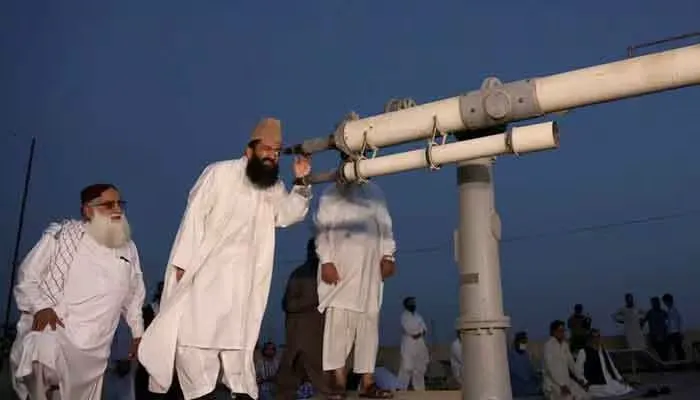
The Pakistan Space and Upper Atmosphere Research Commission has released an astronomical forecast regarding the expected sighting of the Zilhajj 1447 AH moon.
Based on calculations, Eid-ul-Azha is likely to fall on Wednesday, May 27, 2026, subject to official moon sighting confirmation.
The forecast provides early guidance on the Islamic calendar timeline, helping authorities, businesses, and the public plan for the upcoming religious holiday season.
New moon expected on May 17 with limited visibility window
According to the forecast issued by the Pakistan Space and Upper Atmosphere Research Commission, the new moon is expected to be born at around 1:11 am on May 17, 2026.
By the evening of the same day, the moon’s age is estimated to be around 18 hours and 30 minutes, with another calculation placing it at approximately 18 hours and 3 minutes. At this early stage, visibility remains a key factor in determining whether the crescent can be observed with the naked eye.
The agency noted that in coastal regions there may be a gap of nearly 60 minutes between sunset and moonset. This window is considered important for possible moon sighting, provided weather conditions remain clear.
Zilhajj start and Eid-ul-Azha timeline
If atmospheric conditions allow successful sighting, the first day of Zilhajj 1447 AH is expected to fall on Monday, May 18, 2026. This would set the stage for Eid-ul-Azha on the tenth of Zilhajj, likely falling on Wednesday, May 27, 2026.
These dates are based on astronomical models and are not final. They serve as a predictive calendar used for early planning across administrative, travel, and commercial sectors.
In Pakistan, such forecasts are often used by airlines, livestock markets, and event planners to prepare for increased demand ahead of Eid holidays.
Role of Ruet-e-Hilal Committee in final decision
The agency has clarified that the forecast is based purely on scientific and astronomical data. The final decision on moon sighting will be made by the Central Ruet-e-Hilal Committee after reviewing verified testimonies from across the country.
This system combines scientific prediction with traditional observation methods, which remains a standard practice in Pakistan for determining Islamic months.
Religious scholars and committee members consider multiple reports before officially announcing the start of Zilhajj and confirming Eid dates.
Planning impact for public and markets
Early projections of Eid-ul-Azha dates often influence preparations in livestock markets across cities like Karachi, Lahore, and Faisalabad. Traders begin adjusting supply chains, while consumers plan animal purchases and travel schedules.
Transport and hospitality sectors also typically adjust pricing and bookings in advance due to expected holiday demand.
While final confirmation depends on moon sighting, the SUPARCO forecast provides an early indication that helps both public and private sectors prepare for one of the most significant religious events in Pakistan’s calendar.
About Tamoor Ahmed

Tamoor Ahmad has been covering politics since 2022.
