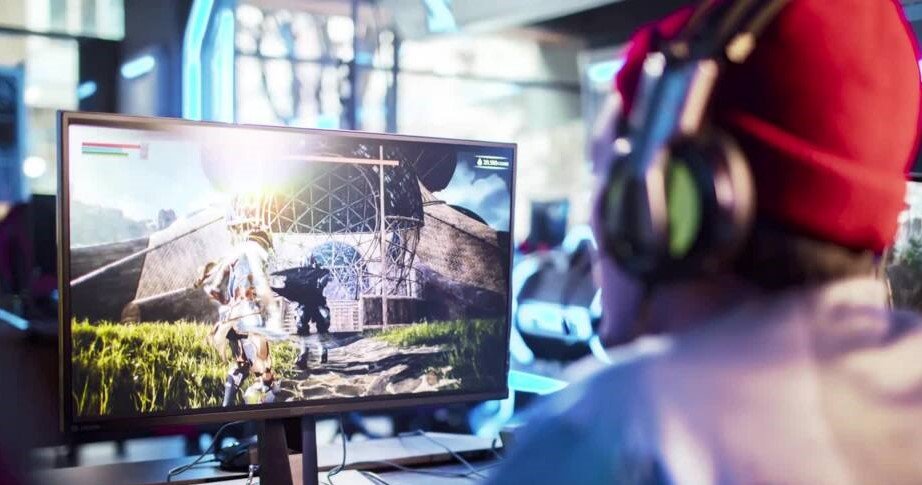
The gaming industry will generate more than $200 million in revenue in 2023, according to Muhammad Zohaib Khan, Chairman of the Pakistan Software Houses Association (P@SHA), and will grow at a pace of 9.77% each year from 2023 to 2027. He does believe that Pakistan’s gaming industry is still falling short of its potential.
“Separately, mobile games brought in $171.30 million in 2022. According to the most recent figures, $16.13 million was made through download games and $21.34 million from online games,” according to the P@SHA director.
According to the CEO of Si Global, Noman Ahmed, “Despite the gaming industry being highly profitable, Pakistan is not benefiting from it as much as it could. It’s essential to invest in the future, and the government of Pakistan’s support for the development of technology is encouraging.
“Establishing training centres for aspirant game developers is one initiative that could help Pakistan’s gaming industry,” he said. “Although the gaming industry’s global volume is over $500 billion, Pakistan’s share is limited to $50 million, which could be significantly increased with initiatives like establishing a local gaming and animation industry.”
A robust ecosystem involving collaboration with tech partners, industry, investors, industry groups, and the government, according to Kapeel Kumar, an expert in startup investing, would revolutionize research and innovation in gaming, VFX, computer vision, and AI with this investment.
According to Kumar, the goal is to promote domestic product creation while fostering the expansion of tech entrepreneurship in the nation, emphasizing the youth. He thinks that by working with business partners, the model may be developed to create global deep tech, animation, and game providers of the highest calibre.
The P@SHA chairman cited Statista Market Forecast and the International Trade Center (ITC) and stated that Pakistan has the potential to become the next regional hub for game development because 64% of its population is under the age of 25, and Pakistan can outperform its yearly projections through targeted skill development.
However, he reiterated his position that the federal government, SBP, and FBR must adjust their policies to reflect global best practices for managing foreign exchange and permit the IT & ITeS sector to freely manage their hard-earned foreign exchange to fund their enterprises, reinvest in their entities, and invest in marketing, sales, and networking while also helping to bolster Pakistan’s foreign exchange reserves.
“We can easily add 3000 gaming developers to the human resource (HR) pool every year,” Khan emphasized, “and in that way, Pakistan can comfortably attain a 30% year-on-year growth in the gaming industry’s foreign remittances, provided we can invest in HR & skills development for aspiring game developers.” Over 8,500 game developers are employed by Pakistan’s gaming business, which has three main sub-sectors: gaming products, middleware, and gaming services.
Collaboration between business and government would guarantee that the model is based on a solid framework, enabling the development of top-tier deep tech, animation, and game providers. In conclusion, investing in game developer training facilities is a crucial first step in helping Pakistan realize its full potential in the gaming and tech sectors, ultimately resulting in economic progress and prosperity.
Noteworthy organizations that supported and took part in the California-based Game Developers Conference 2023 included the Pakistan Trade Development Authority, the Ministry of IT & Telecom, USAID, and the Pakistani Consulate in Los Angeles. Influential members of the global gaming community attended the Pakistan Pavilion due to its strong representation of Pakistan’s potential for game development.
Also read: How Super Mario became a popular game?
