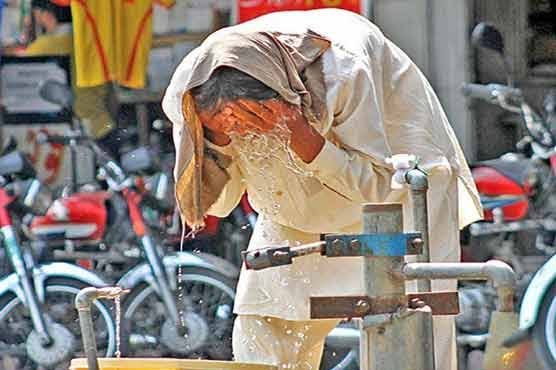
KARACHI: Pakistan Meteorological Department (PMD) authorities, Shaheed Benazirabad in Sindh was the country’s hottest spot on Monday with a mercury reading of 49.9 degrees Celsius amid hours-long power outages across the country, The Asian Mirror reported.
On Sunday, “other cities of interior Sindh also witnessed exceptionally hot and dry weather with 49°C in Jacobabad, 48°C in Mohenjodaro, and 48.5°C in Mohenjodaro” due to a strong heatwave in Sindh, according to a Met department official.
On the other hand, Karachi recorded a temperature of 39° on Sunday.
As temperatures soared into the triple digits, cities around the country experienced surprise power outages for hours at a time. Due to the high cost of fuel, the inhabitants stated that they could not use generators for home power generation.
“Nawabshah is like hell right now, with no electricity for the majority of the day and night. Nawabshah’s daytime high was 50 degrees, and the city’s nighttime low was 45 degrees, according to Balochistani journalist Najaf Raza.
According to Pakistan Meteorological Department authorities, Rahim Yar Khan was the warmest place in Punjab with a maximum temperature of 47.5°C, while Bahawalpur, Dera Ghazi Khan, Multan, Sargodha and Jehlum also recorded temperatures over 45°C.
Dera Ismail Khan remained the warmest area with 45°C in Khyber Pakhtunkhwa while Peshawar and Bannu each had 42°C in Khyber Pakhtunkhwa, with Sibbi in Balochistan having the highest temperature at 47% and Turbat at 43%.
According to PMD officials, Muzaffarabad in Azad Kashmir was the hottest spot, with a high of 41°C. They added that a high of 41°C was recorded in Islamabad on Sunday as well.
Most cities in Sindh are expected to see temperatures rise to or exceed 40 degrees Celsius, with the exception of Nawabshah, Jacobabad, and Larkana, which are expected to see temperatures between 45 and 47 degrees Celsius. The PMD officials also predicted similar weather conditions in Punjab and Balochistan’s plains.
They predicted a dust storm, followed by rain, across upper Sindh, south Punjab, and parts of Balochistan due to a westerly meteorological system.
