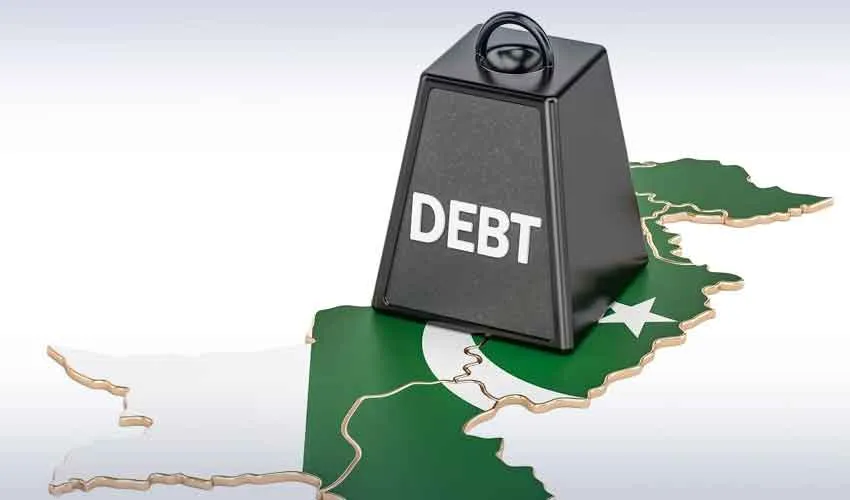
Pakistan’s national debt has climbed steeply over the past three years, reaching Rs 81,400 billion by December 2025, according to official documents.
The surge shwos mounting fiscal challenges for Pakistan, particularly as rising interest payments consume a large share of government resources and deepen reliance on internal borrowing.
Sharp rise in debt over three years
Official figures show a rapid expansion in the country’s debt stock within a relatively short period. In June 2022, Pakistan’s total public debt stood at Rs 49,200 billion. This figure rose to Rs 62,900 billion by June 2023 and climbed further to Rs 71,000 billion by June 2024.
By December 2025, the combined internal and external debt had crossed Rs 81,400 billion, reflecting an overall increase of more than Rs 32,000 billion in just three years. The data highlights the scale of borrowing undertaken to manage fiscal deficits, debt servicing, and economic stabilization needs.
Despite the sharp increase, official records indicate a slight easing in the pace of debt accumulation in the latter half of 2025. Between June and December 2025, the growth rate of debt slowed from 12.9 percent to 1.1 percent, suggesting a modest stabilization, though the overall debt level remains historically high.
Interest payments strain the budget
Alongside the rising debt stock, Pakistan continues to face a heavy interest payment burden that is straining the federal budget. During the last fiscal year, the government paid Rs 8,887 billion in interest on its loans alone, significantly limiting fiscal space for development spending and social welfare programs.
According to data released by the Ministry of Finance, interest payments amounting to Rs 3,563 billion were made between July and December 2025. An even larger outflow is expected in the second half of the fiscal year, from January to June 2026, raising concerns about increased pressure on government finances.
Growing dependence on internal borrowing
Economists note that a rising share of Pakistan’s debt is domestic, which has led to higher interest costs due to elevated policy rates. While internal borrowing reduces exposure to foreign exchange risk, it also intensifies fiscal stress as interest payments remain high and crowd out other expenditures.
The latest figures highlight the urgency of fiscal reforms, revenue enhancement, and expenditure rationalization to place public finances on a more sustainable path. Without meaningful structural changes, analysts warn that debt servicing costs could continue to dominate the budget, limiting economic growth and development prospects.
