The joint military strikes launched by the United States and Israel against Iran on Saturday have pushed the Middle East into a new phase of confrontation, sending shockwaves through global financial markets.
US President Donald Trump said the operation was aimed at neutralising a long-standing security threat and opening a path for Iranians to challenge their leadership.
Tehran responded swiftly, firing missiles toward Israel and heightening fears of a broader regional escalation.
As tensions rise, investors worldwide are bracing for volatility. Here is how the conflict could reshape global markets.
Oil Prices in the Spotlight
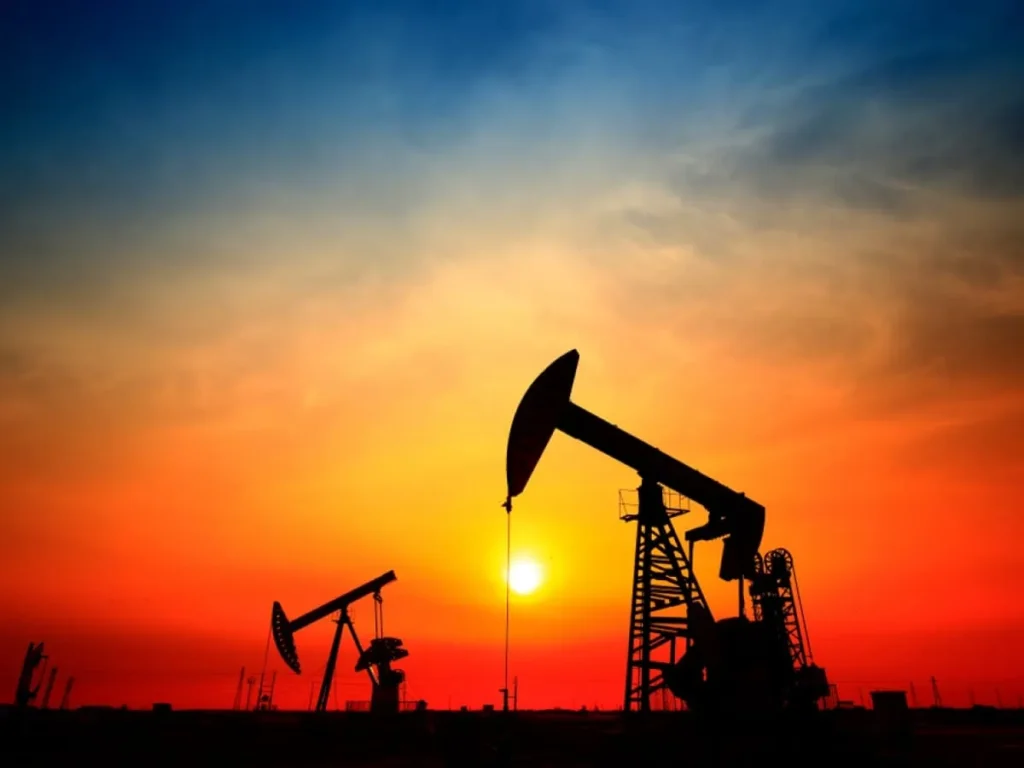
Oil markets are the most immediate and sensitive barometer of Middle East instability.
Iran is a major energy producer and sits astride the Strait of Hormuz, a critical chokepoint through which roughly 20 percent of the world’s oil supply passes. Any disruption in this corridor could significantly tighten global supply.
Brent crude was trading near $73 per barrel on Friday, already up about 20 percent this year. Several oil majors and trading houses have reportedly suspended shipments through the Strait following the strikes.
William Jackson, chief emerging markets economist at Capital Economics, said that even if hostilities remain contained, Brent prices could rise toward $80 per barrel, similar to levels seen during last year’s Iran-Israel clashes.
A prolonged conflict affecting supply, however, could push prices close to $100, potentially adding 0.6 to 0.7 percentage points to global inflation.
Volatility Spreads Across Markets
The renewed conflict is expected to amplify volatility across global asset classes already unsettled by US tariffs and a tech-sector sell-off.
The VIX volatility index has risen by more than 30 percent this year, while implied volatility in US government bonds is up around 15 percent. Analysts warn that currency markets are unlikely to escape the turbulence.
The US dollar weakened briefly during the June conflict but rebounded quickly. Analysts say the currency’s trajectory this time will depend on how long the conflict lasts and whether oil supplies are disrupted.
In a prolonged scenario, the dollar could strengthen against most currencies, except traditional safe havens such as the Japanese yen and Swiss franc, as the US benefits from its status as a net energy exporter.
Israel’s shekel is also under pressure. It fell sharply during previous flare-ups with Iran but recovered quickly. However, analysts at JPMorgan caution that a sustained confrontation — particularly involving Iran’s regional allies — could result in a more lasting decline.
Safe Havens Gain Appeal
As risk appetite weakens, investors are expected to rotate toward traditional safe-haven assets.
The Swiss franc, already up around 3 percent this year against the dollar, could face further upward pressure, complicating policy decisions for the Swiss National Bank. Gold, which has surged 22 percent in 2026, may attract fresh inflows, alongside silver.
US Treasuries are also likely to benefit, with yields already trending lower in recent weeks.
One notable exception is Bitcoin. Once viewed as a hedge in times of crisis, the cryptocurrency fell 2 percent on Saturday and has lost more than 25 percent of its value over the past two months.
Middle East Markets Under Watch
Regional stock markets will offer early signals of investor sentiment. Exchanges in Saudi Arabia, Qatar, and other Gulf states reopened under a cloud of uncertainty.
Market analysts warn that if hostilities persist, Gulf equities could decline by 3 to 5 percent, despite their historical correlation with higher oil prices. Saudi Arabia’s benchmark index had already slipped 1.3 percent over the past week, while Dubai’s main index has posted losses over the last two weeks.
Airlines and Defence Stocks React
The aviation sector has come under immediate pressure, with airlines cancelling or rerouting flights across the Middle East due to airspace restrictions. Prolonged disruptions could weigh further on airline stocks.
Conversely, defence stocks — particularly in Europe — may see renewed demand. Shares of major weapons manufacturers are already up around 10 percent this year, and escalating geopolitical risk could extend those gains.
As investors assess the unfolding situation, markets remain highly sensitive to any signs of escalation or diplomatic breakthrough. With energy security, inflation, and regional stability all at stake, the conflict’s economic impact could prove far-reaching well beyond the Middle East.
