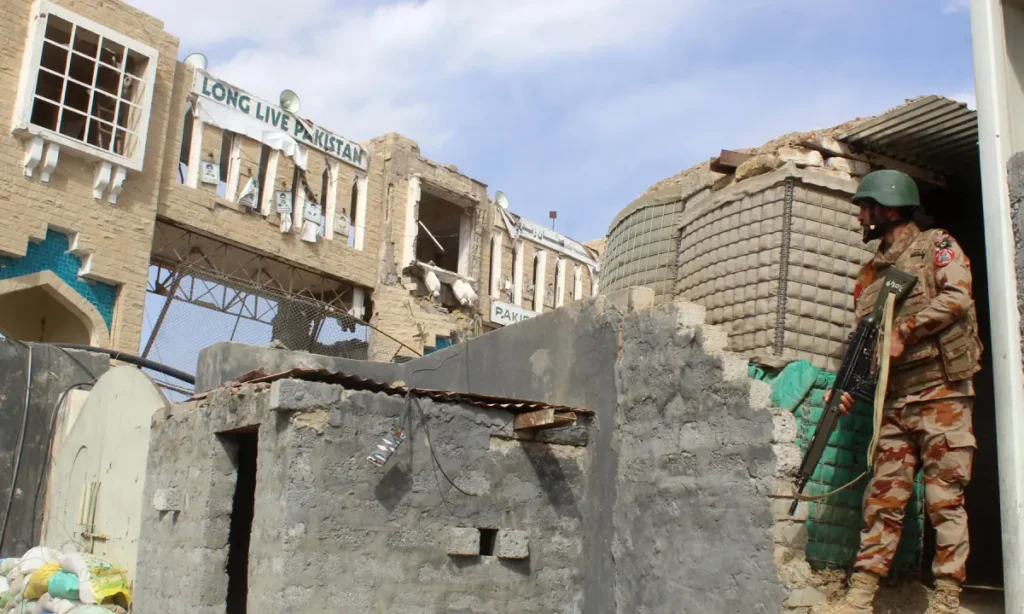
Tensions between Pakistan and Afghanistan escalated sharply after Islamabad announced a new military campaign titled “Ghazab Lil-Haq”, a move that has sparked intense debate across social media, political circles, and security forums.
According to Pakistani officials, the operation was launched in response to what they described as unprovoked cross-border aggression originating from Afghan territory.
While operational details remain limited, authorities called the action a defensive measure aimed at protecting national security and territorial integrity.
Meaning Behind the Name “Ghazab Lil-Haq”
Security analysts say the name of the operation carries deep linguistic and ideological symbolism, going beyond a conventional military label. The phrase “Ghazab Lil-Haq” is rooted in Arabic and can be divided into three key components, each carrying significant meaning.
The word “Ghazab” refers to intense anger or a powerful reaction. In classical Arabic and Islamic usage, it does not merely imply uncontrolled rage but often denotes a forceful, principled response when moral or legal boundaries are violated.
Also read: Internet banned across Afghanistan on Taliban’s orders
The term “Lil” is derived from the Arabic particles “lam” and “al”, meaning “for” or “in the cause of”. Meanwhile, “haq” translates to truth, justice, or rightful entitlement, a concept frequently associated with moral legitimacy.
Together, “Ghazab Lil-Haq” can be interpreted as “anger in the cause of truth” or “a reaction for the sake of justice”. Supporters argue that the name is intended to frame the military operation as a defensive and morally justified response, rather than an act of aggression.
Symbolism in Military Naming
Experts note that the concept of ghazab in Islamic tradition is not inherently negative. It is often associated with measured strength and principled resistance when justice is threatened. By invoking this terminology, the operation’s name appears designed to project resolve while emphasizing moral restraint.
Pakistan’s military has a long-standing tradition of symbolic operation names that combine strategic messaging with ideological meaning.
Past campaigns have included Zarb-e-Azb, meaning “decisive strike”, symbolising a final blow against militancy; Radd-ul-Fasaad, translated as “elimination of disorder”, highlighting efforts to restore stability; and Bunyan al-Marsoos, a Quranic phrase meaning “a solid wall”, representing unity and collective strength.
Such names are carefully chosen to communicate intent, reinforce legitimacy, and shape public perception both domestically and internationally.
Regional Implications
The launch of the operation coincides with the anniversary of the 2019 regional conflict.
Analysts say the continued use of Arabic and Islamic terminology serves both strategic and symbolic purposes, presenting military action as a defense of justice, sovereignty, and national honor.
As developments unfold, observers warn that escalating rhetoric and military responses could further strain Pakistan-Afghanistan relations, with broader implications for regional stability and border security.
