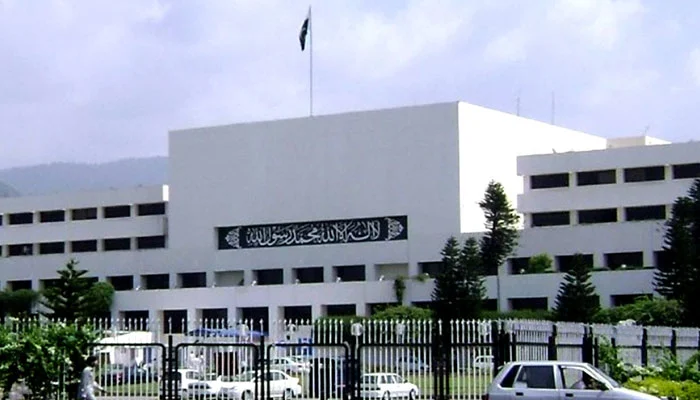
The Committee on Civil Service Reforms has proposed wide-ranging changes aimed at modernizing Pakistan’s civil bureaucracy and transforming it into a more efficient, merit-based, and performance-driven system.
Chaired by Minister for Planning, Development and Special Initiatives Ahsan Iqbal, the committee reviewed human resource models from the Pakistan Army, the corporate sector, and international best practices. It concluded that the existing civil service framework is outdated and no longer capable of meeting the demands of modern governance.
Army-Style Merit-Based Promotion System Recommended
The committee closely examined the Pakistan Army’s promotion and evaluation structure, describing it as highly competitive, structured, and strictly merit-based.
Also read: Senior bureaucrat reportedly spends Rs. 25 crore on daughter’s wedding
Unlike the civil service, where promotions are often considered routine, the Army enforces performance ceilings and selective advancement. Inspired by this model, the committee recommended:
-
Objective assessments by promotion boards
-
Direct interaction between promotion boards and reporting officers
-
Elimination of automatic career progression
These steps aim to ensure that only high-performing officers move up the ranks.
New Performance Evaluation and Rating System
To strengthen accountability, the committee proposed introducing a three-tier performance rating system to replace the existing evaluation methods.
Key recommendations include:
-
Transparent performance scoring
-
Identification of consistently underperforming officers
-
Clear linkage between evaluation results and career progression
This system would allow departments to better distinguish between high performers and those failing to meet standards.
Exam-Based Selection for Senior Training Programs
The committee also proposed that senior management courses — including:
-
Mid-Career Management Course (MCMC)
-
Senior Management Course (SMC)
-
National Management Course (NMC)
should be accessible only through competitive examinations.
Officers who fail to qualify after three attempts could be considered for early retirement, ensuring that senior leadership roles are filled by capable and motivated officers.
Training Reforms with Focus on Specialized Skills
Training was identified as a major weakness in the current system. The committee recommended:
-
Longer and more specialized training programs
-
At least 50% of training focused on domain-specific skills
-
Greater emphasis on technical and sector-specific expertise
This approach is intended to produce officers better equipped to handle complex policy, regulatory, and service delivery challenges.
Corporate-Style KPIs and 360-Degree Evaluations
Drawing from private-sector practices, the committee advised linking promotions and postings to measurable Key Performance Indicators (KPIs).
Additional proposals include:
-
360-degree performance evaluations involving peers and subordinates
-
Transparent annual performance reviews
-
Formal succession planning for leadership positions
These measures aim to promote accountability, transparency, and leadership continuity.
Phased Implementation Expected
The proposed reforms seek to build a professional, competitive, and results-orientated civil service capable of delivering improved governance and public services.
According to officials, the government is expected to review the recommendations and implement the reforms in phases, allowing institutions time to adapt to the new performance-based system.
If approved, the changes could mark one of the most significant overhauls of Pakistan’s civil service structure in decades, shifting the focus from seniority to merit, skills, and measurable outcomes.
