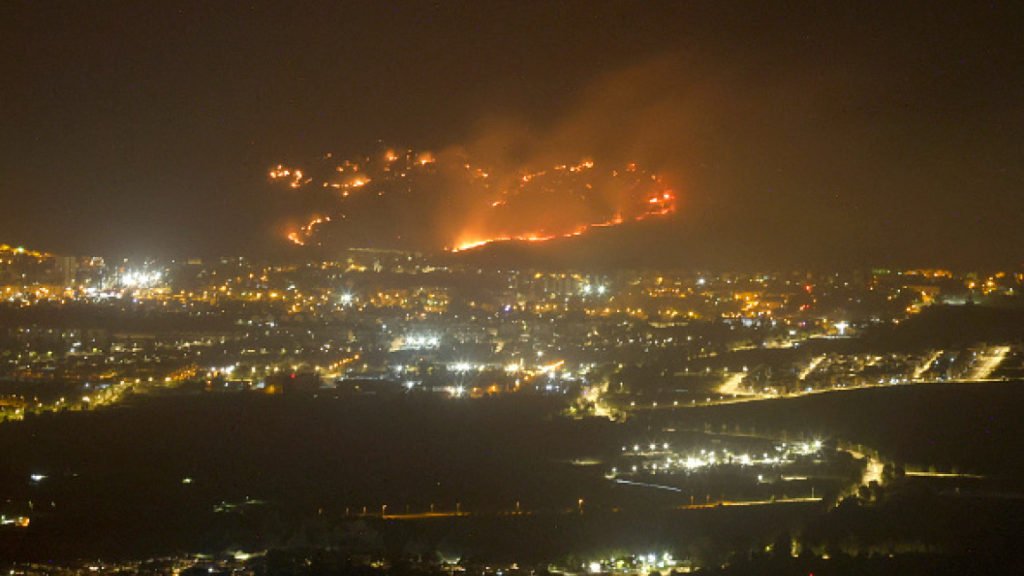
Hezbollah, the Iran-backed Lebanese militant group, launched a significant rocket barrage targeting Israel in retaliation for overnight airstrikes, intensifying the ongoing conflict between the two adversaries.
Hezbollah’s Retaliatory Strike:
On Thursday, Hezbollah claimed responsibility for firing “more than 60” Katyusha rockets at various Israeli military positions, including those in the Israeli-annexed Golan Heights.
The attack was framed as a response to Israeli airstrikes in Lebanon’s Bekaa region, where Hezbollah maintains influence.
Israeli Airstrikes in Lebanon:
Reports from Lebanese state media indicated that Israel conducted overnight airstrikes in eastern Lebanon, targeting areas where Hezbollah holds sway.
The strikes, which reportedly targeted the Baalbek area, resulted in injuries to civilians and caused fires.
One of the strikes allegedly hit a Hezbollah military camp, as confirmed by a source close to the militant group.
Israeli Response:
Confirming the airstrikes, an Israeli army spokesman stated that the operation targeted a “terror target related to Hezbollah’s precision missile project” deep within Lebanese territory.
“I can confirm that an airstrike was indeed conducted deep in Lebanon against a terror target related to Hezbollah’s precision missile project”.
Hezbollah launched some 40 rockets in 2 barrages at the occupied Golan Heights, a short while ago, making several impacts as seen on the footage. pic.twitter.com/KK8ysA9c6h
— Arya – آریا 🇮🇷 (@AryJeay) May 16, 2024
The airstrikes were part of Israel’s ongoing efforts to counter Hezbollah’s military capabilities, particularly its missile arsenal.
Escalating Conflict:
The recent escalation follows a pattern of near-daily exchanges of fire between Israel and Hezbollah since October 7, when Hamas, a Hezbollah ally, launched an attack on southern Israel, igniting the ongoing conflict in Gaza.
The cross-border skirmishes have resulted in casualties on both sides, with hundreds reported dead in Lebanon, including militants and civilians.
Hezbollah’s Deep Incursion into Israel:
In a notable escalation, Hezbollah claimed to have launched drones targeting a military base near the Israeli city of Tiberias.
This incursion marked one of Hezbollah’s deepest penetrations into Israeli territory since the conflict began.
The attack came in response to Israel’s killing of one of Hezbollah’s field commanders in southern Lebanon.
Regional Implications:
The conflict between Israel and Hezbollah holds significant implications for regional stability, particularly amid heightened tensions in the Middle East.
Both sides remain entrenched in their positions, with neither showing signs of backing down, raising concerns about further escalation and the potential for broader regional conflict.
