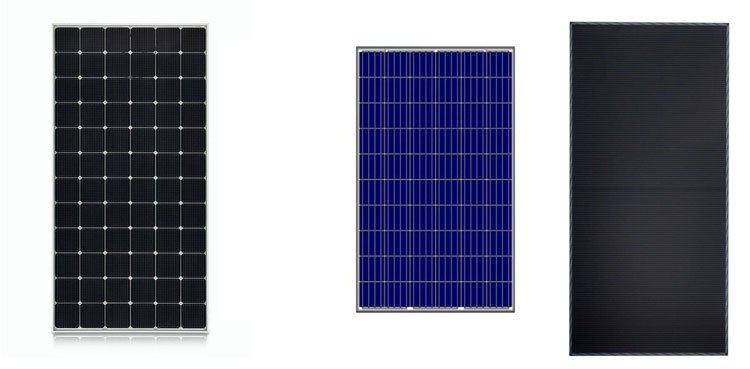
We present you three different types of solar panels. In response to high electricity bills and persistent energy shortages, an increasing number of Pakistanis are turning to solar power.
With the nation’s abundant solar potential estimated at 40 gigawatts (GW) by the World Bank, the government has initiated measures to capitalize on this renewable energy source.
Also read: How to apply for free solar panels in Punjab
Favorable policies and incentives are being introduced to foster the development of solar energy, propelling the shift towards sustainable power generation.
Exploring Solar Panel Varieties:
In the pursuit of solar energy adoption, understanding the diverse types of solar panels is imperative.
Three primary categories dominate the market: monocrystalline, polycrystalline, and thin-film panels.
Each type possesses unique characteristics that cater to varying needs and preferences.
1. Monocrystalline Solar Panels:
Renowned for their unparalleled efficiency, monocrystalline solar panels boast conversion rates of up to 20%.
Made from a single pure silicon crystal, these panels exhibit a sleek black appearance.
Ideal for both residential and commercial settings where space constraints and high efficiency are paramount, monocrystalline panels represent the pinnacle of solar technology.
However, their superior performance comes at a premium price.
2. Polycrystalline Solar Panels:
Polycrystalline panels offer a compelling blend of efficiency and cost-effectiveness.
With efficiency rates ranging from 13% to 16%, these panels are manufactured from melted raw silicon, resulting in a distinctive bluish hue.
Popular among residential and commercial consumers seeking a balance between performance and affordability, polycrystalline panels continue to dominate the market.
3. Thin-Film Solar Panels:
While less efficient compared to their crystalline counterparts, thin-film solar present a cost-effective and flexible alternative.
Boasting efficiency rates of approximately 7% to 14%, these lightweight and portable panels are fabricated by depositing photovoltaic material onto a substrate.
Ideal for small-scale applications such as camping and remote power generation, thin-film panels offer unparalleled versatility.
Choosing the Perfect Solar Panel:
Selecting the right solar panel entails a careful evaluation of individual requirements, budget constraints, and aesthetic preferences.
- Monocrystalline: highest efficiency (up to 20%), most expensive, black appearance
- Polycrystalline: moderate efficiency (13-16%), moderately priced, bluish hue
- Thin-film: lowest efficiency (7-14%), cheapest, portable and flexible
Maintenance and Care:
Regular maintenance is essential for preserving the efficiency and longevity of these panels.
Satisfying solar panel cleaning
pic.twitter.com/wC3Ejz2k8a— Science girl (@gunsnrosesgirl3) May 4, 2024
Routine cleaning to remove dirt and debris, coupled with thorough inspections for damage, is paramount.
Additionally, preventative measures such as tree trimming and professional maintenance checks contribute to sustaining optimal panel performance over time.
