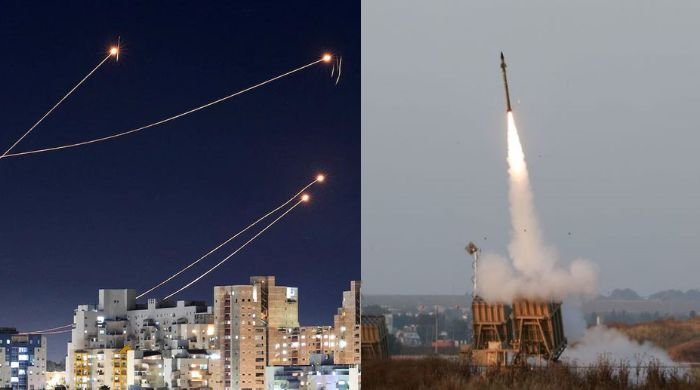
What is Iron Dome and how does it work? Israel’s Iron Dome missile defense system has been instrumental in safeguarding the country from rockets launched by Hamas militants based in Gaza.
The Israeli military credits Iron Dome with significantly reducing potential casualties during the ongoing conflict.
What is Iron Dome and How Does It work?
Iron Dome is engineered to intercept incoming short-range projectiles, operating effectively in all weather conditions.
The system employs radar technology to track incoming rockets, distinguishing between those destined for populated areas and those that are not.
Interceptor missiles are selectively launched at rockets identified as threats to populated regions.
Israel’s Iron Dome infrastructure comprises batteries strategically positioned across the country, each equipped with three to four launchers capable of firing up to 20 interceptor missiles. These batteries include both fixed and mobile units.
Origins of Iron Dome
The development of Iron Dome was spurred by the 2006 conflict between Israel and Hezbollah, during which Hezbollah militants fired thousands of rockets into Israeli territory, causing significant damage and casualties.
In response, Israel committed to creating a new missile defense system to protect against such threats.
Combat Debut and Development
Iron Dome saw its first combat use in 2011 when it successfully intercepted a rocket launched from Gaza, an area controlled by Hamas since 2007.
The system was specifically designed to counter rudimentary weapons like those frequently employed by Gaza-based militants.
Effectiveness and Success Rate
Israel’s military boasts an impressive success rate of up to 90% for Iron Dome, highlighting its efficacy in neutralizing incoming threats.
Despite this success, some rockets have managed to evade interception and strike populated areas, resulting in casualties and damage.
Recent Developments and Support
In 2019, the United States announced plans to purchase and test Iron Dome batteries, underscoring its confidence in the system’s capabilities.
Additionally, the U.S. has pledged to bolster Israel’s anti-rocket defenses by providing two Iron Dome batteries from its own inventory, along with Terminal High Altitude Area Defense (THAAD) missiles and Patriot missile batteries.
Challenges and Continued Use
Despite its effectiveness, Iron Dome faces challenges from coordinated rocket barrages, such as those initiated by Hamas.
The system continually evolves to address emerging threats and enhance its capabilities in safeguarding Israeli communities.
Also read: Israel-Hamas ceasefire extended amidst hostage releases and humanitarian aid
