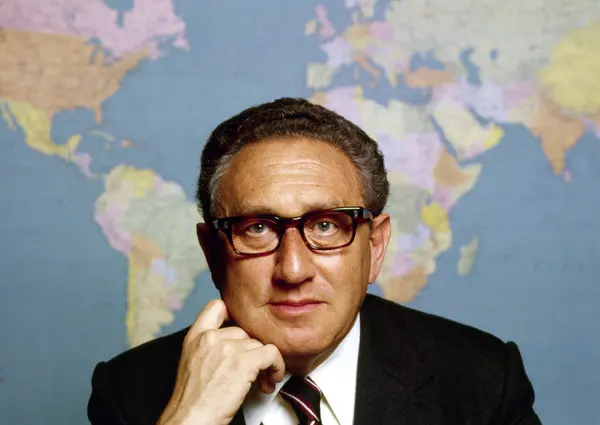
Henry Kissinger dies at 100. Henry Kissinger, the influential figure whose roles as a national security adviser and secretary of state left an indelible mark on U.S. foreign policy, passed away on Wednesday at the age of 100.
The news was confirmed by his geopolitical consulting firm, Kissinger Associates Inc., citing that he died at his home in Connecticut. The statement did not disclose the circumstances of his death.
Kissinger’s contributions spanned decades, with his diplomatic prowess coming to the forefront during the 1970s amid the Cold War.
Serving as national security adviser and later as secretary of state under President Richard Nixon, he played a pivotal role in shaping epoch-changing global events.
Notable achievements include the U.S. diplomatic opening with China, landmark U.S.-Soviet arms control talks, expanded ties between Israel and its Arab neighbors, and the Paris Peace Accords with North Vietnam.
Despite the controversies surrounding his tenure, including allegations of supporting anti-communist dictatorships in Latin America, Kissinger remained a force in U.S. foreign affairs.
His 1973 Nobel Peace Prize, shared with North Vietnam’s Le Duc Tho, was met with significant criticism and resignations from two Nobel committee members.
Kissinger’s influence extended beyond his official roles, as he continued to be active well past his centenary.
He attended White House meetings, published a book on leadership styles, and, in a surprising move in July 2023, visited Beijing to meet Chinese President Xi Jinping.
Born Heinz Alfred Kissinger in Germany in 1923, he became a naturalized U.S. citizen in 1943, served in the Army during World War Two, and later pursued his education at Harvard University.
His academic tenure at Harvard lasted for 17 years, during which he also served as a consultant to government agencies.
In the aftermath of Nixon’s resignation in 1974, Kissinger’s influence endured as he continued as secretary of state under President Gerald Ford.
However, his diplomatic approach faced criticism, especially regarding the India-Pakistan War of 1971 and his role in Chilean and Argentine politics.
Post-government service, Kissinger established a prominent consulting firm in New York, providing counsel to corporate elites globally.
Despite his achievements, Kissinger’s legacy remains contentious, with admirers praising his diplomatic accomplishments and critics condemning his involvement in controversial foreign policy decisions.
As Henry Kissinger dies at 100, Kissinger’s contributions to U.S. foreign policy and the global geopolitical landscape will undoubtedly be subjects of ongoing analysis and discussion.
