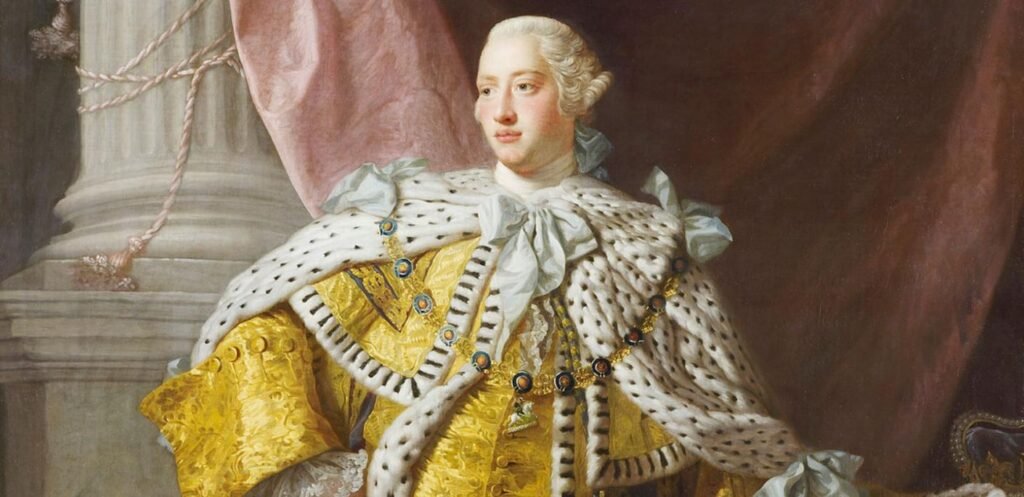
King George III, who ruled Great Britain from 1760 to 1820, is often remembered as a madman due to his periods of mental illness. Despite his many accomplishments as a monarch, his mental illness and the way it affected his reign have overshadowed his achievements in history.
George III’s mental illness
King George III’s mental illness first became apparent in the 1780s, when he experienced periods of agitation, insomnia, and delusions. He would speak to imaginary people and have bouts of uncontrollable laughter or crying. At the time, the condition was called “madness” or “insanity,” and it was not well understood. It is now believed that he suffered from a genetic disorder called porphyria, which can cause mental illness, among other symptoms.
Effects on his reign
George III’s mental illness had a profound impact on his reign. During his bouts of illness, he was unable to perform his duties as king, and his behavior became erratic and unpredictable. This led to a power struggle between his ministers and his son, who served as his regent during his periods of illness. The political instability that resulted from the king’s illness contributed to the tensions that led to the American Revolution, and it made it difficult for the government to function effectively.
Public perception
The public perception of King George III was influenced by the media of the time, which often portrayed him as a madman. Plays and caricatures depicted him as a deranged, ranting lunatic, and rumors circulated that he was kept in a straitjacket and chained to his bed. These depictions were not entirely accurate, but they helped to shape the way that people remembered him.
Legacy
King George III’s legacy is complicated. He was a popular monarch during the early years of his reign and oversaw significant political and cultural changes in Britain. He was also a patron of the arts and sciences and supported many charitable causes. However, his mental illness and the way it affected his reign have overshadowed his accomplishments in history. He is remembered as a tragic figure who was unable to fulfill his duties as king due to his illness.
King George III is remembered as a madman due to his periods of mental illness and the impact that it had on his reign. While his legacy is complicated, it is important to remember that he was a complex figure who made significant contributions to British society during his reign.
