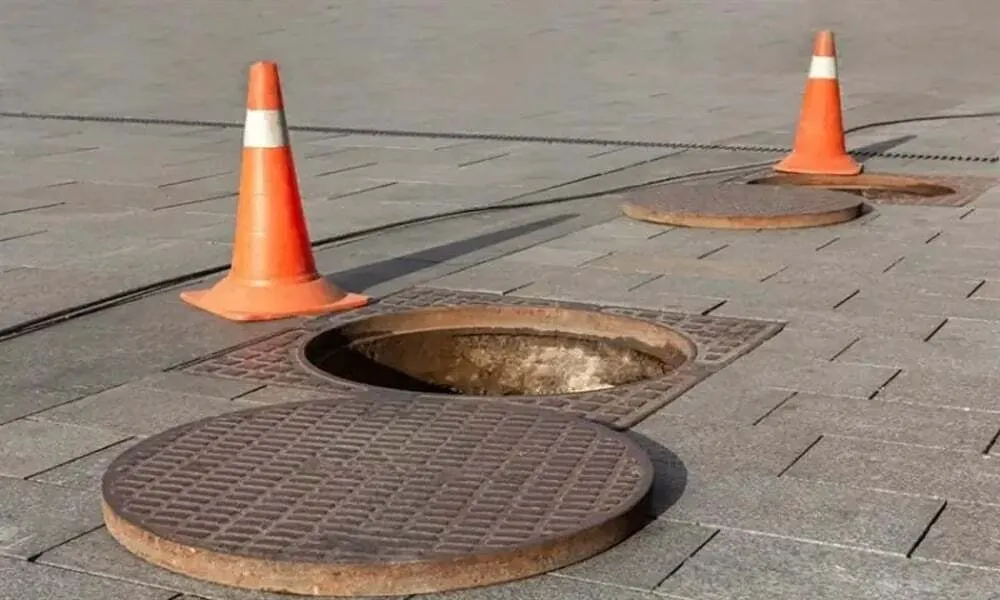
Karachi, the largest metropolitan city of Pakistan, continues to struggle with a serious urban safety crisis that silently claims innocent lives each year: uncovered and poorly maintained manholes. What should be routine infrastructure has instead become a source of constant danger. Across roads, footpaths, and residential streets, these exposed drains transform ordinary travel into a life-threatening risk, particularly for pedestrians, motorcyclists, and school-going children.
Over the past few years, reports suggest that more than twenty people, including several children, have died in accidents linked to open manholes across the city. One particularly disturbing incident occurred in North Nazimabad, where a vehicle fell into an uncovered drain near a school. In the confusion that followed, children walking home unknowingly approached the hazardous site. Tragically, two children slipped and fell into the hole. Residents promptly reported the issue to the local union council and town authorities. Although officials conducted a survey and carried out temporary repairs, residents say the work was short-lived. Weak construction materials and substandard repair methods caused the covers, pipelines, and drainage structures to deteriorate again within a short time, leaving the danger unresolved.
A particularly tragic example of this ongoing crisis occurred in Gulshan-e-Iqbal near NIPA Chowrangi, where a three-year-old child, Ibrahim, lost his life after falling into an uncovered manhole while out with his family. According to news reports, the child accidentally stepped onto a weak or missing cover and was swept into the drainage system before help could arrive. Rescue teams searched for hours before recovering his body, sparking widespread public outrage and highlighting serious lapses in municipal safety oversight. This incident became a painful reminder that the problem of open manholes in Karachi is not merely about infrastructure defects but about preventable loss of innocent lives. Ibrahim’s death illustrates how unattended hazards in public spaces continue to endanger children the most and reinforces the urgent need for permanent, accountable solutions rather than temporary repairs.
When a sudden and preventable death occurs, families often experience intense grief mixed with shock and disbelief. Because the incident happens unexpectedly in an ordinary place like a street or footpath, parents may struggle to accept that something so routine led to such a tragic outcome. This frequently leads to persistent guilt, where parents blame themselves for not protecting the child, even when the fault lies with unsafe infrastructure. Such guilt can become emotionally overwhelming and may develop into depression or anxiety disorders.
Families also experience anger and helplessness. Knowing that the accident could have been prevented often creates deep resentment toward authorities or institutions responsible for public safety. This anger can prolong the grieving process and prevent emotional closure. In many cases, family members repeatedly replay the incident in their minds, imagining how it might have been avoided. Psychologists describe this as traumatic rumination, which can lead to sleep disturbances, panic attacks, and chronic stress.
For siblings and other children in the family, the impact can be equally serious. They may develop fear of public spaces, become overly dependent on parents, or experience nightmares and emotional withdrawal. The household environment often changes permanently, as joy and normal routines are replaced by mourning, legal struggles, and social isolation.
Over time, if families do not receive emotional or social support, the trauma can evolve into complicated grief, a condition in which the pain of loss does not lessen with time and continues to interfere with daily life. This is why preventable urban hazards are not only infrastructure failures but also sources of deep psychological suffering for entire families and communities.
Despite repeated accidents and public complaints, the issue remains widespread across Karachi. Temporary fixes are often applied after an incident gains attention, but long-term solutions are rarely implemented. Many residents report that manhole covers are either missing, broken, or replaced with fragile materials that cannot withstand traffic pressure. During rainfall or at night, these hazards become even more dangerous, as standing water and poor lighting conceal them from view.
The consequences extend far beyond individual accidents. Open manholes contribute to rising urban mortality, increase the risk of serious injuries, and lead to frequent vehicle accidents, particularly during nighttime travel. Motorcyclists and drivers often notice these hazards only when it is too late to avoid them. However, the most vulnerable victims remain children, who lack awareness of such dangers and frequently pass these locations while walking to school or playing outdoors. Each incident not only causes physical harm but also creates lasting trauma within communities and erodes public trust in municipal governance.
If this issue continues to be neglected, the future risks are alarming. Population growth, increased traffic, and worsening drainage systems mean that accidents could rise in frequency and severity. Without durable infrastructure, strict inspection systems, and accountability for repair quality, these hazards will continue to claim lives. What is currently viewed as sporadic tragedy may evolve into a normalized urban risk, a situation where citizens are forced to navigate their own streets with fear.
Open manholes in Karachi are not merely maintenance lapses; they represent a broader failure of urban planning, infrastructure management, and civic accountability. Preventing further tragedies requires immediate and sustained intervention, including high-quality materials, routine inspections, rapid response mechanisms, and transparent monitoring of municipal work. Until these steps are taken seriously, Karachi’s streets will remain unsafe, and innocent lives, especially those of children, will continue to pay the cost of neglect.
