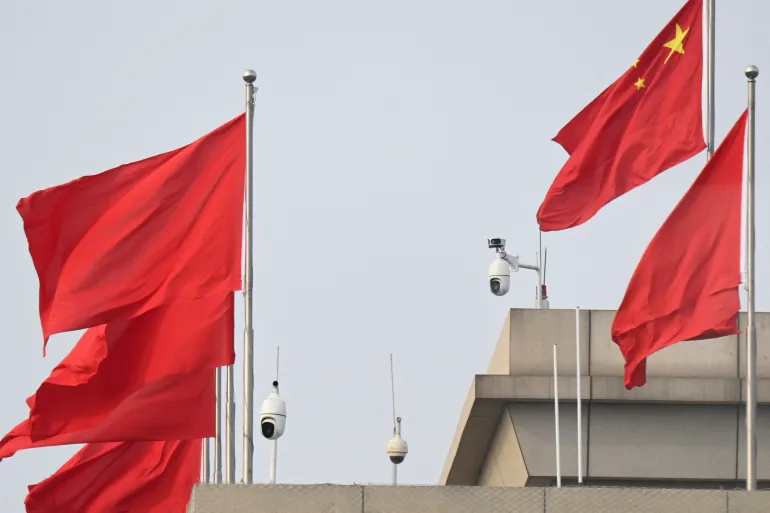
As tensions grow between major global powers, a new arena of competition is emerging—not on traditional battlefields, but in cyberspace.
One of the most influential players in this digital struggle is China. China’s powerful Great Firewall is not just for domestic control—it is now a model being exported globally. It is a carefully designed system of digital control that China is sharing with other countries. From facial recognition systems in Pakistan to surveillance tools in Cambodia and internet filtering in Africa, China is building what experts call a “digital border wall”—a ”wide system of technologies, laws, and partnerships meant to control information, protect governments, and expand its global influence.
This export of control is no longer a side project—it’s becoming central to how global influence is exercised.
This growing digital architecture is rapidly transforming China’s global engagement, from trade and infrastructure to a new kind of soft power grounded in technology and control. As more countries adopt Chinese digital systems, a deeper shift is underway — one that is reshaping global ideas of power, privacy, and press freedom. In effect, this is a form of digital soft power — using technology not only to connect but also to influence how other nations govern, surveil, and define digital rights.
China isn’t just supplying equipment — it’s promoting a full model of controlled digital space. Through its Digital Silk Road, it offers countries ready-made tools, funding, and training that shape how governments manage the internet. But in doing so, many of these states are giving up a degree of independence and adopting China’s vision of cyber-sovereignty, where controlling information is seen as a government’s right, not a threat to democracy.
For many developing countries, the lack of local digital systems, limited money, and few good options make China’s offer more attractive. According to a 2022 report by Freedom House and the International Republican Institute, China has already sent surveillance and digital control technology to at least 80 countries. These ready-to-use solutions, often supported by funding and technical help, let governments skip steps in development — even if it means bringing in a system of control.
Who’s Embracing the Wall — and Why?
Countries like Pakistan, Laos, Ethiopia, and Zimbabwe are turning to China not just for advanced technology but for a model of digital control that helps their governments manage information, monitor citizens, and suppress dissent. China offers a powerful package: low-cost surveillance systems, political non-interference, and full digital infrastructure— all under the label of modernisation.
Across South Asia, similar patterns are emerging — from increased internet monitoring in India to biometric systems in Bangladesh — showing that the appeal of China’s digital control model is not limited to one country.
In Pakistan, the government has rolled out Safe City CCTV networks in Islamabad and Lahore. According to the Digital Rights Foundation, citing Al Jazeera, the country also procured a Chinese-made national firewall costing between $72 million and $107 million.
The Pakistan Software Houses Association (P@SHA) has warned that this firewall “could cost the national economy up to $300 million” due to slower internet speeds and disruptions impacting digital business and investment.
For many governments, this model offers control over the digital space without relying on Western platforms or facing outside criticism. As this model spreads, it sparks a broader debate — one that weighs the benefits of digital control and efficiency against concerns over freedom, sovereignty, and the future of open digital governance.
Can Democracies Push Back — or Is This a Necessary Step?
The rise of China’s digital model raises an important question: Should democracies try to stop this trend, or is it now necessary to control the digital space? In non-democratic countries, these tools are often used to keep power and stop opposition. But even in some democracies, similar technologies are being used — often in the name of security, fighting terrorism, or public safety.
What makes China’s model more appealing is that Western democracies have not offered a strong and practical alternative. While they promote online rights and digital freedom, their systems are harder to follow. They often require strong legal frameworks, skilled institutions, and long-term funding resources that many developing countries lack. As a result, many governments are left to choose between using China’s ready-made tools or having no system at all.
At the same time, governments like Pakistan say that in a time of fake news, online hate, and cybercrime, stronger digital control is not just allowed — it is important for national safety and peace. But where should the line be drawn? When does helpful control become a digital dictatorship?
As more countries face this challenge, one big question remains: can they protect their digital space without losing freedom — or is the global move toward tighter control now impossible to stop?
China’s digital model shows how technology and government control are becoming closely linked. What started as a way for China to manage its own internet is now a key part of its foreign policy, helping other governments build systems that control how information moves, how people are watched, and how dissent is handled.
For countries like Pakistan, Ethiopia, Cambodia, and Egypt, the attraction lies in quick results: safer cities, faster digital growth, and less need for Western platforms. But these short-term benefits come with long-term costs.
Many governments say these controls are needed to stop fake news, cybercrime, and hate speech. But the risks are much greater and include:
-l ess freedom of speech,
– more use of surveillance for political purposes,
– increased online censorship,
– greater reliance on foreign-made digital systems, and
– long-term harm to basic rights and democracy.
In the end, this model may bring order and control, but it slowly weakens the core values of open societies. As more countries follow this path, the real worry is not just growing digital control but that it may quietly become the new normal around the world.
