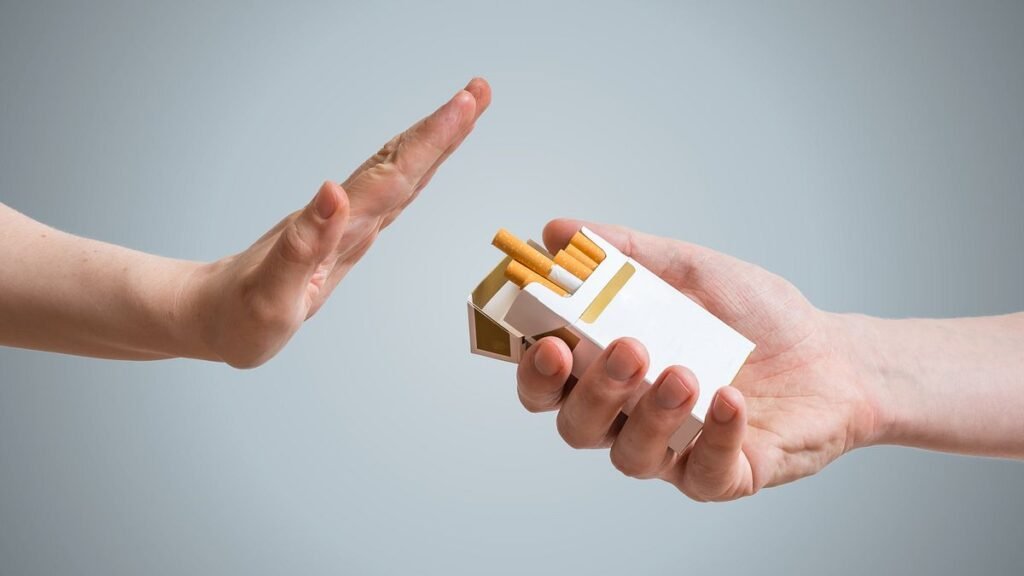
Globally, tobacco is a leading cause of over 8 million deaths each year and a substantial risk factor for developing illnesses, including lung, liver, oral, and throat cancers, chronic obstructive pulmonary disease, heart disease, and stroke. A major fraction of these deaths—roughly 7 million—are caused by direct tobacco use, whereas 1.2 million are caused by secondhand smoke exposure. The majority of smokers come from low- and middle-income countries (LMICs), each with their own socioeconomic profile. Cigarette smoking raises the illness load and the risk of mortality. Cigarette usage has decreased in many parts of the world, especially in developed countries. Despite the fact that the number of smokers is down, population expansion – mainly in LMICs – continues to drive up cigarette use.
With a large number of tobacco and cigarette users, Pakistan, India, and Bangladesh are the most susceptible nations in South Asia. In Pakistan and Bangladesh, a large proportion of people aged 15 to 65 consume tobacco. There are around 25 million tobacco users in Pakistan, and a variety of tobacco products are accessible, including cigarettes, water pipes (“shisha”), stoves, “gutka,” and “niswar.” Smoking is a leading cause of heart disease, lung cancer, emphysema, and chronic bronchitis in the country.
In Pakistan, tobacco use rises with age and declines between 65 and beyond. In 2017-18, 23 percent males and 5 percent females in Pakistan smoked tobacco in some form, including cigarettes, “hookah,” “shisha,” “paan,” “gutka,” and “niswar,” according to the Pakistan Demographic and Health Survey (PDHS). Of them, PDHS says, 22 percent males and 3 percent females smoke cigarettes.
Within the context of the WHO recommendations on tobacco control, Pakistan has taken a number of steps, including raising tobacco pricing and taxes, enforcing warning legislation, prohibiting public smoking and advertising, and prohibiting the sale of cigarettes in educational institutions. However, the implementation of these measures remains weak.
In 2016, a pricing comparison of 20-stick packages of premium and cheap cigarette brands revealed that Sri Lankan costs were higher than those in Pakistan, Bangladesh, and India. It has been proved that greater costs lead to reduced predominance. Cigarette smoking is less common in Sri Lanka than in India, Pakistan, and Bangladesh. According to prior research, a typical 10% increase in the price of 20-stick cigarette packs would lower adult cigarette consumption by 4 percent.
The tobacco tax rationale is derived directly from economic theory. A higher tax rate raises the cost of cigarettes, and this in turn lowers consumption. With various econometric adjustment models, several studies reveal the dynamics of the links between taxes and consumption. With the significant assumptions of economic theories, price is the main determinant of supply and demand for any economic product.
However, there is a catch when this formula is attached to LMICs, including Pakistan.
Tobacco and cigarette taxes fail to play a significant role in reducing tobacco and cigarette use in Pakistan and other low and middle-income countries because of the low tax ratio and other variables influencing cigarette demand. In Pakistan, cigarette usage has steadily grown over time. In 2013, Pakistan changed its tobacco excise tax scheme. For cigarettes, it now has a two-tiered specific excise tax. The two levels are Rs880 per 1000 cigarettes for cigarettes having a retail price (price before VAT) less than or equal to Rs2286 per 1000 sticks, and Rs2325 per 1000 cigarettes for cigarettes with a retail price (price before VAT) greater than Rs2286 per 1000 sticks. The lowest tier costs Rs17.6 for a pack of 20 cigarettes, whereas the highest tier costs Rs46.50 for a pack of 20 cigarettes. The tax reduces the complexity of a three-tiered, mixed system. However, there is still a significant price difference between the economy and mid-priced cigarette groups and premium cigarettes.
Pakistan has some of the lowest cigarette prices in the world. Cigarette excise taxes account for a little over half of the total price paid by smokers. This is lower than in nations that have adopted a comprehensive strategy for tobacco use reduction, where excise taxes account for 70 percent or more of the retail price. Despite this, the major threats are the significant quantity of illicit cigarettes and the poor quality of local cigarettes. The typical average price of a 20-stick of these low-cost cigarettes is said to be between Rs30 and Rs45.
Only a tax increase is insufficient to justify smoking cessation or a decrease in cigarette use in developing nations with inadequate governance, trade, and cessation strategies. Though the majority of research has shown that increasing cigarette pricing via higher taxes is effective in reducing smoking among teenagers, young adults, and those with low socioeconomic status, there is a dearth of research on the influence of rising cigarette prices on long-term smokers’ smoking behaviors and the impact on smoking cessation. Age, gender, money, peer and family factors, and school status, all impact the smoking habit. Because smoking is an addictive substance, it will react more slowly to price increases than non-addictive commodities, so long-term returns may be greater than short-term gains.
All this points to the notion that quitting smoking is a multifactor phenomenon. In the long term, a tax increase alone does not justify smoking cessation or a decrease in cigarette use. The research shows the desire to stop smoking is there, but the policies and infrastructure required for effective cessation are lacking.
Along with taxation, Pakistan has to focus on two fronts: raising public knowledge about the dangers of combustible smoking and enforcing tobacco regulations, and offering inexpensive and accessible smoking cessation platforms throughout the country. To back these two fronts, Pakistan can also make use of tobacco harm reduction (THR) and nicotine replacement therapy (NRT). This would help the country in significantly lowering the smoking prevention levels.
The number of people utilizing THR and NRT products has steadily increased in Pakistan during the past five years. However, as compared to the number of tobacco smokers, their numbers are still insignificant. THR and NRT products are expensive and only available in premium areas, and they are utilized in an unregulated environment. Smokers use them without seeking medical counsel.
As a result, the choice to switch from combustible smoking to THR and NRT products is an individual decision. The majority of smokers are unaware that THR and NRT products are available. Friends are their primary sources of knowledge about these items, which they mostly utilize out of curiosity.
The high cost and poor quality of THR and NRT products are key deterrents for combustible smokers who want to make the most of quitting. Simultaneously, efforts should be made to prevent teenagers from starting to smoke or vape. The government should broaden its circle of interaction with stakeholders in order to achieve this goal. The most essential stakeholders should be smokers, who have been largely ignored in tobacco control initiatives.
Overall Pakistan needs to take four initiatives to reduce or even end the use of combustible smoking. These are the availability of accessible and affordable smoking cessation services, making voices of smokers part of tobacco control policies, including THR in the national tobacco control policy and sensibly regulating THR products.
