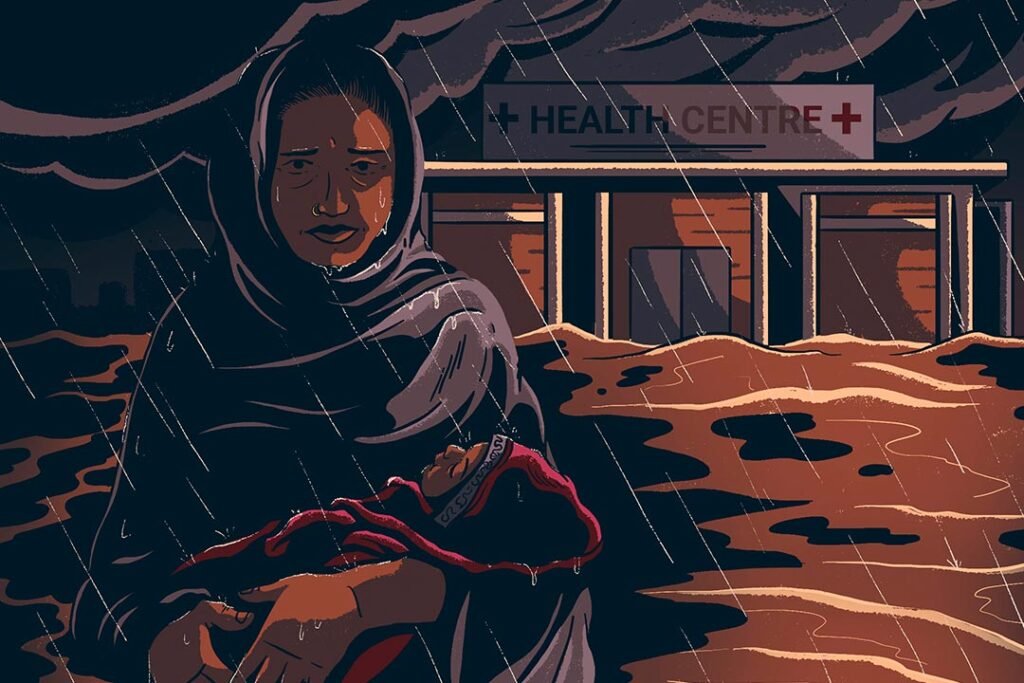
Food Crisis Looms in Pakistan, as the country continues to suffer from catastrophic flooding. Around one-third of the country remains underwater, and most of the 33 million people affected by the disaster have yet to receive assistance. But the crisis could still get worse. The retaining wall of Pakistan’s largest lake gave way under rising water levels, imperiling communities downstream. More monsoon rains are expected in the coming weeks. International aid is pouring into Pakistan, and a newly established humanitarian air corridor has facilitated the arrival of emergency relief. More than a dozen countries have pledged assistance. United Nations Secretary-General António Guterres who personally visited Pakistan has described the floods as a big economic threat to the country.
For flood effecters, the immediate focus of the government is on providing food, clean water, and shelter. Our officials and international donors are also working to address public health challenges. However, another disaster with direct global implications looms a major food crisis. With crops, livestock, and agricultural land damaged or destroyed, Pakistan will struggle to feed itself and the countries that depend on its food exports. According to preliminary estimates, 65 percent of Pakistan’s main food crops including 70 percent of its rice have been swept away during the floods, and 3 million livestock have died.
As officially informed 45 percent of agricultural land is now destroyed. The such territory is precious in the best of times of Pakistan’s total land area, because less than 40 percent is arable, and land erosion inflicts heavy damage on agricultural land. Wheat is Pakistan’s top food crop, and the annual planting season begins soon. More than 90 percent of Pakistani households are wheat consumers.
But with so much land destroyed or damaged, the wheat harvest could be jeopardized; some farmers fear their land won’t be usable within the next three months. Pakistan will likely have to import more food, which could raise costs and worsen the country’s balance of payments crisis.
Before the floods, food inflation was at 26 percent, and in recent days some costs have surged by as much as 500 percent. These high costs will be felt heavily in cities, which are home to largely poor and working-class populations. If history is any guide, it could lead to urban unrest. It will manifest differently in rural areas, which are home to around two-thirds of Pakistan’s population.
Rural land ownership is wildly unequal, and most residents own little or no land, which compounds food insecurity. In the longer term, this could exacerbate a public health challenge: stunting in children attributed to poor nutrition. A food crisis in Pakistan would have also international implications.
The country is the fourth-largest global rice exporter, with buyers from China to sub-Saharan Africa, any dramatic drop in exports will only add to global food insecurity fueled by reduced wheat exports from Ukraine. Pakistan also exports many non-food crops, especially cotton if the flood waters recede soon enough, Pakistan can still avoid a worst-case scenario, salvaging some agricultural land. Most of Pakistan’s wheat and rice crops grow in Punjab province, which wasn’t hit as hard by the floods. But given the sheer scale of the flooding, the most significant damage is already done. The international donor community is already grappling with acute crises in Afghanistan and Ukraine, and donor fatigue remains a concern for Pakistan. The global implications of the flood crisis underscore the importance of global support to preempt another disaster.
According to many surveys, the government’s target of “zero-hunger by 2030” set out in the Agenda for Sustainable Development is not going to be met. The 2021 Global Hunger Index, compiled by leading international aid agencies, put Pakistan at 92 among 116 countries, declaring its hunger level “serious” as 60 percent of its population is food-insecure and 44pc of children under five years of age are chronically malnourished. These were last year’s figures so it’s not very difficult to understand how this year’s record floods and subsequent devastation must have further wrecked the entire sector.
This is a serious setback caused by a toxic combination of factors, including the poverty shock of COVID-19, declining crop yields due to climate change, and growing water scarcity in Pakistan. But the real problem is that successive governments in Pakistan have not paid proper attention to the agriculture sector. As a result, the sector’s productivity continued to decline. Tragically, Pakistan, which once exported grains, is now dependent on imports of wheat and edible oils.
The unprecedented floods have dealt a body blow to Pakistan’s agriculture and food security. The raging monsoon waters have destroyed the livelihoods of millions, which has serious long-term implications for food scarcity in the country. A large number of people have lost their lands, livestock, and life savings and they need urgent sustenance, relocation, and re-building.
According to experts, the country faces the grim prospect of widespread starvation coupled with a sharp rise in poverty. The challenge calls for a herculean national effort to marshal all our resources and put them to the best possible use. The focal point of all our planning should be a revival of our agriculture which remains the mainstay of our economy
