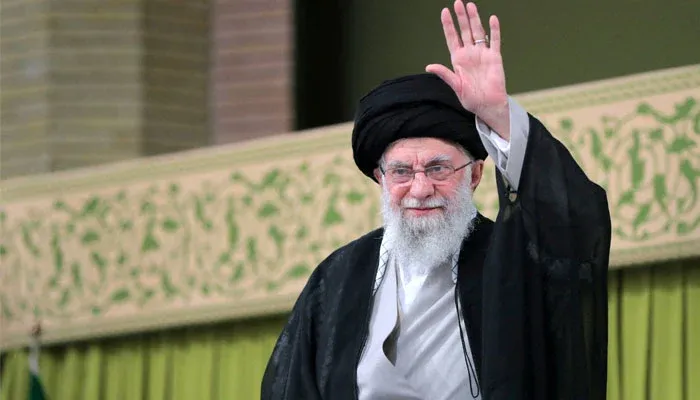
Following the martyrdom of Iran’s Supreme Leader Ayatollah Ali Khamenei, the Islamic Republic has moved to activate its constitutional succession mechanism to ensure continuity of governance, according to Iran’s state-run IRNA.
Iranian state media confirmed that Ayatollah Ali Khamenei was killed in strikes attributed to Israel and the United States.
The Fars News Agency reported that the government has declared 40 days of national mourning, along with seven days of public holidays, in response to his death.
Constitutional Succession Process
Under Article 111 of the Constitution of the Islamic Republic of Iran, the responsibility to appoint a new supreme leader rests with the Assembly of Experts.
The constitution mandates that the assembly must act “within the shortest possible time” in the event of the leader’s death, resignation, or dismissal.
Until a successor is formally chosen, leadership duties are transferred to a temporary three-member council. This interim body consists of the president, the head of the judiciary, and a senior jurist from the Guardian Council selected by the Expediency Discernment Council.
Constitutional provision for the absence of the Leader
According to Principle 111 of the Constitution, In the event of the demise, resignation, or dismissal of the Leader, the Assembly of Experts is obliged to take action as soon as possible to appoint and introduce a new Leader.— IRNA News Agency ☫ (@IrnaEnglish) March 1, 2026
Iranian state television, citing one of Khamenei’s advisers, said the transitional council will include Masoud Pezeshkian, judiciary chief Gholamhossein Mohseni Ejei, and another senior legal figure appointed under constitutional provisions.
This interim council will exercise the supreme leader’s powers until the Assembly of Experts completes consultations and formally announces a successor.
The constitution also provides flexibility during the transition. If any member of the temporary council is unable to fulfill their duties, the Assembly of Experts may appoint a replacement, provided the required majority of jurists is maintained.
Military Escalation Signals
Amid the political transition, the Islamic Revolutionary Guard Corps announced what it described as “the most devastating offensive operation in the history of the Islamic Republic of Iran.” According to reports cited by Al Jazeera, the IRGC said the offensive would begin “within moments”.
The Guard stated that the operation would target Israeli-held territories and US military bases across the region.
Regional and Political Impact
Ayatollah Ali Khamenei had served as Iran’s supreme leader since 1989, holding ultimate authority over the state’s military, judiciary, and key political institutions.
Analysts say his death marks a historic turning point for Iran, with potential consequences for regional stability, global energy markets, and Iran’s internal power balance.
As the succession process unfolds, attention remains focused on the Assembly of Experts and the interim leadership council, while fears grow that the military escalation could widen into a broader regional conflict.
