Following Russia’s invasion of agricultural powerhouse Ukraine in March, world food prices reached an all-time high, according to a United Nations body, adding to global fears of hunger.
Fears of a global food crisis have been sparked by the disruption in export flows caused by the February 24 invasion and international sanctions against Russia, particularly in the Middle East and Africa, where the knock-on consequences are already being seen.
Russia and Ukraine, whose enormous grain-growing regions are among the world’s key breadbaskets, account for a large part of global exports in numerous major commodities, including wheat, vegetable oil, and corn, and their prices hit all-time highs last month.
A Russian blockade has shut down Ukrainian ports, raising concerns about this year’s harvest as the war continues to rage during the sowing season.
Last month, the United Nations Food and Agriculture Organization (FAO) reported that its Food Price Index, which analyses monthly changes in international prices for a basket of commodities, averaged 159.3 points, up 12.6 percent from February. As it stands, the February index was at its highest point since 1990.
According to the FAO, the war in Ukraine is to blame for the 17.1 percent increase in grain prices, which includes wheat and other grains such as oats, barley, and corn. Russia and Ukraine together contribute for over 30% and 20% of worldwide wheat and corn exports, respectively.
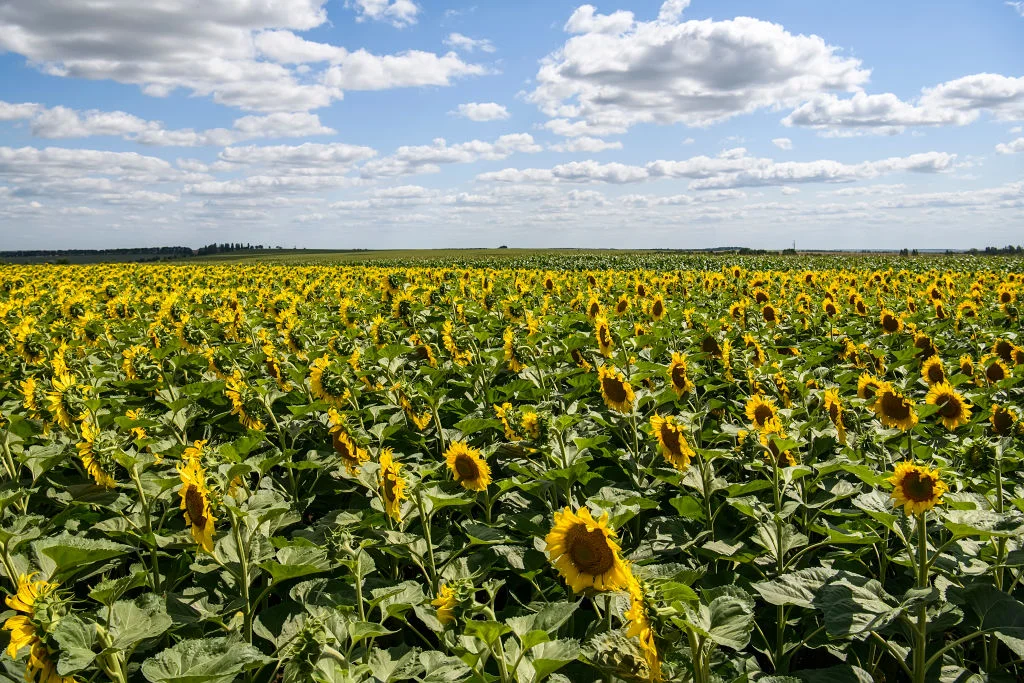
The most significant price increases were in vegetable oils, which jumped 23.2 percent due to higher quotations for cooking sunflower seed oil. Ukraine is the world’s largest exporter of sunflower oil, followed by Russia.
Sugar and dairy products prices “also increased substantially,” according to the FAO.
“Of course, there is a big supply disruption,” Schmidhuber told reporters in Geneva. “That massive supply disruption from the Black Sea region has driven prices for vegetable oil.”
He said he couldn’t say how much the war was to blame for the high food prices, noting that poor weather in the US and China had also contributed to crop problems. However, he claimed that “logistical factors” were a major impact.
“Basically, there are no exports across the Black Sea, and exports through the Baltics are basically done,” he said.
Food shortages in the Middle East, Africa, and parts of Asia have been threatened by rising food costs and disruptions in supply from Russia and Ukraine, which have already left many people hungry.
Those countries rely on affordable supplies of wheat and other grains from the Black Sea region to feed millions of people who live on subsidised bread and cheap noodles, and they now face the prospect of even more political unrest.
Other large grain producers, such as the United States, Canada, France, Australia, and Argentina, are being closely watched to see if they can quickly ramp up production to fill in the gaps, but farmers face challenges such as rising fuel and fertiliser costs, which are exacerbated by the war, drought, and supply chain disruptions.
According to Sib Ollo, senior researcher for the World Food Program for West and Central Africa in Dakar, Senegal, the war disruptions have added to an already precarious food situation caused by COVID-19, conflicts, poor weather, and other structural problems in the Sahel region of Central and West Africa.
“The food and nutrition security in the region has deteriorated dramatically,” he told reporters, adding that six million children are malnourished and roughly 16 million people in metropolitan areas face food insecurity.
Farmers in particular were concerned, he claimed, that they would be unable to obtain fertilisers manufactured in the Black Sea region. Russia is a major exporter in the world.
“Fertiliser prices have risen by about 30% in several parts of this region as a result of the supply disruption caused by the Ukraine situation,” he stated.
According to him, the World Food Program has requested $777 million to cover the needs of 22 million people in the Sahel region and Nigeria over the next six months.
The FAO was working on a proposal for a method to reduce import costs for the poorest countries, according to Schmidhuber, to satisfy the requirements of food-importing countries. The idea requires qualified countries to commit to increased investments in their own agricultural productivity in order to receive import credits to help cushion the damage.
