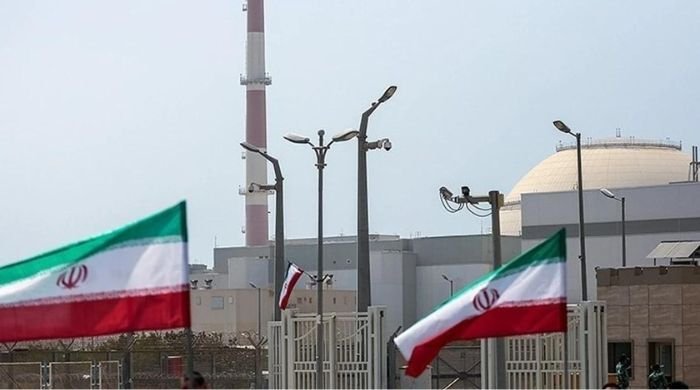
Did Iran relocate its Enriched Uranium before US Airstrikes?
American President Donald Trump rejected recent claims suggesting that Iran relocated enriched uranium before the US launched coordinated airstrikes on key Iranian nuclear facilities.
The allegations, reportedly originating from a classified U.S. intelligence assessment, have fuelled debate over the actual effectiveness of the operation and the current status of Iran’s nuclear program.
No evidence of removal
Trump claimed success of the strikes, saying that there is no evidence to suggest that Iran removed any nuclear material from the sites in advance.
“There’s no indication the uranium was moved,” said White House Press Secretary Karoline Leavitt in an interview. “Everything is now buried deep under rubble after our highly successful strikes.”
The American military attacked three major Iranian nuclear locations – Fordo, Natanz, and Isfahan – using a combination of B-2 stealth bombers and submarine-launched cruise missiles.
The assault, carried out last Saturday, marks significant escalation in U.S. and Israeli military pressure on Iran following rising tensions since mid-June.
Despite tall claims by Trump, a preliminary assessment by the Defense Intelligence Agency (DIA) paints a more cautious picture.
According to multiple sources briefed on the findings, the core infrastructure of Iran’s nuclear program appears largely intact, and the attacks may have only set the program back by a few months.
The evaluation based on damage analysis from US Central Command suggests that Tehran may have successfully moved a significant quantity of enriched uranium, reportedly around several hundred kilograms prior to the assault.
Moreover, much of the centrifuge equipment at the sites is believed to remain operational.
Iranian officials remain defiant.
Iran to continue uranium enrichment activities
In an interview with German broadcaster Das Erste, Deputy Foreign Minister Majid Takht Ravanchi confirmed that Iran would continue its uranium enrichment activities, asserting that the country is acting within the framework of the Nuclear Non-Proliferation Treaty (NPT).
“No one can dictate our path as long as we remain within our treaty commitments,” he said.
As conflicting narratives emerge from Washington and Tehran, international observers remain focused on the implications of these strikes.
While the U.S. administration insists on the mission’s success, intelligence officials caution that Iran’s nuclear ambitions remain very much alive, and any gains may be temporary without further diplomatic or military follow-up.
