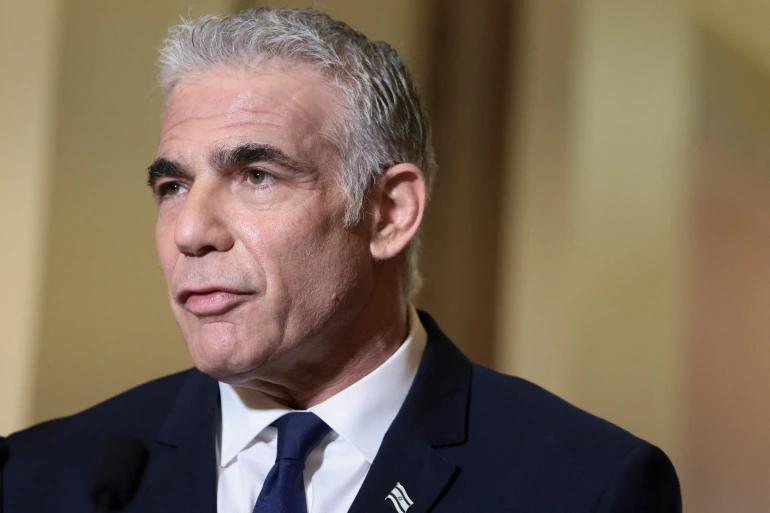
UK and Israel vow to stop Iran from becoming a nuclear power. In a joint essay, the foreign ministers of the UK and Israel stated that they will “operate night and day” to prevent Iran from becoming a nuclear power.
“The clock is ticking, which heightens the need for close cooperation with our partners and friends to thwart Tehran’s ambitions,” the UK’s Liz Truss and her Israeli counterpart Yair Lapid wrote in The Telegraph newspaper on Sunday.
Lapid landed in London on Sunday for a two-day visit to the UK and France, a day before the restart of discussions on Iran’s nuclear programme in Vienna.
As negotiators gather in Vienna on Monday in a last-ditch effort to rescue a nuclear deal, Israeli Prime Minister Naftali Bennett said earlier in the day that his country is “extremely concerned” that world powers will lift sanctions on Iran in exchange for insufficient limits on its nuclear programme.
According to Israeli Channel 13, one of Lapid’s principal goals in visiting the UK and France is to ensure that banking sanctions on Iran stay in place.
According to The Telegraph, Lapid will meet with his British counterpart Truss on Monday to sign a series of accords, including a 10-year commitment to collaborate closely on cybersecurity, technology, trade, and defence.
According to the storey, Israel will become Britain’s “tier one” cyber partner in an effort to strengthen its cyber defences as countries around the world face rising dangers.
Following that, Lapid will give a speech at an event hosted by British Prime Minister Boris Johnson, at which both officials will speak.
The foreign minister is scheduled to fly to France on Monday night, ahead of a Tuesday afternoon meeting with French President Emmanuel Macron.
Iran’s Foreign Ministry spokesman, Saeed Khatibzadeh, said the joint article put doubt on Western intentions heading into the Vienna discussions to save the Joint Comprehensive Plan of Action (JCPOA), as the nuclear deal is officially known.
During a news conference on Monday, he told reporters that contacts between two European nuclear deal partners and the pact’s main opponent on the eve of the talks show they do not sincerely want to relieve sanctions.
“This shows that not only are these countries not serious, but also they want the talks to be lengthened and they don’t want the effective implementation of the JCPOA,” Khatibzadeh said.
With Tehran maintaining its strong position and Western nations growing increasingly irritated, chances of salvaging the 2015 nuclear deal appear bleak.
UK and Israel vow to stop Iran from becoming a nuclear power.
Diplomats fear time is running out to restore the accord, which was abandoned in 2018 by then-US President Donald Trump, angering Iran and displeasing the other parties participating – the UK, China, France, Germany, and Russia.
Between April and June, six rounds of indirect negotiations were held. The next round begins after a pause caused by the election of Ebrahim Raisi, a hardline Muslim leader, as Iran’s new president.
According to Western diplomats, Tehran’s new negotiating team has made demands that are implausible to US and European officials.
All US and European Union restrictions imposed since 2017, even those unconnected to Iran’s nuclear programme, must be lifted.
