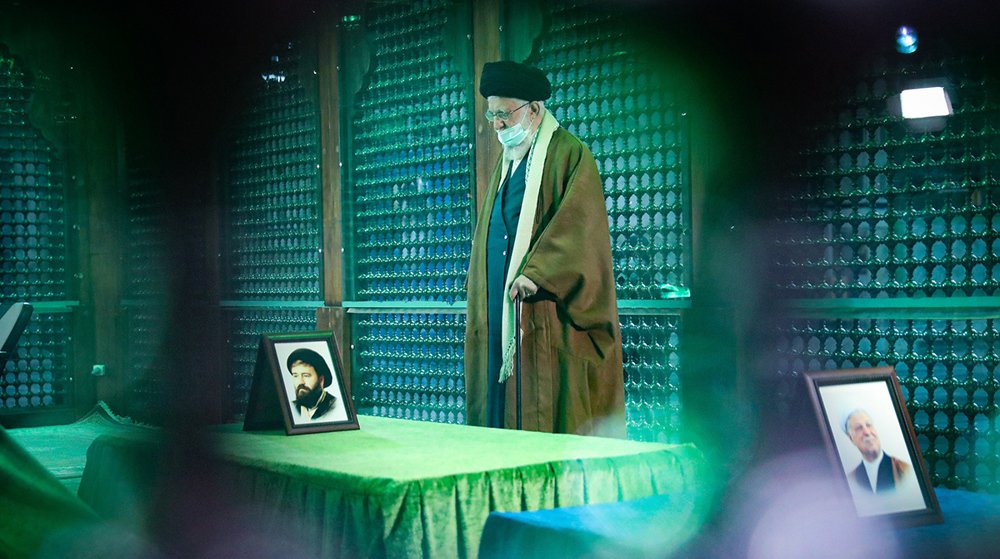
The 43rd anniversary of the Islamic Revolution, which toppled the US-backed Pahlavi dictatorship, has been marked by celebrations in Iran.
The Ten-Day Dawn celebrations begin with events commemorating Ayatollah Ruhollah Khomeini, the late founder of the Islamic Republic, returning to Iran after 15 years in exile.
On February 1, 1979, millions of Iranians greeted the charismatic leader in Tehran. The arrival of Imam Khomeini fueled months of mass uprisings against the Pahlavi dictatorship.
The riots culminated in the overthrow of the Pahlavi regime ten days later, bringing an end to more than two millennia of monarchy in Iran.
The Islamic Revolution ushered in a new political structure founded on Islamic values and democracy.
“We met in this holy place today, as we do every year, to pay our respects to Imam Khomeini. “A person who changed the course of our country’s history and established a political system that respects our Muslim values,” a witness to the rituals at Imam Khomeini’s mausoleum told the news media.
On Monday, Ayatollah Seyyed Ali Khamenei, the Leader of the Islamic Revolution, paid a visit to Imam Khomeini’s mausoleum.
Ayatollah Khamenei also paid a visit to the Behesht Zahra cemetery, where many Iranians were martyred during the revolution and the 1980-1988 war against Iran by former Iraqi tyrant Saddam Hussein.
Iranians participate in a variety of events and activities to commemorate the 10-Day Dawn celebrations.
“For the cause of the Islamic Republic, we lost many of our dear ones.” We hope to say no to foreign influence in our country by commemorating the occasion. “No matter how much pressure and sanctions the US applies on our country, we still hold to those beliefs,” another attendee told a reporter.
Iranians took part in a referendum less than two months after the Islamic Revolution’s success, in which more than 98 percent of eligible voters voted ‘yes’ to the Islamic Republic as a new political system.
