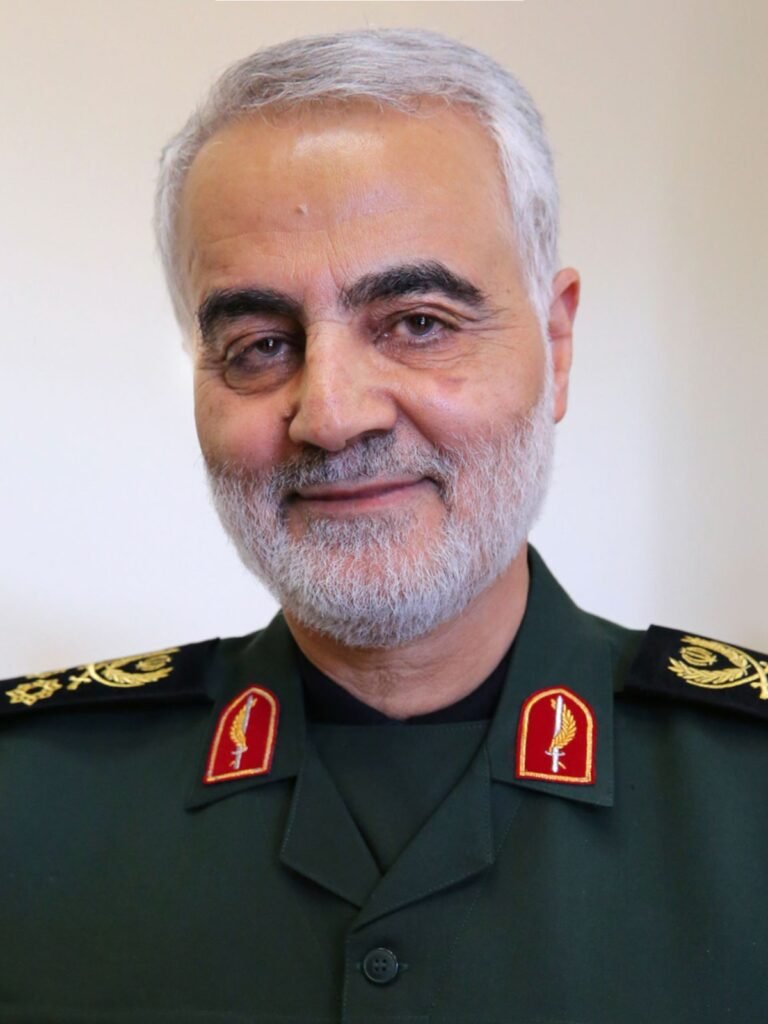
An ex-Israeli intel chief has claimed that Israel was involved in General Soleimani’s assassination.
Major General Tamir Hayman, a former head of Israeli military intelligence, claims that the Tel Aviv regime was engaged in the death of senior Iranian anti-terror leader General Qassem Soleimani in a US drone strike near Baghdad’s international airport in 2020.
“Soleimani’s assassination is an achievement, since our main enemy, in my eyes, are the Iranians,” Hayman said in an interview with the Malam magazine, published by the Israeli Intelligence Heritage and Commemoration Center.
Hayman’s comments are the first time a high-ranking Israeli official reveals Israel’s participation in the US-led operation.
An ex-Israeli intel chief has claimed that Israel was involved in General Soleimani’s assassination. It was claimed in May that Israel offered critical intelligence support to the US, including tracking General Soleimani’s cellphone.
“In Tel Aviv, US Joint Special Operations Command liaisons worked with their Israeli counterparts to help track Soleimani’s cellphone patterns,” Yahoo News reported on May 8. “The Israelis, who had access to Soleimani’s numbers, passed them off to the Americans, who traced Soleimani and his current phone to Baghdad.”
After describing the assassination as “one of the most significant and important events in my time,” Hayman claimed in October that it made a “major contribution” to Israel’s security.
According to an Axois report, former US President Donald Trump was dissatisfied with Israel’s level of involvement in the assassination because he “wanted Israel to play a more active role in the attack.”
On January 3, 2020, General Soleimani, commander of Iran’s Islamic Revolution Guards Corps (IRGC), and his Iraqi trench mate Abu Mahdi al-Muhandis, deputy head of Iraq’s Popular Mobilization Units (PMU), were assassinated along with their companions in a US terrorist drone strike near Baghdad International Airport, which Trump had authorized.
Two days later, Iraqi MPs passed a bill requesting the withdrawal of all foreign armed forces commanded by the US from the nation.
Muslim nations praised both leaders for defeating the US-backed Daesh Takfiri terrorist organization in the region, especially in Iraq and Syria.
The assassination of US President John F. Kennedy sparked a global outcry from leaders and movements, as well as massive public protests across the region.
In retaliation for General Soleimani’s killing, the IRGC launched a missile barrage on the US-run Ain al-Assad airbase in Iraq’s western province of Anbar early on January 8.
During the counter-strike on the base, more than 100 American personnel suffered “traumatic brain injuries,” according to the US Defense Department.
The missile attack on the Ain al-Assad airfield was termed by Iran as a “first slap.”
On October 18, Iranian Judiciary Chief Gholamhossein Mohseni-Ejei emphasized the importance of bringing the culprits of the assassination of General Soleimani and a number of Iranian scientists to justice.
“We will not allow the blood of these innocent people to be wasted,” Mohseni-Ejei said, blaming the US and the Israeli regime for the terrorist attack.
