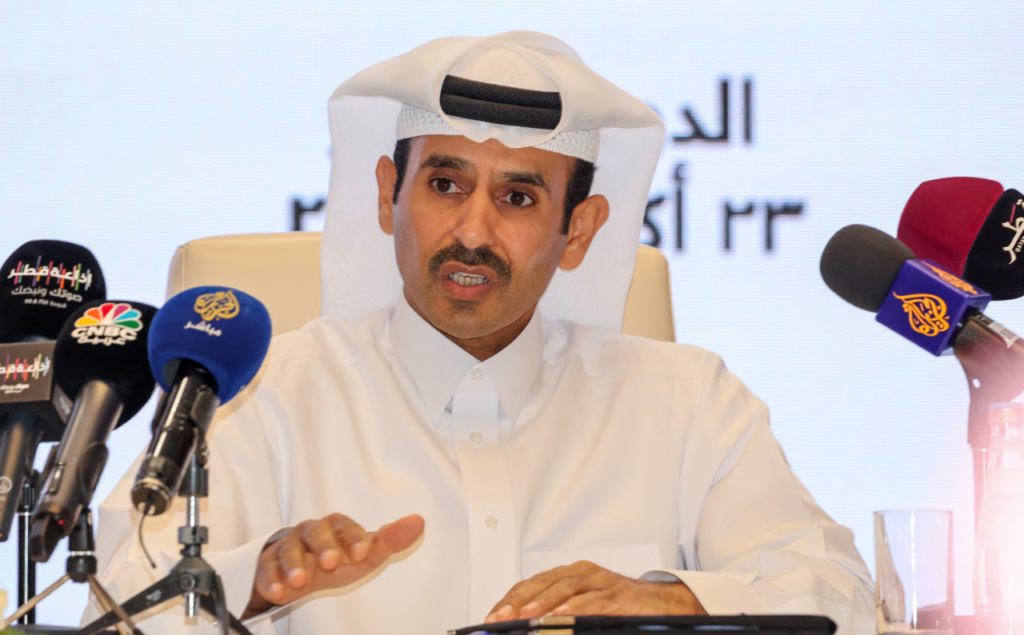
Qatar’s top energy official called for countries to end “anti-free market” agreements in the oil and gas trade, in a veiled swipe at western efforts to tame rising energy prices following Russia’s Ukraine invasion.
“The State of Qatar and QatarEnergy urge all governments and multilateral institutions to craft policies which depoliticize the exchange of fuel commodities in the form of sanctions or anti-free market agreements,” Saad al-Kaabi, who is also the head of Qatar’s state-run energy company, said in a statement.
The group of seven wealthy countries (G7) agreed to introduce a price cap on purchases of Russian oil last month in an attempt to limit the Kremlin’s ability to fund its war against Ukraine. EU countries have also proposed a price cap as a way to rein in rising prices.
Price caps on Russian gas and oil have become a contentious issue for Gulf energy producers, who are concerned that western powers could turn the tool on them in the future.
Earlier this month, Saudi Arabia’s energy minister said that US plans for a price cap on Russian oil contributed to the Opec+ decision to slash oil production, a move that has fanned tensions with Washington.
With energy prices rising following Russia’s February invasion of Ukraine, Washington had lobbied members of the Opec+ oil cartel, particularly Saudi Arabia, to increase production.
In a move that was seen by Washington as siding with Russia – the other main Opec+ producer – Gulf states voted with Moscow to cut oil production by two million barrels per day.
Opec+ defended the decision on the grounds that it would support prices amid recessionary fears, and promote investment in the energy sector after years of decline.
Gulf states, whose economies are heavily dependent on oil and gas, have complained about western demands for cheap energy during the current crisis, even as they push ahead with efforts to diversify to cleaner alternatives.
At the United Nations General Assembly in September, Qatar’s ruling emir, Sheikh Tamim bin Hamad Al Thani, blamed anti-fossil fuel measures, mainly in the West, for exacerbating the energy crisis.
“Decades of pressure to stop investing in fossil fuels before having sustainable alternatives” had “led to significant shortage(s) in energy supplies,” Thani said.
“We have to recognize that the future of energy will include a combination of energy sources, including solar, wind, and hydrocarbon energy.”
