
Although the Pakistani drama industry is flourishing, We must agree that not many dramas are up to par, primarily due to their plot. Some might disagree, but if a drama is about a man or woman caught up in a love triangle with a cunning relative who wants to ruin them, then please move on. Such content is not something we want to watch or support. But if a show has everything we want to see, such as realizing how valuable each family member is (particularly girls), breaking preconceptions about non-Muslims, supporting equal treatment, and handling household difficulties, I’m happy to watch it on the daily basis. Kuch Ankahi by Sajal Aly and Bilal Abbas Khan is now available. Kuch Ankahi started airing on January 7 and you can watch it every Saturday at 8 pm on ARY Digital.
Some on-air drama trailers were difficult for us to watch, but Kuch Ankahi immediately drew our interest. We have to admit that the trailer and possibly even the poster made us think of Ramzan’s humour. After watching it, it became clear that the programme was unlike anything we had ever seen before and something that we had all been eager to witness.
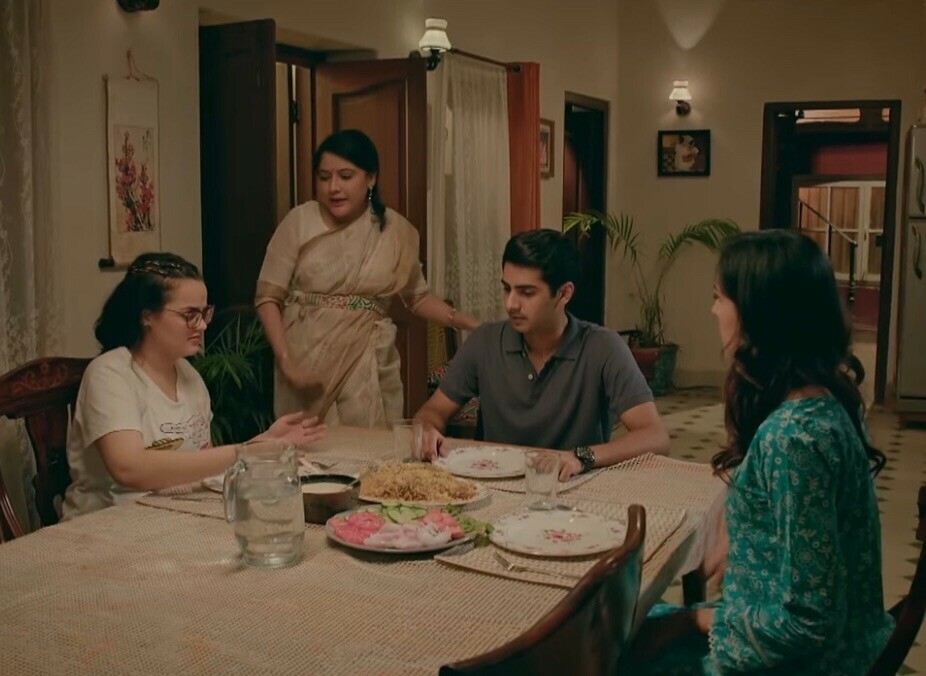
The drama stars Khan as Salman and Aly as Aaliya. Her older sister Samiya is played by Mira Sethi and her younger sister Tanya by Qudsia Ali. When the drama began, Aaliya and Salman were a true depiction of Tom and Jerry, a duo that never gets along and always has a plan for the other to not succeed. They don’t realise they have a bond like no other but eventually come to learn that they will have to rely on each other. However, it’s not just these two characters that make Kuch Ankahi special.
Here are five takeaways from Pakistani drama Kuch Ankahi:
- Daughters can be everything you’ll ever need

In the drama, Aly’s character, Aaliya Agha, competes with Salman, played by actor Salman Khan, to close a deal that will resolve the dispute surrounding her father’s home, the source of her parents’ concern. Samiya in Sethi’s Samiya, who abides by her mother’s wishes and concurs with whatever she says, also represents the unspoken love the eldest daughter has for her parents. Tanya may be young, but it’s her support that brings joy not only to her parents but to her sisters as well, with her jokes that light up the room.
2. Age is just a number and marriage is not a solution to every problem
We’ve all been through the phase where family members start debating whether we’re still young enough to get married or have passed our prime. When they reach their mid-20s, unfortunately, a lot of women feel compelled to settle down. Everyone seems determined to get you “settled” as soon as possible, whether the issue is the bags under your eyes or the lone strand of white hair.
In the play, Samiya is under pressure to get married by the time she is 28 years old when her mother is haunted by her in-laws and the first strand of white hair appears. Asma Abbas and Ali Safina, who play her future mother-in-law and fiancé Saif-ur-Rehman, respectively, continue to visit and support her mother Irsa Ghazal’s aspirations.
Samiya’s reserve and desire to comply with everything her mother says are traits that women in this society exhibit frequently. Often, we act in this way to ensure the happiness of our family. A story that goes beyond just a man and a woman who argue and eventually fall in love has something special because Samiya’s journey seemed intimate and authentic.
3. A home without problems isn’t a home
Dramas frequently disregard domestic issues. Most people only consider marriage, divorce, and inheritance. Some may cover more topics, but the depth is always lacking and the conclusion is rushed.
The father, Agha Jan, who is portrayed by Mohammad Ahmed, faces his siblings, who have been issuing notices to their brother to sell the house, in the opening scene of Kuch Ankahi. Since he only has girls, his brothers are fighting for a piece of the house’s inheritance, which was left to him after his father went away.
The focus of the narrative then changes to Aaliya’s customer Sehrish, played by Alina Abbas, who has been handed most of her father’s property due to her kind nature. Sheheryar Munawar’s character Asfar, who is her younger brother, seeks to claim ownership of everything instead. He claims that their father is picking favourites among the children, but the father, who is represented by actor YBQ, counters that his youngest son is too immature to handle these obligations.
Kuch Ankahi expertly captured the representation of families and the arguments that are frequent in all homes, as if the play were intended to reflect on society as a whole.
4. Equality and interfaith harmony should be promoted
Meena is employed at the Agha house. There are hints that she is not Muslim, despite the fact that her religion was not explicitly stated in the beginning. Was she subjected to discrimination as a result of this? Not even once, and that is what makes Kuch Ankahi unique.
Meena is not the typical domestic helper. She is a member of the Agha family, at least in the eyes of Samiya, Tanya, and Aaliya, who treat her fairly, take good care of her, buy her gifts, and watch over her children Neha and Deepak. The story is about Meena’s duty in the household as well as her difficult existence with an addicting spouse who doesn’t have a job. As a result, she hires her son to work in a tailor shop to earn extra money to support the family.
5. All phuppos (aunts)are not evil
Samiya, Aaliya, and Tanya look up to Sofia Agha, who is portrayed by Vaneeza Ahmed. Sofia is a beloved aunt who her nieces eagerly anticipate meeting and welcoming with warm arms, in contrast to the nasty phuppos portrayed in many Pakistani dramas.
It was fascinating to see a phuppo like Sofia seize control of the Agha household and prevent her nieces from settling for less, like Samiya, who agreed with her mother to wed into a dysfunctional family. In addition, Sofia and Agha Jan get along as any brother and sister would. She’s not only a fantastic phuppo for Ghazal’s Shammo but also a fantastic sister-in-law.
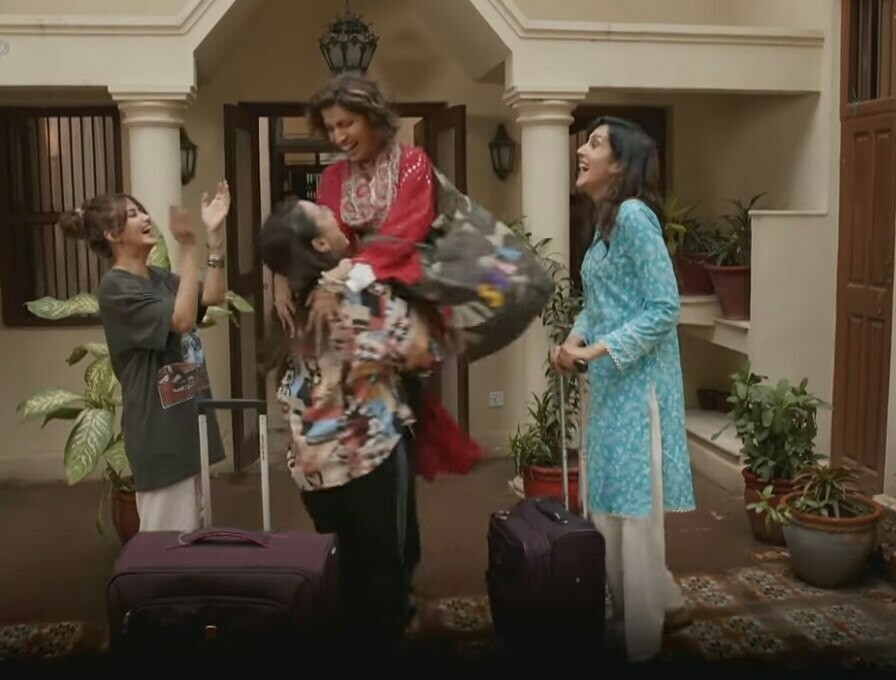
It offers a novel perspective on family dynamics, from Sofia and Agha Jan’s arguments to the three sisters’ unwavering loyalty to one another. The fact that no aspect of the show celebrates one gender over the other, whether it is Khan doing the dishes or Aly fixing her own car, is even bigger and better.
Syed Mohammad Ahmed wrote the script for Kuch Ankahi, which Nadeem Baig directed under the auspices of Six Sigma Plus in association with the Kashf Foundation.
The drama is described as a “modern day and light-hearted drama that is full of messages” and discusses issues related to the rights of women to property both legally and religiously, harassment in the workplace, the pressure of marriage women are put through, body shaming and other “problems prevailing in Pakistani society”.
“The plot revolves around Agha Jan’s ancestral house where he lives with his three daughters. Agha is not willing to share the property with his sister, and his second daughter Aliya is working day in and day out to settle the claims over the house. The story also takes an amazing turn when Salman — another young real estate agent — enters their house as a tenant,” reads the description provided by ARY Digital’s YouTube channel.
