US Vice President JD Vance has confirmed that formal negotiations with Iran will kick off this week—but not before issuing a sharp warning: don’t let the ceasefire unravel over what he calls a genuine “misunderstanding” about Lebanon.
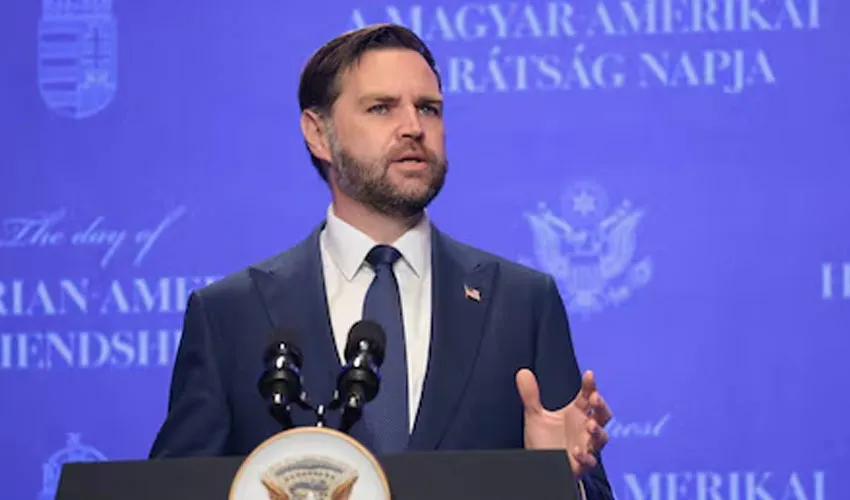
Speaking to reporters during a visit to Hungary, Vance revealed that the United States and Iran have been communicating through Pakistan, which played a pivotal back-channel role in brokering the current two-week truce.
According to Vance, Iran has already submitted a 10-point proposal and has promised to reopen the Strait of Hormuz—a vital artery for global oil shipments and international trade.
The upcoming talks mark the next logical step after the ceasefire, Vance explained, emphasizing that the truce itself was very much a team effort.
“We worked as a team for the ceasefire,” he said, singling out Secretary of State Marco Rubio for praise. He was careful to note, however, that the ceasefire applies specifically to Iran—and that Lebanon is not, and was never, part of the deal.
Iran Must Show Up in Good Faith
Vance didn’t mince words about what Washington expects next.
“The next step after the ceasefire is for the Iranians to take,” he said, adding that President Donald Trump retains every option to return to military action if diplomacy fails.
He reiterated a long-standing red line: under no circumstances will the United States allow Iran to acquire nuclear weapons.
Still, Vance left the door open to compromise. If negotiations show tangible progress, he said, the US is willing to discuss easing some sanctions on Tehran. It’s a carrot-and-stick approach—diplomatic rewards in exchange for verifiable compliance.
Lebanon: The Elephant in the Room
So where does the confusion over Lebanon come from?
According to Vance, Iranian negotiators walked away from earlier talks believing that Lebanon was explicitly covered by the ceasefire. That, he said, is simply incorrect.
“I think this comes from a legitimate misunderstanding,” Vance told reporters, clarifying that the ceasefire focuses squarely on Iran, Israel, and US Gulf allies.
His statement, however, puts him at odds with earlier claims from Pakistani Prime Minister Shehbaz Sharif, who had publicly said Lebanon was included in the truce. Iranian Foreign Minister Abbas Araghchi has echoed that same position, insisting that Lebanon’s security was part of the bargain.
Vance brushed aside the discrepancy as either confusion or deliberate distortion, accusing some unnamed parties of engaging in “bad faith negotiation” and “propaganda.”
Israel Shows Restraint—For Now
On a more constructive note, Vance acknowledged that Israel has agreed to dial back its military operations in Lebanon, at least temporarily, to give the negotiations room to breathe.
“The Israelis have offered to check themselves a little bit in Lebanon,” he said, though he offered no specifics on what that restraint looks like in practice.
Still, he warned Iran not to test the limits of that patience.
“It would be dumb for Iran to let this negotiation fall apart over Lebanon, which has nothing to do with them,” Vance said. “That’s their choice.”
Iran Signals It Won’t Abandon Hezbollah
For their part, Iranian officials are projecting no such flexibility. The Islamic Revolutionary Guard Corps (IRGC) has made it clear that Tehran will not turn its back on Hezbollah, its long-time Lebanese ally.
In a sharply worded statement, the IRGC warned that continued Israeli strikes on Lebanese soil could reignite full-scale fighting.
“If the aggressions against Lebanon are not stopped immediately, we will give a regretful response,” the IRGC said, stopping short of detailing what that retaliation might look like.
What Happens Next?
All eyes are now on the negotiating table. With formal US-Iran talks scheduled to begin this week in Islamabad (as earlier reports suggest), the stakes couldn’t be higher. A successful round of diplomacy could lead to sanctions relief, reopened shipping lanes, and a de-escalation across the region. A breakdown, however, could return both nations to the brink of war.
For now, the ceasefire holds—but barely. And Lebanon remains the fault line.
