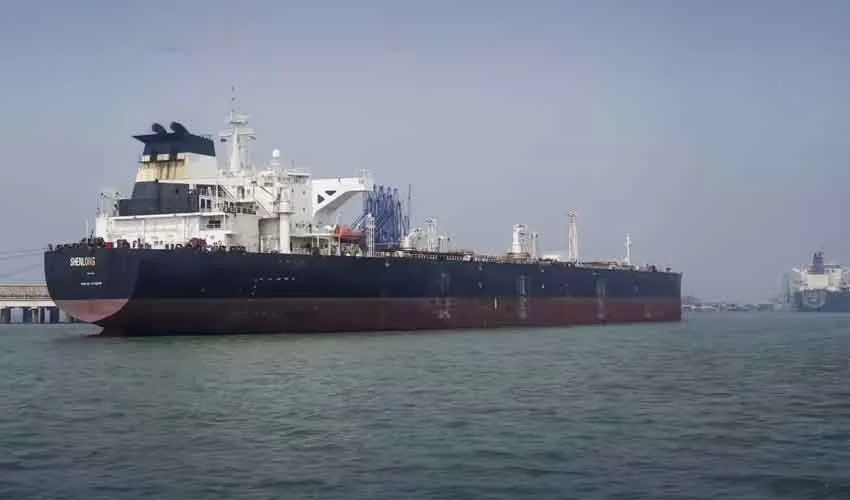
India is poised to receive its first shipment of Iranian crude oil in nearly seven years this week, following the United States’ temporary removal of sanctions on Iranian oil and refined products aimed at easing global supply shortages.
Ship tracking data from LSEG and Kpler confirmed on Wednesday that a very large crude carrier (VLCC) carrying Iranian oil is heading toward India’s east coast, marking a significant geopolitical and energy market development.
The cargo aboard the Curacao-flagged VLCC named Jaya was purchased by Indian Oil Corporation (IOC), the country’s largest state-run refiner. The vessel’s trajectory represents a dramatic shift in India’s energy procurement strategy, which had strictly avoided Iranian crude since May 2019 under intense pressure from previous US administrations.
Ship Tracking Data Reveals Cargo Route
According to LSEG ship tracking data, the Jaya initially traveled to Southeast Asian waters for discharge in China before changing course and heading toward India. This circuitous route reflects the complexities of handling Iranian crude even after sanctions relief, with traders and shippers remaining cautious about potential enforcement actions.
Also read: US–Israel–Iran Conflict Escalates as Oil Surges, Markets Slide, and Talks Collapse
Additional LSEG data shows another carrier, the Jordan, is also signaling India as its discharge location, suggesting that multiple Iranian oil shipments may be en route to the subcontinent in the coming weeks. Indian Oil Corporation did not immediately respond to a Reuters email seeking comment on the transaction.
End of a Seven-Year Hiatus
India, the world’s third-largest oil importer and consumer, has not received a cargo from Tehran since May 2019. The halt followed sustained US pressure on New Delhi to cease purchases of Iranian crude after the Trump administration unilaterally withdrew from the Joint Comprehensive Plan of Action (JCPOA), commonly known as the Iran nuclear deal, and reimposed sanctions on Tehran’s energy exports.
Before the sanctions were reimposed, Iran was among India’s top oil suppliers, providing approximately 10 per cent of the country’s crude needs. Indian refiners had developed extensive logistical and payment infrastructure for Iranian imports, much of which was dismantled or mothballed following the sanctions. The resumption of imports will require reactivating banking channels, insurance arrangements, and shipping protocols.
Why the US Temporarily Lifted Sanctions
The temporary removal of sanctions on Iranian oil comes amid severe supply disruptions caused by the ongoing US-Israel military confrontation with Iran. The conflict has directly threatened shipping through the Strait of Hormuz, a critical chokepoint through which approximately 20 per cent of globally traded petroleum passes daily.
Iran’s closure of the strait as part of its retaliatory measures during the war choked global crude supplies, sending prices soaring above $100 per barrel and creating acute shortages in oil-importing nations like India. The Trump administration’s decision to temporarily waive sanctions on Iranian oil is widely seen as an emergency measure to stabilize global energy markets and prevent further price spikes.
The two-week ceasefire announced between the US and Iran, subject to the immediate and safe reopening of the Strait of Hormuz, has further facilitated the resumption of Iranian oil exports. While crude prices have since fallen below $100 per barrel, supply chains remain fragile, and Iranian oil offers a much-needed additional source.
India’s Oil Ministry Confirms Purchases
India’s oil ministry confirmed last week that domestic refiners have purchased Iranian oil amid the Middle East conflict that has disrupted traditional supply routes through the Strait of Hormuz. The ministry acknowledged that the supply disruptions had hit the South Asian nation hard, forcing refiners to seek alternative sources.
The ministry also stated that refiners are not facing any problems with payments for Iranian oil purchases, suggesting that banking channels for transactions have been established or reactivated.
Payment mechanisms for Iranian oil have historically been complex due to the US dollar-based nature of global oil trade and the previous sanctions regime. It remains unclear whether transactions are being conducted in currencies other than the dollar, such as the Indian rupee or Chinese renminbi.
Strategic Importance for India’s Energy Security
The resumption of Iranian oil imports carries significant strategic implications for India’s energy security. Iran offers several advantages as a supplier:
Proximity: Iran is geographically close to India’s west coast, reducing shipping times and freight costs compared to suppliers from the Americas, West Africa, or Russia.
Credit Terms: Iranian oil has historically been available on favorable credit terms, easing cash flow pressures on Indian refiners.
Price Discounts: Iranian crude has often been priced at a discount to comparable benchmarks, providing cost savings.
Diversification: Access to Iranian oil reduces India’s reliance on other major suppliers, including Russia, Saudi Arabia, Iraq, and the UAE.
India has aggressively sought to diversify its crude sources since the Russian invasion of Ukraine in 2022, becoming a major buyer of discounted Russian oil. Iranian oil now offers a complementary source, further insulating India from supply shocks.
Impact on Global Oil Markets
The return of Iranian oil to global markets, even on a temporary basis, has contributed to recent price declines. Iran possesses some of the world’s largest proven oil reserves and, before sanctions, exported approximately 2.5 million barrels per day. Even a fraction of that volume returning to market adds meaningful supply.
Also read: Oil Prices Steady as Trump Weighs Ending Iran War Despite Strait of Hormuz Closure
However, analysts caution that the current sanctions relief is explicitly temporary, tied to the two-week ceasefire and negotiations scheduled for April 10 in Islamabad. A sustained return of Iranian oil to global markets would require a more comprehensive diplomatic agreement addressing Iran’s nuclear program, missile development, and regional activities.
Payment and Banking Mechanisms
One of the most significant barriers to Iranian oil trade has been the payment mechanism. Traditional US dollar-based channels through SWIFT (the global financial messaging system) remain restricted. However, India and Iran have previously developed alternative payment systems, including rupee-based trade mechanisms and barter arrangements.
Under these arrangements, India pays for Iranian oil in rupees, with Iran using those rupees to import Indian goods and services. This mechanism bypasses dollar-based systems and reduces exposure to US sanctions enforcement. The oil ministry’s statement that refiners face no payment problems suggests these alternative channels are operational.
Refining and Logistics
Indian refiners, particularly Indian Oil Corporation, have extensive experience processing Iranian crude grades, including Iran Light and Iran Heavy. These crudes are well-suited to India’s refinery configuration, which is designed to process a range of Middle Eastern heavy and sour crudes.
The resumption of imports will require logistics adjustments, including securing tankers, arranging insurance (which had been withdrawn under sanctions), and coordinating with ports. However, given India’s prior experience with Iranian oil, these adjustments are expected to proceed smoothly.
Political and Diplomatic Considerations
India’s decision to resume Iranian oil imports carries political and diplomatic dimensions. New Delhi has historically maintained a careful balancing act between its strategic partnership with the United States and its energy and economic ties with Iran. The temporary US sanctions waiver provides diplomatic cover for India to resume imports without directly challenging American policy.
India also maintains close ties with Israel, a major defense partner, while simultaneously engaging with Iran. The resumption of oil imports is unlikely to significantly affect India-Israel relations, given the temporary nature of the waiver and India’s longstanding position that it seeks energy from all available sources.
What Comes Next
The immediate future of Iranian oil imports to India depends on several factors. The durability of the US-Iran ceasefire will determine whether sanctions relief continues beyond the initial two-week period. The upcoming negotiations in Islamabad between the US and Iran could lead to a more permanent agreement, potentially opening the door for sustained Iranian oil exports.
For Indian refiners, the resumption of Iranian oil is a welcome development that enhances supply security and potentially lowers costs. Whether this proves to be a one-off shipment or the beginning of a sustained trade relationship will depend on diplomatic developments that remain highly uncertain.
