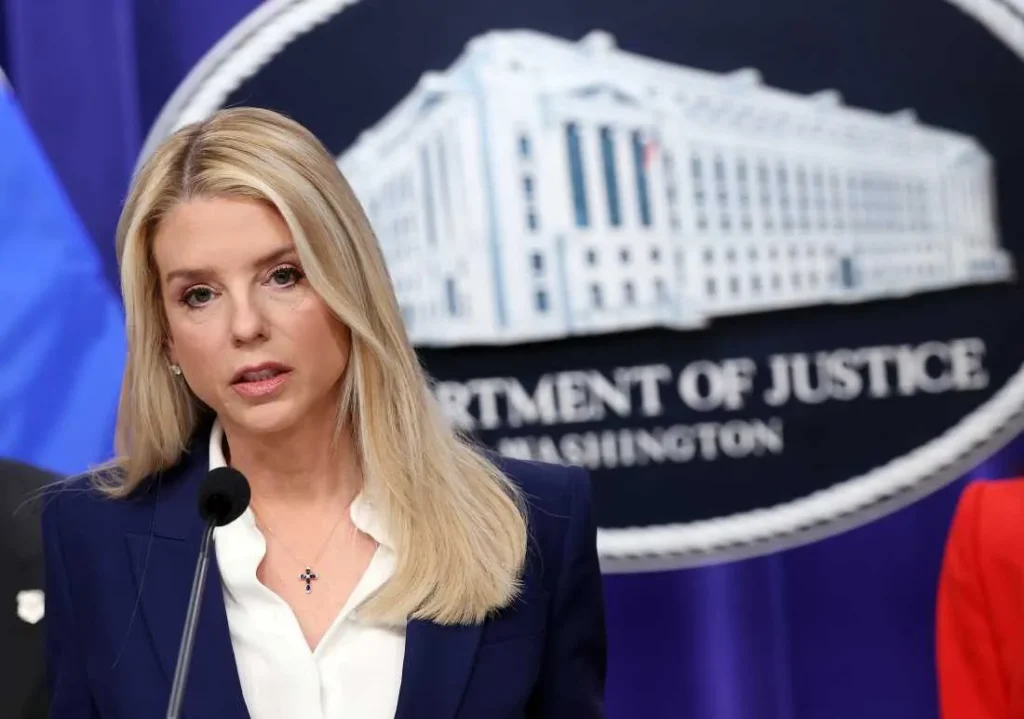
In a dramatic shake-up at the highest levels of government, US President Donald Trump has dismissed Attorney General Pam Bondi, appointing Deputy Attorney General Todd Blanche as the acting head of the Department of Justice. The decision marks a major reorganization within the administration and is expected to have far-reaching implications for US domestic governance and legal policy.
Bondi’s removal comes as part of Trump’s broader effort to install loyalists and closely aligned figures in key government roles. Todd Blanche, previously serving as Deputy Attorney General, will now oversee the Justice Department on an interim basis. Political analysts view the appointment as a strategic move aimed at consolidating executive influence over law enforcement and legal decision-making during a critical phase of the administration.
Observers note that the Justice Department reshuffle could reshape priorities ranging from federal prosecutions to regulatory enforcement. By elevating Blanche, a figure seen as closely aligned with the president’s agenda, the administration appears determined to ensure tighter control over the direction of federal legal policy.
Major changes in military leadership
At the same time, the Trump administration has carried out a significant restructuring within the US military. Secretary of Defense Pat Hagseth announced the removal of Army Chief of Staff Randy George, replacing him with an official considered more in sync with presidential priorities. The move signals a clear shift in the administration’s approach to defense leadership and military strategy.
General Randy George is widely regarded as a seasoned and accomplished officer. He previously served as a senior military assistant under former Defense Secretary Lloyd Austin and played key roles in major conflicts, including the Gulf War, the Iraq War, and the Afghanistan campaign. His dismissal, analysts argue, underscores the administration’s intent to align senior military leadership more closely with Trump’s vision for the armed forces.
Signals of a broader realignment

Experts say the simultaneous changes in both civilian and military leadership point to a broader realignment of policy and strategy across the federal government. The Justice Department and the armed forces are two of the most powerful institutions in the United States, and leadership shifts at this level could significantly influence domestic law enforcement priorities, military operations, and overall national security planning.
Supporters of the administration argue that these changes are necessary to ensure cohesive leadership and effective implementation of presidential directives. Critics, however, warn that frequent reshuffles risk creating uncertainty within institutions that rely heavily on stability, continuity, and independence.
Global attention on Washington
The developments have drawn close attention from observers around the world, as they highlight Trump’s determination to directly shape strategic and operational decisions across the US government. By placing trusted allies in pivotal roles, the administration appears focused on reinforcing its policy agenda ahead of future political and legal challenges.
As the Justice Department and the US military adjust to new leadership, analysts say the coming months will be crucial in determining how deeply these changes affect the American legal system, defense posture, and broader governance framework.
