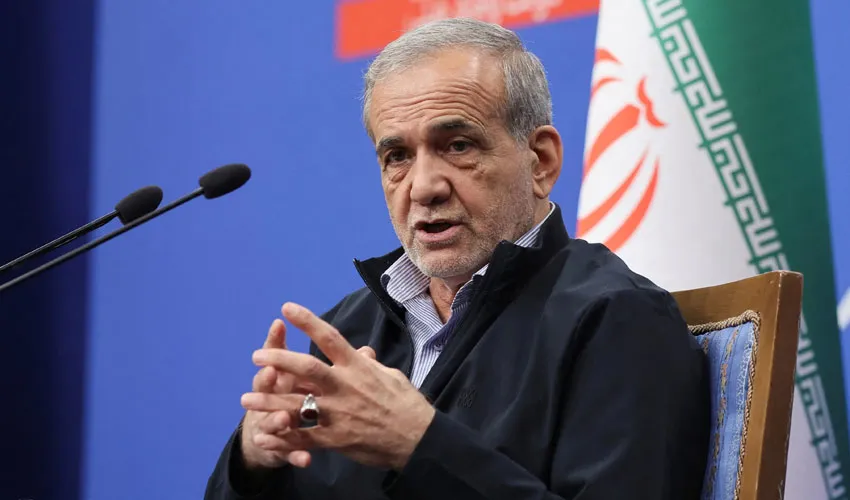
TEHRAN – Iranian President Masoud Pezeshkian has firmly declared that any decision to end the ongoing war will be made solely by Iran, based on its national conditions and interests.
The statement comes at a time of heightened tensions between Tehran and Washington, alongside reports of indirect diplomatic contacts between the two long-standing adversaries.
Speaking during a government meeting, Pezeshkian emphasized that while Iran remains open to a resolution, no external power will dictate the terms.
“The decision to end the war will depend on prevailing conditions and will be made by Iran itself,” Pezeshkian said. “Any resolution will take into account all circumstances while safeguarding the country’s dignity, security, and national interests.”
He added: “We will protect the honor and interests of the Iranian people at all costs.”
Praise for Armed Forces Amid Crisis
The Iranian president described the role of the country’s armed forces as “historic”, calling their contributions to national security a “golden chapter” in Iran’s modern history. He also lauded recent public gatherings across the nation as a powerful sign of resilience during what he called a critical phase.
Pezeshkian further portrayed Iran’s current global standing in assertive terms, stating that the nation today shines “like a bright pearl” before the world and serves as an inspiration for free nations.
Governance and Stability Key During Conflict
Highlighting domestic stability, Pezeshkian stressed the importance of maintaining public services as a pillar of national strength during wartime. He noted that continuity in governance and essential services is vital for enduring external pressures and internal challenges.
Trump’s April 6 Deadline Raises Stakes
The Iranian leader’s remarks come against a backdrop of escalating rhetoric from the United States. Former president and current presidential candidate Donald Trump has issued a stark warning, threatening that Iran’s power plants, oil fields, and key infrastructure — including the strategic Kharg Island — could be “completely obliterated” if negotiations fail ahead of an April 6 deadline.
Trump’s warning has added urgency to the simmering confrontation, with analysts suggesting that the deadline may be aimed at forcing Iran’s hand in potential nuclear or regional security talks.
Indirect Contacts With US Reportedly Ongoing
Despite the fiery statements from both sides, reports indicate that indirect communication between Tehran and Washington is continuing through regional mediators. While no official details have emerged, such back-channel talks have historically been used to de-escalate crises or lay groundwork for broader negotiations.
The simultaneous pursuit of diplomacy and military posturing reflects the high-stakes nature of the current Iran-US standoff, which has drawn global concern over the possibility of a wider conflict in the Middle East.
Global Reactions and Strategic Implications
International observers are closely watching the developments, particularly with the April 6 deadline approaching. Any military action against Iran’s energy infrastructure could trigger a sharp rise in global oil prices and provoke retaliatory strikes by Tehran or its regional allies.
Pezeshkian’s insistence on Iran’s sovereign decision-making is seen as a message to both domestic audiences and international powers: Tehran will not bow to ultimatums but remains watchful of the evolving diplomatic landscape.
