The Pentagon is laying the groundwork for sustained ground operations inside Iran, signaling a potentially dramatic escalation in the five-week-old U.S.-Iran conflict.
According to a bombshell report from The Washington Post, military planners are finalizing options that would involve elite Special Operations raids alongside conventional infantry deployments—operations that, if approved, could unfold over the course of weeks.
While officials stress that the plans would “fall short of a full-scale invasion,” the very existence of such preparations marks a significant turning point in the conflict. The specifics of timing, troop numbers, and target locations remain under active review, with ultimate authorization resting solely with President Donald Trump.
A Force Amassing: 3,500 Marines Arrive as 82nd Airborne Prepares
As diplomatic efforts hang by a thread, the U.S. military is quietly but rapidly reinforcing its footprint in the Middle East.
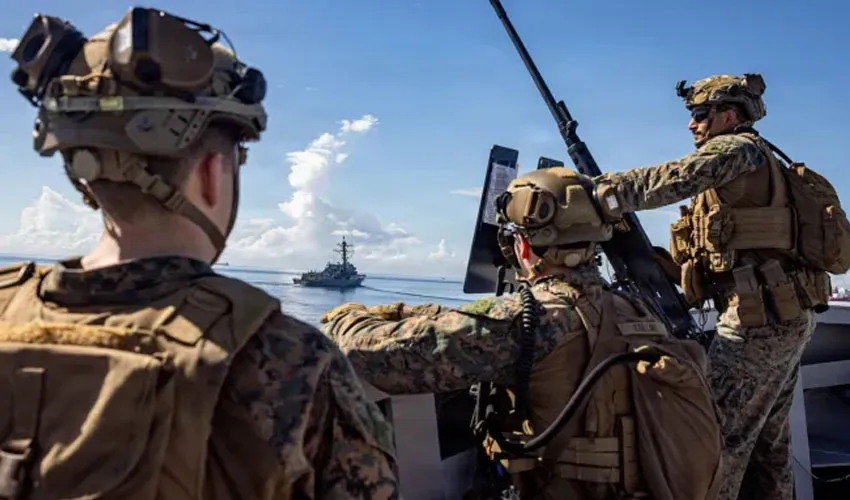
The 31st Marine Expeditionary Unit, comprising 3,500 combat-ready Marines, has already arrived in the region. Simultaneously, thousands of soldiers from the U.S. Army’s 82nd Airborne Division are being prepared for potential deployment, positioning America’s global response force for rapid insertion should the order come.
The buildup underscores a stark reality: the Pentagon is not merely posturing. It is actively configuring its forces for sustained combat operations inside Iranian territory.
Trump’s Ultimatum: ‘Unleash Hell’
The planning coincides with a marked hardening of rhetoric from the White House. President Trump has issued a blunt ultimatum to the Iranian regime, urging it to “accept defeat” amid mounting military pressure.
Warning that continued Iranian obstruction in the Strait of Hormuz—a critical artery for global oil supplies—would cross a red line, Trump promised a devastating response, vowing to “unleash hell” if necessary.
Observers note that any ground operation, even limited raids, would represent a high-stakes gamble with the potential to ignite a broader regional conflagration.
What ‘Weeks of Operations’ Would Mean
Military analysts warn that a sustained ground campaign—even one framed as limited in scope—carries profound risks.
-
Regional Escalation: Prolonged U.S. ground operations inside Iran could draw in Iranian proxies across Iraq, Syria, Lebanon, and Yemen, expanding the conflict beyond its current contours.
-
Global Energy Markets: The Strait of Hormuz, through which approximately 20% of the world’s oil passes, remains a flashpoint. Any prolonged hostilities threaten to send energy prices soaring.
-
Diplomatic Fallout: With the conflict already in its fifth week, extended operations would likely shatter remaining diplomatic channels and deepen international divisions.
Presidential Approval Hangs in the Balance
For now, the trigger remains unpulled. Presidential approval for the ground operations has not yet been granted, and sources indicate that the administration continues to weigh its options.
Yet the military machine is now positioned for speed. With forward-deployed forces, standing contingency plans, and a commander-in-chief who has signaled little patience for Iranian defiance, the stage is set for a decision that could reshape the geopolitical landscape of the Middle East.
As one senior defense official reportedly framed it: “We are ready to act if the situation deteriorates. The question now is political, not military.”
