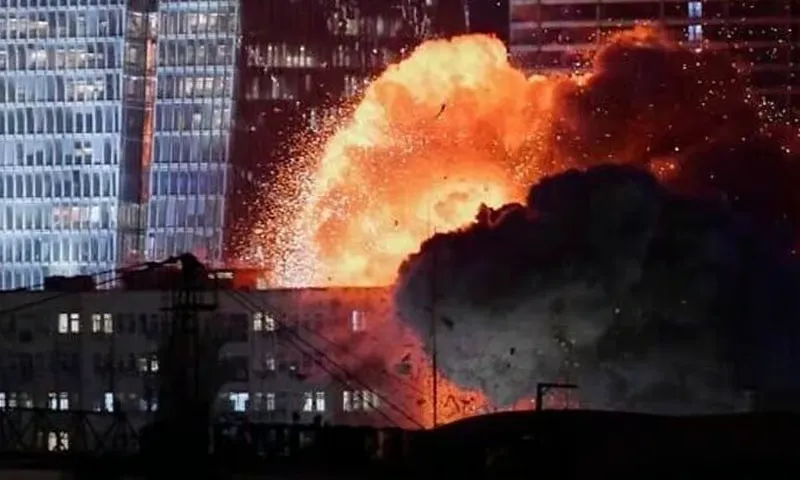
Iran launched a series of missile strikes on Tel Aviv, retaliating for the killing of senior security official Ali Larijani in what Tehran has described as a targeted assassination.
Israeli officials said some of the missiles were fitted with cluster-style warheads, designed to release multiple smaller explosives over a wide area, making air defence systems less effective.
The strikes reportedly hit densely populated parts of Tel Aviv overnight, killing at least two people and pushing Israel’s total death toll from the ongoing conflict to 14.
Projectile lands near Bushehr nuclear facility
Amid the escalation, Iranian authorities confirmed that a projectile landed near the Bushehr Nuclear Power Plant on Tuesday evening. Officials said there was no damage to the site and no casualties.
The International Atomic Energy Agency was informed, with Director General Rafael Grossi urging all parties to exercise restraint to avoid a potential nuclear-related crisis.
Tehran confirms deaths of senior officials
Iran formally confirmed Larijani’s death, stating he was killed alongside his son Morteza Larijani, senior official Ali Reza Bayat, and several bodyguards.
Officials described the strike as a coordinated and deliberate assassination, while Iranian state-linked outlets suggested the attack exposed a significant intelligence breach.
Israel expands military campaign in Tehran
The Israel Defense Forces said it carried out strikes on more than 10 sites across Tehran, targeting positions associated with the Basij force.
Israeli Defence Minister Israel Katz signaled that operations would continue, indicating a strategy focused on dismantling Iran’s leadership structure.
Prime Minister Benjamin Netanyahu also confirmed that key figures had been eliminated, describing the campaign as a major blow to Iran’s command network.
Risk of wider war grows
Iran’s Islamic Revolutionary Guard Corps condemned the killings and warned of further retaliation.
With missile exchanges intensifying, leadership figures being targeted, and sensitive infrastructure at risk, the conflict is rapidly expanding—raising fears of a broader regional war with global implications.
