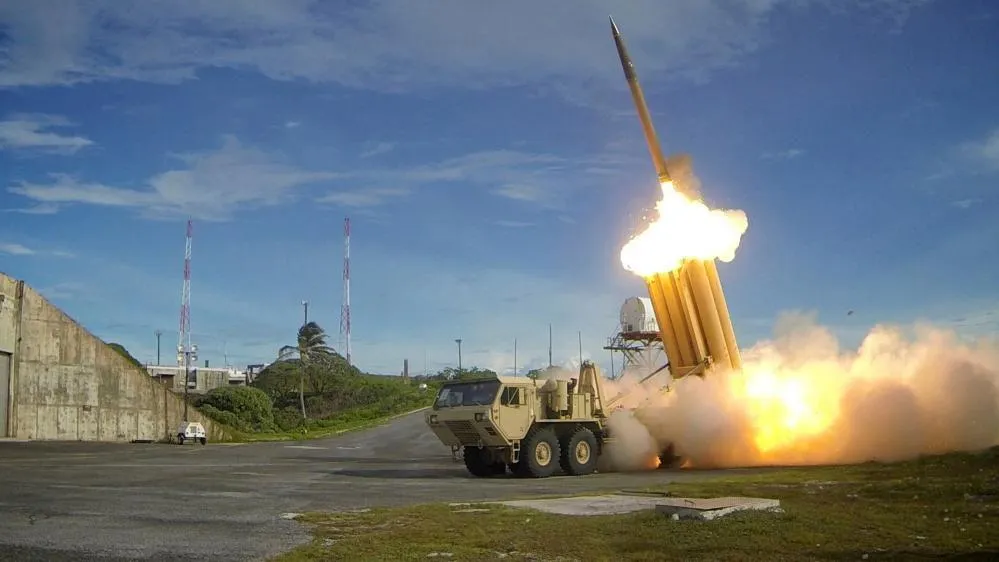
US military forces have intercepted hundreds of Iranian ballistic missiles in recent days, a major defensive success that is now raising serious concerns about the sustainability of American air defence interceptor stockpiles if the conflict with Iran continues for weeks or longer.
Iran launched large-scale missile and drone barrages in response to the joint military campaign by the United States and Israel, targeting US military bases and partner nations across the Middle East. The attacks marked one of the most intense exchanges of missile fire the region has seen in decades.
Since the start of hostilities, US missile defence systems have successfully neutralised a significant number of incoming threats.
“We have intercepted hundreds of ballistic missiles aimed at US forces, our allies, and regional stability,” said General Dan Caine, the top US military commander.
Interceptor Use Rising Faster Than Supply
While the interceptions prevented major casualties and infrastructure damage, defence analysts warn that the cost is rapid depletion of advanced missile defence interceptors, which are expensive, technologically complex, and slow to manufacture.
Also read: Pentagon Briefings Reveal No Proof Iran Planned Strike on US Forces First
“There is a real possibility that the United States and its partners could exhaust interceptor stocks faster than Iran depletes its missile arsenal,” said Kelly Grieco of the Stimson Center, adding that the outcome is not yet certain.
At the beginning of the war, Israeli intelligence assessments estimated Iran possessed roughly 2,500 ballistic missiles, potentially exceeding the combined interceptor inventories of both the US and Israel.
Race Between Launchers and Air Strikes
US and Israeli forces are attempting to reduce the pressure by striking Iranian missile launchers, storage depots, and production facilities. According to analysts, the conflict has become a race between Iran’s ability to launch missiles and the effectiveness of allied air strikes in destroying launch capabilities before they are used.
“The balance will depend on how quickly Iranian launch systems can be neutralised,” Grieco said.
Drones Add to Defence Burden
Iran has also deployed large numbers of drones, further stretching air defence resources. While US officials have not released figures, General Caine said American systems have proven highly effective against unmanned aerial vehicles.
Experts note, however, that ballistic missiles remain the primary concern, as they consume far more interceptors than drones and place the greatest strain on missile defence inventories.
Conflict Timeline Remains Unclear
The duration of the war is a key factor in determining how severe interceptor shortages could become. Donald Trump has described the conflict as potentially lasting several weeks but said operations are progressing faster than anticipated.
Also read: Unesco, Malala denounce US-Israeli attack on Iran girls’ school
US Defence Secretary Pete Hegseth has offered varying estimates, ranging from two to six weeks, depending on battlefield developments and diplomatic outcomes.
Global Security Implications
Defence experts warn that a prolonged war with Iran could impact US military readiness beyond the Middle East.
“Sustained operations could seriously strain interceptor reserves needed for other strategic theatres, including deterrence against China,” said Joe Costa of the Atlantic Council.
The underlying issue, analysts agree, is industrial capacity. Missile defence production is struggling to keep up with global demand driven by conflicts in Europe, the Indo-Pacific, and the Middle East.
“Production simply cannot match the pace of consumption,” Grieco said. “The United States is using missile defence interceptors faster than they can be replaced.”
As the conflict continues, the availability of missile defence systems, rather than battlefield tactics alone, may play a decisive role in shaping the next phase of the war.
