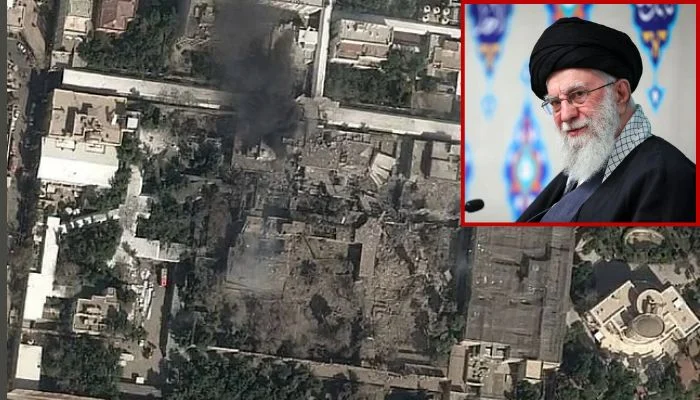
New details published by The New York Times reveal that US and Israeli intelligence agencies closely tracked Iran’s Supreme Leader Ayatollah Ali Khamenei for months before launching a coordinated strike on his compound in Tehran, an operation that Iranian and regional sources say resulted in his killing along with senior members of Iran’s leadership.
According to the report, the Central Intelligence Agency monitored Khamenei’s movements over an extended period and learned he would attend a high-level meeting of Iran’s top military and security commanders on the morning of February 28, 2026.
Timing Shift Triggered Accelerated Strike
The meeting had initially been scheduled for Saturday evening in Tehran. However, Israeli intelligence discovered it had been moved to earlier in the day. That change prompted Israeli military commanders to accelerate the strike timeline, moving the operation forward to capitalize on the intelligence window.
US and Israeli officials cited by the report said Washington and Tel Aviv worked in close coordination, with the CIA passing precise intelligence on Khamenei’s location to Israeli counterparts.
Israeli Jets Launched Long-Range Attack
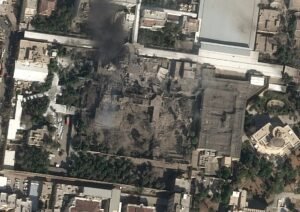
Israel ultimately carried out the strike. The operation began at approximately 6:00 a.m. local time in Israel, according to the report. Nearly two hours later, long-range missiles fired by Israeli Air Force jets struck the compound in Tehran where the meeting was taking place.
Sources said senior national security officials were gathered in one structure within the compound, while Khamenei was located in a separate building at the time of the attack.
A separate report by The Wall Street Journal said nearly 30 bombs were dropped on the compound during the operation.
Senior Iranian Figures Reportedly Killed
Satellite imagery released by Reuters showed thick plumes of smoke rising from the compound following the strikes.
According to the reports, the attack resulted in the deaths of Khamenei and several senior Iranian officials, including Ali Shamkhani, former secretary of Iran’s Supreme National Security Council, and Mohammad Pakpour, commander of Iran’s Islamic Revolutionary Guard Corps.
Neither Washington nor Tel Aviv has officially confirmed the details of the intelligence-sharing or the full scope of the casualties.
The revelations, however, underscore the unprecedented level of US-Israel intelligence coordination behind one of the most consequential strikes on Iran’s leadership in decades.
