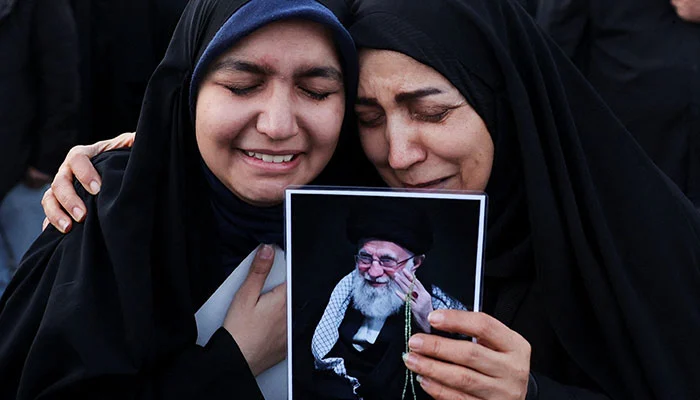
For more than three decades, Ayatollah Ali Khamenei had overseen a dramatic transformation of Iran, consolidating power at home while projecting military and political influence across the Middle East.
His 36-year rule, the longest of any Iranian leader since the 1979 revolution, reshaped the Islamic Republic into a formidable anti-US force with regional reach extending from Lebanon to the Gulf.
Iranian state media announced on Saturday that Khamenei had been killed at the age of 86 in airstrikes carried out by Israel and the United States, after years of failed diplomatic efforts to resolve disputes over Iran’s nuclear programme.
The strikes reportedly destroyed his Tehran home.
From Unlikely Successor to Supreme Authority
When Khamenei succeeded Ayatollah Ruhollah Khomeini in 1989, many viewed him as an improbable choice. Lacking Khomeini’s charisma and senior clerical credentials, he was initially dismissed by critics as weak and indecisive.
Yet over time, Khamenei entrenched himself at the apex of Iran’s power structure.
“He went from a weak president to an initially weak supreme leader to one of the five most powerful Iranians of the last 100 years,” said Karim Sadjadpour of the Carnegie Endowment for International Peace.
As supreme leader, Khamenei wielded final authority over Iran’s complex system of clerical rule and elected institutions. He commanded the armed forces, appointed heads of the judiciary and security services, and placed loyalists at the helm of state media and the Islamic Revolutionary Guard Corps.
Anti-US Ideology and the Nuclear Standoff
Khamenei’s rule was defined by deep hostility toward Washington. He routinely condemned the United States as the “Great Satan”, reinforcing the anti-American ideology that lay at the heart of the 1979 revolution.
His rhetoric intensified during both terms of Donald Trump, particularly after the US withdrew from the 2015 nuclear agreement.
Although he cautiously backed the deal negotiated under President Hassan Rouhani, Khamenei’s distrust of the West never waned.
When sanctions returned in 2018, he sided with hardliners who argued that engagement with Washington had failed. As new talks faltered in 2025, he openly challenged US demands, insisting Iran had the right to uranium enrichment.
Despite repeated denials of pursuing nuclear weapons, Khamenei maintained Iran’s strategic ambiguity, even citing a religious edict banning nuclear arms as incompatible with Islamic principles.
Managing Dissent at Home
Khamenei faced repeated waves of domestic unrest, including student protests in 1999 and 2002, and a far more serious challenge in 2009 after a disputed presidential election.
His authority was tested again in 2022, when nationwide protests erupted following the death of Mahsa Amini while in morality police custody. Each time, the state responded with force, preserving Khamenei’s grip on power but deepening generational divides.
Expanding — and Losing — Regional Influence
Under Khamenei, Iran poured billions of dollars into regional allies, building influence through groups such as Hezbollah and Hamas. Iran and Israel waged a prolonged shadow war, marked by assassinations, cyberattacks, and covert strikes.
That conflict escalated dramatically after 2023, spilling into open confrontation by 2024 and culminating in a full-scale air war in 2025. Meanwhile, Iran’s regional position weakened with the fall of Syrian President Bashar al-Assad and Israeli strikes that decimated allied leaderships.
A Powerful but Uncertain Legacy
His death leaves an Islamic Republic at a crossroads — engaged in open confrontation with Israel and the United States, navigating constitutional succession, and grappling with questions about its future direction after the passing of the man who shaped Iran more than any leader since the revolution.
