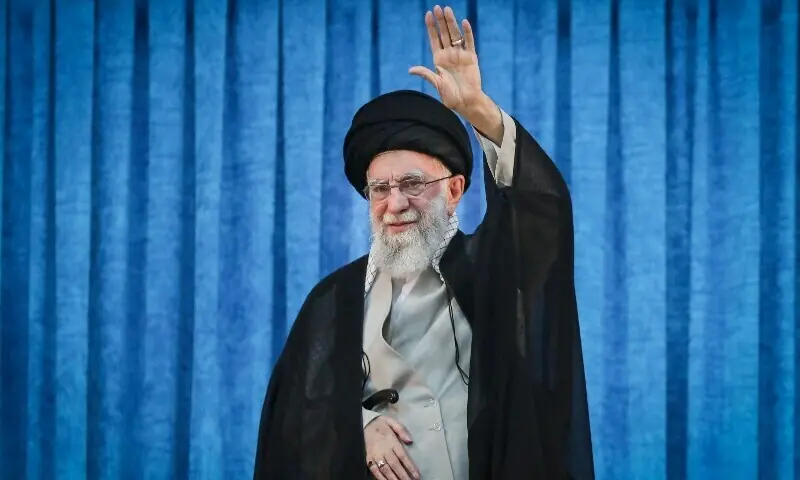
Iran’s Supreme Leader Ayatollah Ali Khamenei has died, Iranian state media confirmed early Sunday, after a major attack on the country’s leadership and strategic sites by the United States and Israel.
The announcement marks one of the most consequential developments in Middle Eastern geopolitics in decades.
State television and state-run news agencies said Khamenei, who was 86 years old and had led Iran since 1989, was killed during the strikes on Saturday. Tehran has declared 40 days of national mourning and seven days of public holidays in his honor.
The joint US-Israeli air campaign, described by Western officials as an effort to dismantle Iran’s nuclear and missile capabilities, has rapidly escalated tensions across the region.
US President Donald Trump publicly acknowledged Khamenei’s death, saying in a social media post that the strikes were aimed at eliminating a long-standing threat and helping the Iranian people reclaim their country.
Also read: Iran’s supreme leader Ali Khamenei promises ‘crushing response’ to Israeli airstrikes
Israeli Prime Minister Benjamin Netanyahu earlier said that there were “signs” the Iranian supreme leader had been killed and that Israel had destroyed his compound in Tehran.
Western outlets reported that senior Iranian officials, including commanders of the Islamic Revolutionary Guard Corps (IRGC), were also killed in the operation.
Iranian media also reported that several members of Khamenei’s family, including his daughter, son-in-law, and granddaughter, were among the casualties. The Revolutionary Guards issued a statement mourning their leader as “unique in strength of faith and courage” and vowed “severe punishment” for those responsible.
The strikes have prompted immediate regional ramifications. Iran retaliated with missile and drone attacks targeting US bases and allied positions in the Gulf, raising concerns about a broader conflict.
Also read: Ayatollah Sistani denounces Israeli aggression against Iran, threats against Ali Khamenei
World leaders have called for restraint and de-escalation, with Antonio Guterres, the United Nations Secretary-General, urging an immediate cessation of hostilities to prevent uncontrollable escalation.
Khamenei’s death represents a dramatic turning point for Iran. As the country’s ultimate spiritual and political authority, he had overseen domestic policy, military strategy, and foreign relations for more than three decades, shaping Iran’s role in the Middle East and its confrontations with the West.
Under Iran’s constitution, succession to the position of supreme leader involves the Assembly of Experts, a clerical body responsible for choosing the nation’s next senior religious authority. Analysts say the process could unfold amid heightened uncertainty as regional and domestic tensions intensify.
