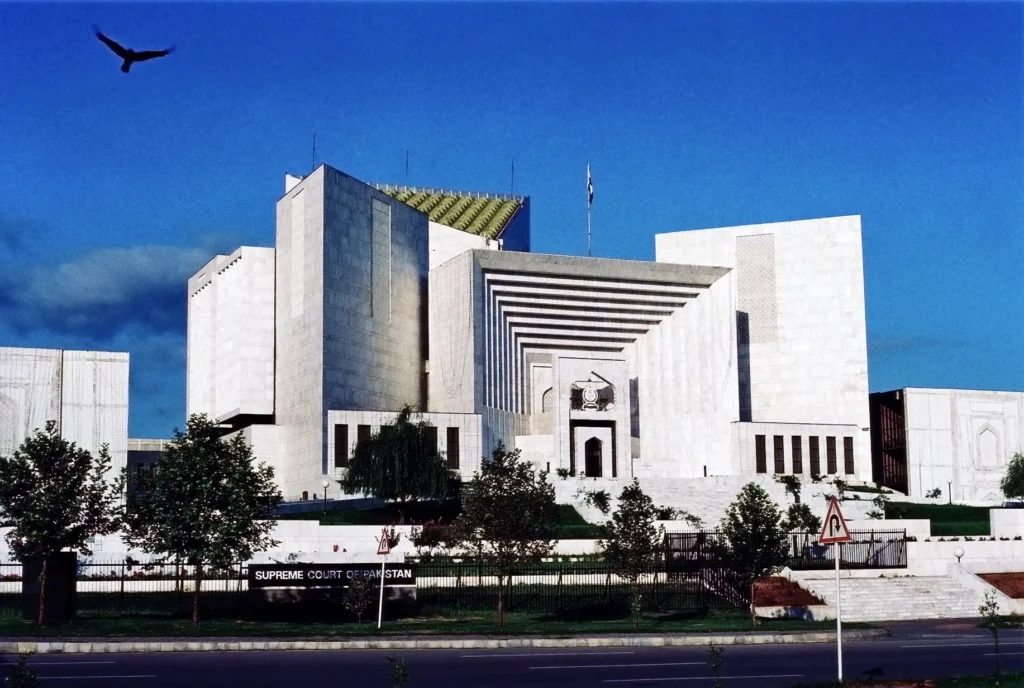
The Supreme Court of Pakistan has delivered a landmark ruling clarifying that suspension from service does not amount to removal, dismissal, or termination, and that a suspended government employee remains entitled to full salary and benefits throughout the suspension period.
The verdict was issued by a two-member bench comprising Justice Shahid Bilal Hassan and Justice Shakeel Ahmad, which upheld an earlier decision of the Federal Service Tribunal (FST) in favor of the affected civil servant.
Suspension Is Only an Interim Measure
In a four-page judgement authored by Justice Shakeel Ahmad, the court ruled that suspension is merely a temporary administrative step that prevents an employee from performing official duties while the service contract continues to remain fully intact.
“Consequently, the civil servant continues to hold the post, albeit without performing duties. All contractual rights, including entitlement to full salary and benefits, remain enforceable during the suspension period,” the judgement stated.
The court emphasized that a government-issued appointment letter constitutes a binding legal contract and that unilateral withholding of salary without lawful authority amounts to a violation of service terms.
Case Background
The case involved a senior clerk-cum-inspector of the Federal Board of Revenue (FBR), who had served for more than 31 years.
The employee applied for retirement on medical grounds after a medical board declared him unfit for further service.
Despite this, the department compulsorily retired him on July 12, 2024, while also treating his suspension period as extraordinary leave without pay.
Authorities further attempted to recover salary and allowances already paid during the suspension.
The civil servant challenged the decision before the Federal Service Tribunal, which partly ruled in his favor. The FBR subsequently appealed the verdict before the Supreme Court.
Salary Withholding Deemed Unjust
Upholding the FST’s decision, the Supreme Court ruled that depriving a suspended employee of full pay is unjust, oppressive, and contrary to Fundamental Rule 53(b).
The court noted that financially penalizing an employee before final adjudication amounts to pre-judgement and violates principles of natural justice.
The judgment also drew upon Islamic injunctions, citing references from the Quran and Hadith regarding the sanctity of lawful earnings, fulfillment of contracts, and the prohibition of exploitation.
“Imposing financial punishment prior to a finding of guilt contradicts Islamic principles of justice and fairness,” the court observed.
Final Ruling
In its concluding remarks, the Supreme Court affirmed that the Federal Service Tribunal had correctly held that the suspended civil servant was entitled to receive full salary and benefits for the entire duration of his suspension.
Legal experts say the ruling is likely to have far-reaching implications for public-sector employment, reinforcing protections for civil servants and setting a clear precedent against arbitrary salary withholding during suspension.
