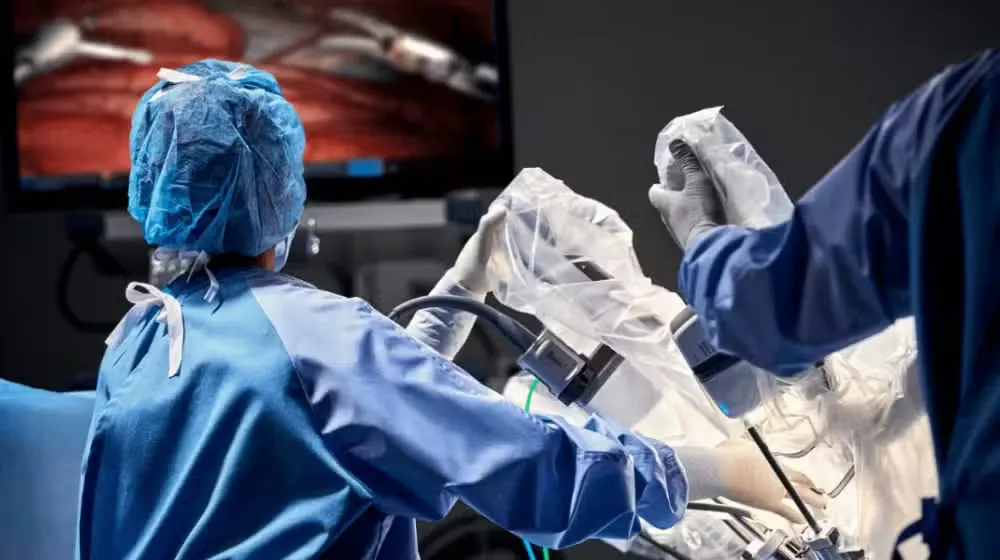
The Institute of Kidney Diseases (IKD) at Hayatabad Medical Complex has taken a major step toward launching robotic surgery services, a development that would mark the first use of robotic surgery in Khyber Pakhtunkhwa.
The initiative follows a one-day live workshop held at IKD, during which two robot-assisted surgical procedures were successfully performed by visiting surgeons from the United Kingdom.
Live Workshop Demonstrates Advanced Surgical Technology
The workshop introduced local doctors, surgeons, and medical staff to robot-assisted surgery, highlighting its effectiveness in handling complex urological procedures. The demonstrations provided hands-on exposure to the technology and showcased its potential benefits for patient care.
IKD officials noted that robotic surgery is already being practiced in other parts of Pakistan and is expanding rapidly across the world.
Benefits of Robotic Surgery
Robotic surgery allows surgeons to operate through small incisions using robotic arms controlled from a specialized console. Compared to conventional surgery, the technology offers several advantages, including:
-
Greater surgical precision
-
Reduced blood loss
-
Shorter hospital stays
-
Faster patient recovery
Proposal Submitted for Government Approval
IKD Director Dr. Kamran Khan said a formal proposal has been submitted to the institute’s Board of Governors seeking government approval and a special grant to purchase a surgical robot.
He added that the cost of the equipment is approximately $1 million, and both international partners and the robot supplier have expressed willingness to support training programs for local surgeons and operating staff.
Readiness and Future Plans
According to IKD officials, the institute already has fully equipped operation theaters and surgeons trained in laparoscopic procedures, making the transition to robotic surgery feasible once specialized training is completed.
Initially, robotic systems will be used for complex cases such as tumor surgeries, with plans to gradually expand their use to other procedures, including organ transplants, in the future.
